
Choosing the Right Pet for Your Lifestyle
The single most consequential decision in pet ownership happens before you ever visit a shelter or breeder: choosing a species and breed that genuinely matches your living situation, schedule, and financial reality. A mismatch here is one of the leading drivers of pet relinquishment in the United States.
Wellness exam
A routine veterinary checkup that assesses an animal's overall health, confirms vaccinations, and establishes a baseline for future care — not triggered by illness.
Pet-proofing
The process of identifying and eliminating household hazards — such as toxic plants, loose cords, and accessible chemicals — before bringing a new animal home.
Socialization window
A critical developmental period in young animals, typically the first few months of life, when exposure to new experiences shapes long-term temperament and behavior.
Microchipping
A procedure in which a small identification chip is implanted under the skin. If a lost pet is found and scanned, the chip links back to the owner's contact information.
Enrichment
Activities, toys, and environmental features that stimulate an animal's mind and natural behaviors, reducing boredom-related stress and behavioral problems.
Relinquishment
When a pet owner surrenders their animal to a shelter or rescue organization, often because the pet's needs were not a good match for the owner's lifestyle or resources.
Ask yourself these questions honestly before committing:
- Space: Do you live in an apartment, a house with a yard, or somewhere in between? Large, high-energy dog breeds generally require more room and outdoor access than small dogs or cats.
- Time: Dogs need daily walks, training, and social interaction. Cats are more independent but still require enrichment and companionship. Working long hours or traveling frequently affects which pets thrive in your home.
- Allergies and household members: Consider everyone who will live with or regularly visit the pet, including children and elderly family members.
- Long-term commitment: Dogs and cats commonly live 10–15 years or more. Some parrots live several decades. Make sure your life plans can accommodate that timeline.
The full scope of responsible pet ownership goes well beyond food and shelter — understanding that early makes the difference between a pet that thrives and one that struggles.
Setting Up a Safe, Pet-Ready Home
Pet-proofing your home before your new animal arrives is not optional — it is a core safety step. Animals explore with their mouths, paws, and curiosity, and common household items that seem innocuous can be dangerous or even fatal.
Common Hazards to Address
- Toxic plants: Many popular houseplants — including lilies (extremely toxic to cats), sago palm, and pothos — are poisonous to pets. The ASPCA maintains a publicly available toxic plant database.
- Chemicals and medications: Store cleaning products, pesticides, and all medications (including vitamins) in closed cabinets. Dogs in particular are skilled at opening low cabinets.
- Electrical cords: Puppies and kittens are especially prone to chewing cords. Use cord covers or route cables out of reach.
- Small objects: Coins, rubber bands, hair ties, and small toys can cause intestinal obstructions if swallowed.
Household Plants Can Be Deadly to Pets
Some of the most popular houseplants in American homes — including lilies, pothos, and sago palm — are toxic or even fatal to cats and dogs if ingested. Before your pet arrives, audit every plant in your home and outdoor areas. Rehome or place toxic plants well out of reach, and consult the ASPCA's Animal Poison Control resources if you are unsure about a specific species.
For dogs, verify that any outdoor fencing is escape-proof — gaps, weak sections, or gates that don't latch securely are common oversight points. Designate a confined, safe area where your pet will spend their first days as they adjust to the new environment.
Essential Supplies Before Day One
Having the right supplies assembled before your pet arrives prevents frantic last-minute shopping and helps your animal settle in with less disruption. The list varies by species, but the essentials follow a consistent pattern.
For Dogs and Cats
- Species-appropriate food (confirm the type with your vet or the shelter to maintain diet continuity)
- Stainless steel or ceramic food and water bowls
- A crate or carrier sized appropriately for your animal
- A collar with a current ID tag and, for dogs, a leash
- A designated sleeping area — bed, crate mat, or cat tree perch
- Litter box and litter (cats); enzymatic cleaner for accidents (dogs)
- Basic enrichment: toys appropriate for age and size
- A grooming brush suited to your pet's coat type
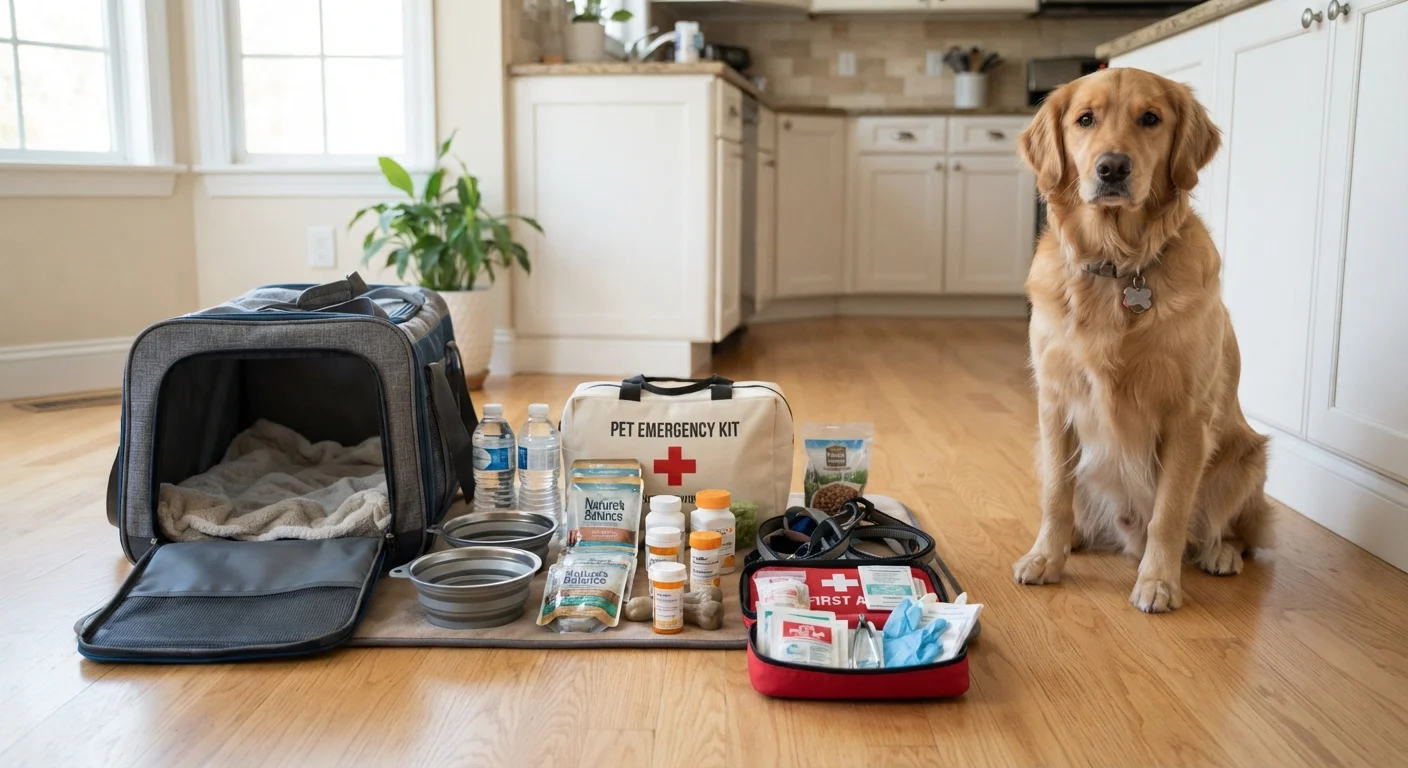
Prepare Your Emergency Kit Early
Don't wait for a crisis to think about pet emergencies. Assemble a basic kit — with copies of vaccination records, a week's worth of food, medications, and your vet's after-hours contact — within the first month of ownership. Updating it annually takes only minutes but can be critical when time is short.
It is also worth preparing for the unexpected before a crisis forces your hand. Our pet emergency preparedness checklist walks you through building a kit, organizing medical records, and planning evacuation scenarios — all steps best taken before you need them.
Your First Veterinary Visit
Scheduling a wellness exam within the first week of bringing your pet home is one of the highest-impact actions a new owner can take. This visit establishes a health baseline, identifies any conditions the animal arrived with, and gives you expert guidance tailored to your specific pet.
What to Expect at a Wellness Exam
- Physical assessment: The veterinarian will check weight, teeth, eyes, ears, coat, and organ function.
- Vaccination review: Your vet will confirm which vaccines have been given and recommend a schedule going forward.
- Parasite screening: Fecal tests for intestinal parasites and recommendations for flea, tick, and heartworm prevention are standard.
- Microchipping: If your pet isn't already microchipped, this is a good time to have it done. It significantly improves the odds of reunion if your pet is ever lost.
- Spay/neuter discussion: If applicable, your vet will advise on appropriate timing based on species, breed, and age.
Bring any records provided by the shelter or breeder, and come prepared with questions. For broader health guidance as your pet ages, see our pet health resource hub.
This article provides general educational information about pet care and is not a substitute for guidance from a licensed veterinarian. Always consult a qualified veterinary professional for advice specific to your pet's health and needs.
Building Routines That Support Long-Term Wellbeing
Animals are creatures of habit, and consistent daily routines directly support physical health and behavioral stability. Structure reduces anxiety, aids in house-training, and makes it easier to spot when something is off.
Core Routine Elements
- Feeding schedule
- Feed at the same times each day rather than free-feeding, which makes it easier to monitor appetite changes — an early indicator of illness.
- Exercise and enrichment
- Dogs need daily walks and play; the amount varies by breed and age. Cats benefit from interactive play sessions and vertical spaces to climb. Mental stimulation is as important as physical activity for most species.
- Socialization
- Exposing puppies and kittens to a variety of people, sounds, and environments during their developmental windows (roughly the first 3–4 months) shapes their temperament for life. Work with your vet on safe socialization timing around vaccination schedules.
- Grooming
- Regular brushing, nail trims, and ear checks prevent common problems from escalating. Begin handling ears, paws, and mouths early so your pet becomes comfortable with grooming as routine rather than stressful.
As your pet moves through different life phases, their needs will shift. Our guide to routine pet care across life stages covers how feeding, exercise, and health priorities evolve from puppyhood or kittenhood through senior years. For broader ownership guidance, the pet ownership tips hub covers training, behavior, and the practical realities of living with animals day to day.