Why Dogs Depend on Predictability
Dogs are not simply adaptable companions — they are pattern-recognition machines. Decades of behavioral research and veterinary observation consistently show that dogs experiencing unpredictable environments exhibit higher cortisol levels, increased vigilance, and a greater frequency of stress behaviors such as excessive barking, destructive chewing, and house-training failures.
A reliable daily routine communicates safety. When your dog knows that a walk follows breakfast and that quiet time comes after play, they can relax instead of scanning constantly for what happens next. This is especially important for dogs with fearful temperaments, rescue dogs adjusting to a new home, or puppies still building their understanding of the world.
For new pet owners, our guide to bringing a pet home for the first time walks through how to layer a routine into that critical first week. And if you want to understand broader daily care across different life stages, see our complete overview of routine pet care.
Consistency Matters More Than Perfection
You don't need a military-precise schedule — but predictability is essential. Dogs read patterns in your behavior, sounds, and environment to anticipate what comes next. When those patterns disappear without warning, it can trigger anxiety, destructive behavior, or house-training regressions. Aim for reliable timing, not a rigid clock.
Building the Routine: What You'll Need
Before mapping out your dog's day, gather a few basics and confirm some foundational information. Setting up the right tools and knowing your dog's specific needs makes consistency much easier to maintain.
What you will need
Measuring cup or kitchen scale
Ensures accurate, consistent portion sizes at each meal to prevent over- or underfeeding.
Leash and collar or harness
Required for safe, structured daily walks that form the backbone of your dog's exercise routine.
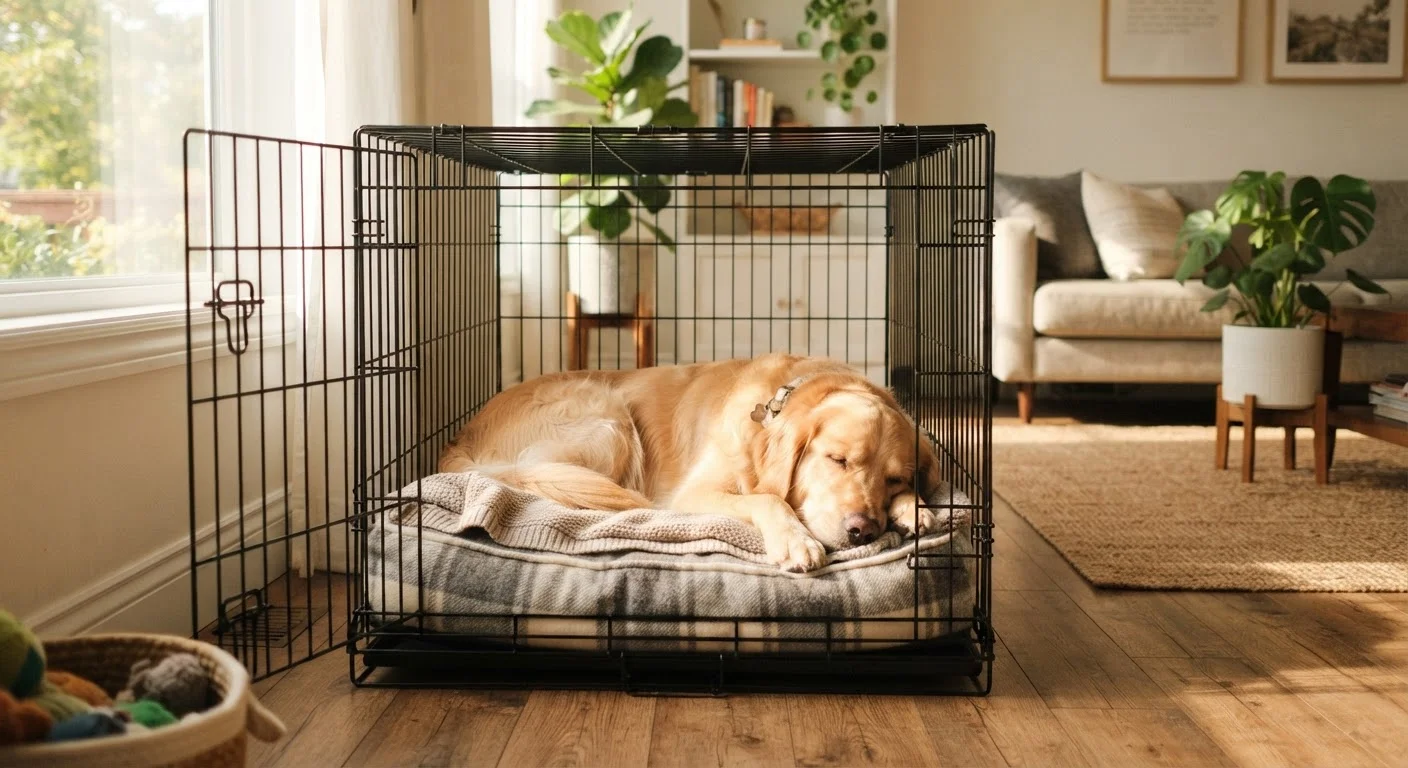
Dog crate or designated resting space
Provides a predictable, calm location for rest periods, which helps dogs decompress and self-regulate.
Puzzle feeder or enrichment toy
Extends mental engagement during low-activity windows, preventing boredom-driven behavior.
For dogs who will be spending time alone at home, it's worth reading about crate training versus free-roaming — the approach you choose will shape how you structure rest periods and unsupervised windows in the routine.
Step-by-Step: Structuring Your Dog's Day
The steps below outline a practical daily framework you can adapt to your household schedule. Follow them in order when first establishing a routine — once each element is stable, the whole schedule becomes self-reinforcing.
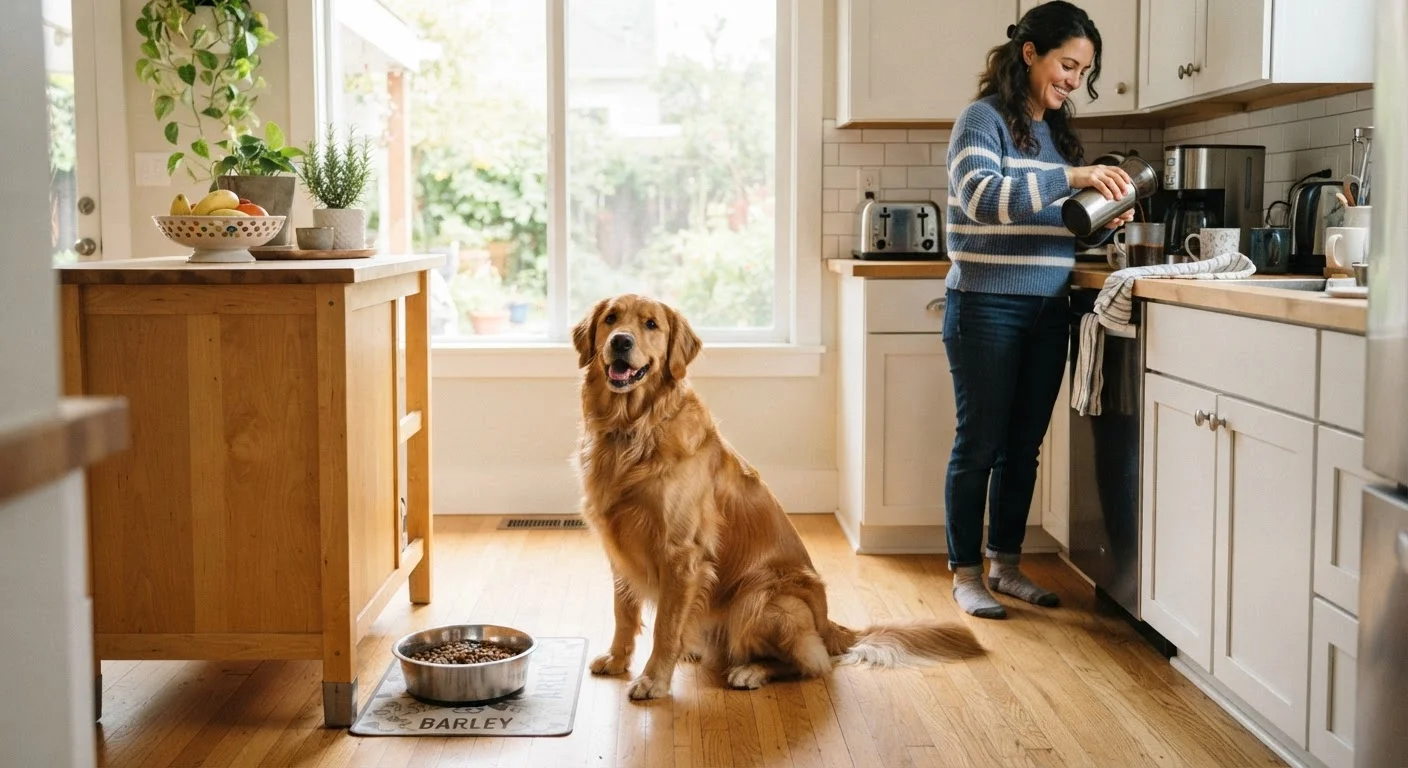
Anchor your dog's day with fixed feeding times
Choose one or two feeding windows and hold to them daily. Most adult dogs do well with two meals — morning and evening — spaced roughly 10–12 hours apart. Puppies typically need three to four smaller meals. Set portions based on your dog's weight, age, and activity level, using your veterinarian's guidance rather than the bag's serving chart alone.
Consistent mealtimes regulate digestion, help predict bathroom needs, and give your dog a clear daily anchor point.
Schedule walks at predictable times each day
Map out at least two structured walks per day — one in the morning and one in the evening. The duration depends on your dog's breed, age, and energy level: a young border collie needs far more than a senior basset hound. Even low-energy breeds benefit from the mental stimulation of outdoor smells and environments, not just the physical exercise.
Walks also become natural bathroom opportunities, which helps regulate elimination and reduces accidents indoors.
Build in a dedicated play and enrichment window
Set aside 15–30 minutes for intentional play or enrichment each day. This could be fetch, tug, training exercises, or a puzzle feeder. Mental stimulation is just as important as physical activity — dogs who are mentally tired are calmer and less destructive.
Short, daily training sessions (5–10 minutes) are particularly valuable because they reinforce your bond and give your dog a sense of accomplishment.
Designate quiet rest periods
Dogs sleep 12–14 hours per day on average. Rather than letting rest happen randomly, create one or two predictable downtime windows — for example, after the morning walk and again in the early afternoon. Direct your dog to their designated resting space using a consistent cue word or gesture.
This helps dogs learn to settle on their own without requiring constant stimulation, which is a key skill for reducing anxiety.
Create a consistent pre-bedtime wind-down
End each day the same way: a final bathroom outing, a calm interaction (gentle petting or quiet time — not vigorous play), and settling into a sleeping space. Doing these steps in the same order signals to your dog that the active part of the day is over.
Dogs who have a clear nighttime cue tend to sleep through the night more reliably, which benefits both the dog and the household.
Adjust the routine as your dog's life stage changes
A routine that works for a 6-month-old puppy will need revision by the time that dog reaches 7 or 8 years old. Older dogs often need shorter, more frequent walks, earlier bedtimes, and adjusted portion sizes. Stay attentive to behavioral and physical signals that your dog's needs have shifted, and revisit the schedule with your veterinarian at annual wellness visits.
Use Transitions as Cues
Dogs pick up on contextual cues faster than explicit commands. Putting on your walking shoes, picking up keys, or setting down a food bowl all become reliable signals. Deliberately using the same actions in the same order each time helps your dog understand what's coming and reduces anticipatory restlessness.
Common Pitfalls and How to Avoid Them
Most routine breakdowns come from a few predictable sources. Understanding them in advance helps you course-correct before behavior problems develop.
- Irregular feeding times: Skipping or shifting meals by several hours disrupts digestion and creates unpredictable bathroom timing. Try to keep meals within a 30-minute window of the target time.
- Skipping walks on low-energy days: Even shortened walks preserve the routine's structure. A 10-minute outing is better than none for maintaining the pattern your dog relies on.
- Overreacting to minor accidents: Punishment-based responses to house-training lapses can increase anxiety and make the problem worse. If regressions occur, revisit whether the schedule has shifted or whether a health issue may be contributing.
- Abrupt schedule changes: When your schedule must change — daylight saving time, a new job, travel — transition gradually over several days rather than switching all at once.
Watch for Signs of Over-Reliance
While routine is healthy, dogs who cannot tolerate any variation may be developing separation anxiety or an anxiety disorder. If your dog panics at minor schedule shifts, shows destructive behavior during absences, or cannot settle without constant reassurance, consult your veterinarian or a certified applied animal behaviorist for guidance.
It's also worth noting that some well-meaning habits can work against your dog's wellbeing in subtle ways. Our article on everyday habits that quietly undermine your pet's health covers several patterns that owners often don't realize are problematic.
This article provides general pet care information for educational purposes only. It is not a substitute for personalized veterinary advice. Always consult a licensed veterinarian for guidance specific to your dog's health, age, and individual needs.