The Core Difference: Chemistry vs. Friction
Exfoliation — the process of removing dead skin cells from the surface — is one of the most impactful steps you can add to a skincare routine. But not all exfoliation is equal. The two main camps work through completely different mechanisms, and understanding how each one operates helps you choose the right tool for your skin's actual needs.
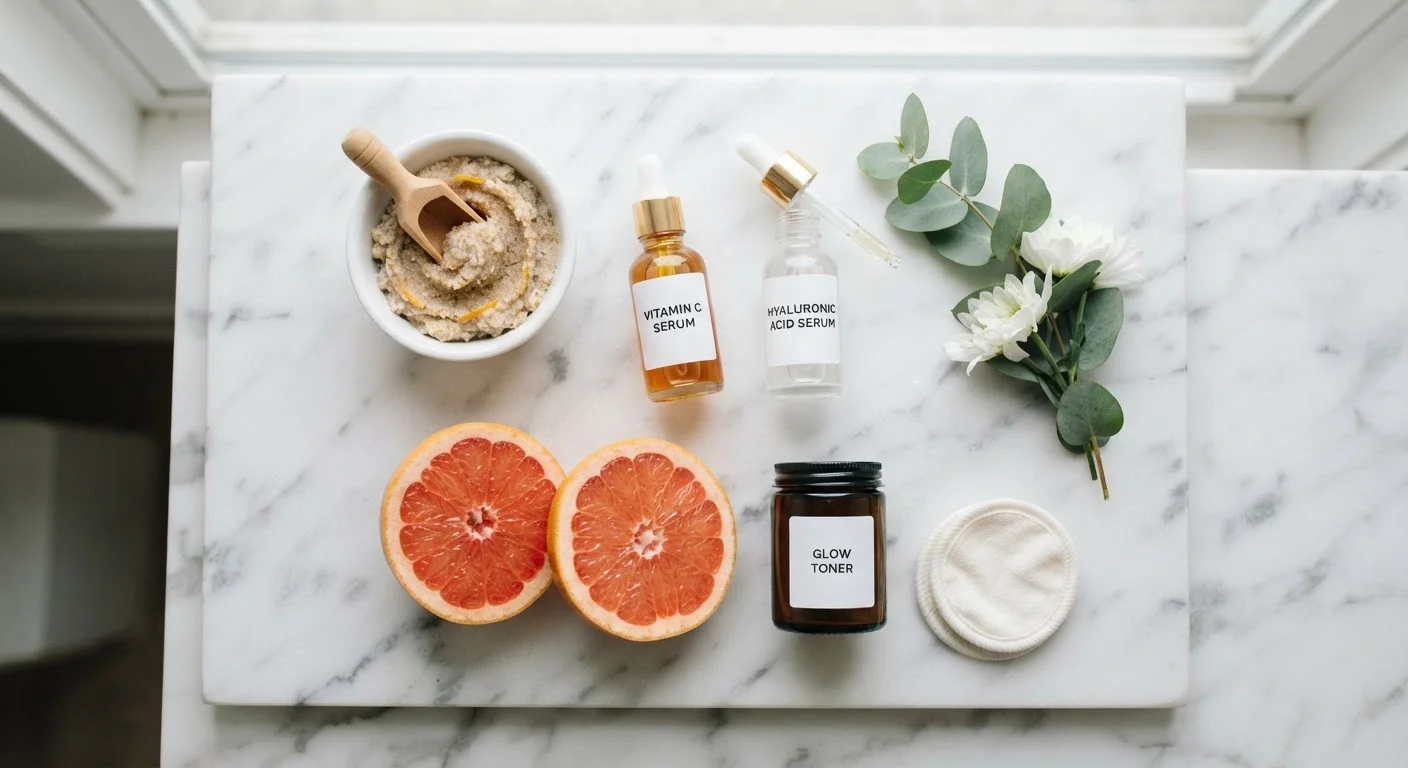
Chemical exfoliants use active acids or enzymes to loosen the bonds holding dead cells together. Rather than scrubbing anything away, they dissolve the "glue" that keeps dull, dead cells stuck to the surface. The most common types are alpha hydroxy acids (AHAs) — like glycolic and lactic acid — which work on the outer surface of the skin, and beta hydroxy acids (BHAs) like salicylic acid, which are oil-soluble and can penetrate into the pore lining. Enzyme exfoliants (often derived from fruits like papaya or pineapple) offer a gentler variation, breaking down protein bonds in dead skin cells without acids.
Physical scrubs, on the other hand, use abrasive particles — sugar, salt, finely ground seeds, or synthetic microbeads — to manually buff away dead cells through friction. The action is mechanical: you're physically dislodging surface buildup rather than dissolving it.
To understand where exfoliation fits in your overall approach, see how each skincare step works and why sequence matters.
| Criterion | Chemical Exfoliants | Physical Scrubs |
|---|---|---|
| How it works | Dissolves bonds between dead skin cells | Manually buffs away dead skin via friction |
| Best skin types | Oily, acne-prone, dry, uneven tone | Normal to combination, non-sensitised skin |
| Depth of action | Surface to pore lining (BHAs) | Outer surface only |
| Results timeline | Gradual improvement over weeks | Immediate surface smoothness |
| Ease of use | Requires attention to concentration and layering | Intuitive, no wait time |
| Risk of irritation | Low to moderate if used correctly | Higher if particles are coarse or pressure is heavy |
| Suitable for active breakouts | Yes (especially BHAs) | Generally not recommended |
What Each Method Does Well — and Where It Falls Short
Chemical exfoliants shine when consistency and evenness matter. Because they work across the entire applied area simultaneously, they tend to produce more uniform results than manual scrubbing, which applies uneven pressure. AHAs are particularly associated with improving the look of dull, dry, or sun-damaged skin over time. BHAs are a go-to for oily and breakout-prone skin because of their ability to work inside the follicle — something topical friction can't accomplish. The main caveats: acids require some awareness. Concentration, pH, contact time, and how often you use them all affect results and tolerability. Overuse can compromise the skin barrier.
Physical scrubs deliver immediate gratification — skin feels noticeably smoother right after use. They're also intuitive: no waiting, no pH considerations, no special layering rules. The limitation is that particle size and pressure matter enormously. Coarse or irregularly shaped particles used aggressively can create micro-abrasions in the skin. Finely milled, rounded particles used with a light hand are far less likely to cause issues. It's worth noting that many dermatologists caution against very harsh scrubs on active breakouts or inflamed skin, as friction can spread bacteria and worsen irritation.
A Note on "Natural" Scrubs
Ingredients marketed as natural — like walnut shell powder or apricot kernel — aren't automatically gentler. Some natural abrasives have jagged, irregular edges that can be harsher on skin than finely milled synthetic alternatives. The shape and size of the particle matters more than whether it's derived from a plant. If you prefer a physical scrub, look for fine, rounded particles regardless of whether the source is natural or synthetic.
Several popular exfoliation myths — like "you need to feel the tingle to know it's working" — can lead to overuse that does more harm than good. Effective exfoliation doesn't have to be aggressive.
How to Choose — and How Often to Use Each
The right choice depends on your skin type, concerns, and how much routine complexity you're comfortable with. Neither method is universally superior — both can be effective and both can cause problems when misused.
A general starting point: if your concerns include blackheads, breakouts, or oiliness, a BHA chemical exfoliant is worth exploring. If you're working on dullness or uneven texture and have drier skin, an AHA may be a better fit. If you simply want a once-a-week surface refresh with no product layering involved, a gentle physical scrub with fine particles is a reasonable choice.
Frequency matters more than most people realise. For most skin types, exfoliating two to three times per week is a reasonable ceiling — and once a week is plenty for sensitive skin. Signs of over-exfoliation include persistent redness, tightness, increased breakouts, or a shiny, almost waxy texture. When any of those appear, scaling back is the right move.
2–3x
Maximum weekly exfoliation frequency for most skin types
General guidance from dermatology sources suggests most people benefit from exfoliating no more than two to three times per week, with sensitive skin types doing better at once weekly.
~8–9%
AHA concentration considered a threshold for significant efficacy
Cosmetic chemistry literature generally indicates that AHA concentrations around 8–10% at an appropriate pH are needed to produce meaningful exfoliation effects, compared to lower concentrations in many rinse-off products.
It's also worth keeping ingredient compatibility in mind. Pairing a strong acid exfoliant with other active ingredients on the same night can push skin toward irritation. Learn which skincare ingredients don't pair well before stacking products. And if you're working with a tight routine budget, exfoliation is one area where simplifying often still delivers results.
This article is for general informational and educational purposes only. If you have a skin condition or concerns about your skin health, consult a qualified dermatologist or healthcare professional for personalised guidance.