What a Budget-Friendly Routine Actually Needs
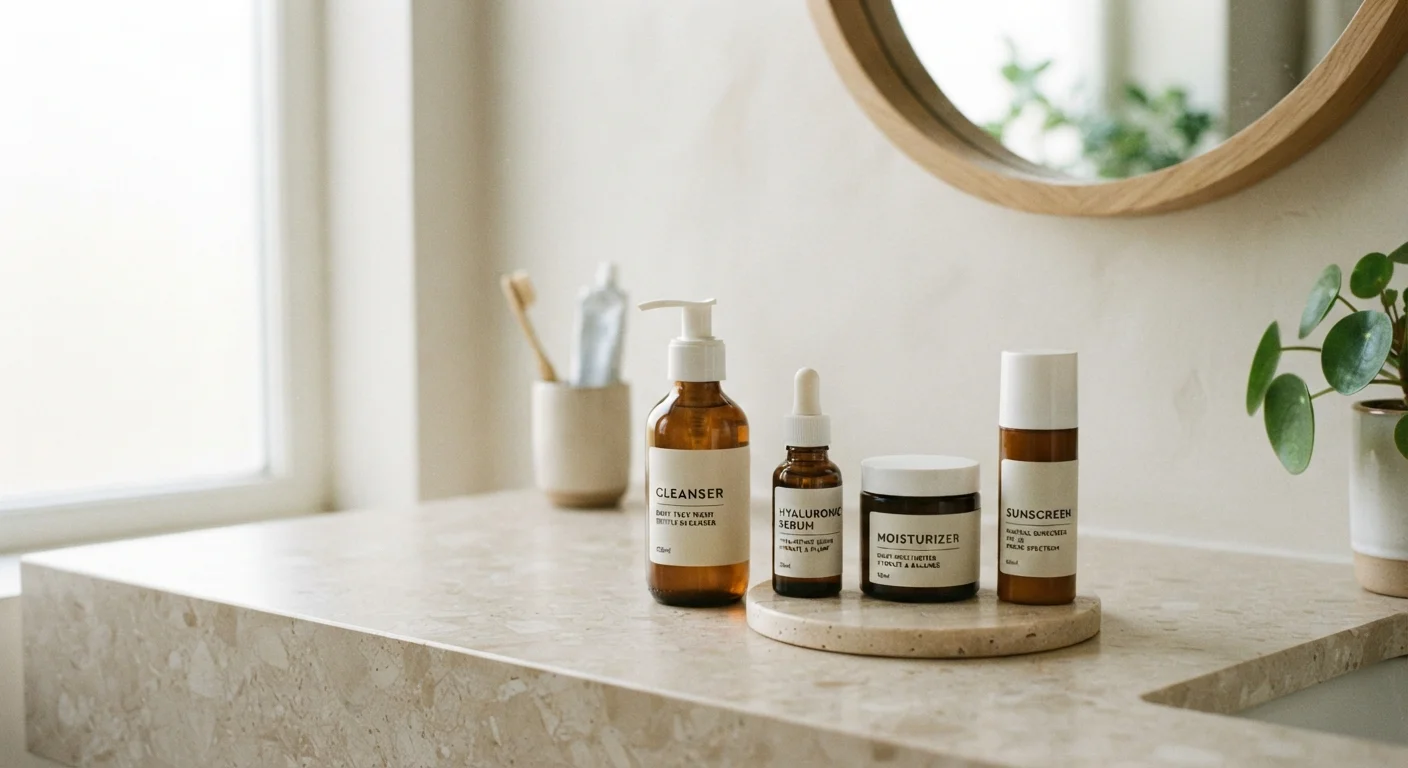
Skincare marketing has a talent for making every step feel non-negotiable. In reality, dermatologists broadly agree that most people's skin needs just three things: a gentle cleanser, a moisturizer suited to their skin type, and a broad-spectrum SPF during the day. Everything else — toners, essences, facial mists, multi-step serums — layers on top of that foundation. They may offer real benefits, but they're additions, not requirements.
Understanding this shifts the budget conversation entirely. If you need to trim, you're trimming the extras. If you're starting from scratch, you can build toward those extras gradually rather than purchasing everything at once.
Ingredient quality matters more than price. Skincare actives like niacinamide, hyaluronic acid, and glycerin appear across price tiers — the markup often reflects packaging, fragrance, and branding rather than efficacy. Learning to read an ingredient label is one of the most cost-effective skills you can develop.
Reduces cost without sacrificing core skin health
The evidence-backed essentials — cleanser, moisturizer, SPF — are available at low price points. Skipping non-essential steps can cut routine costs significantly without undermining skin barrier function or sun protection.
Easier to identify what's working or causing reactions
Fewer products means fewer variables. If your skin reacts to something, a short routine makes it far easier to pinpoint the culprit — a distinct advantage over a ten-step lineup.
Simpler routines are easier to maintain consistently
Consistency is widely considered more important than complexity in skincare. A two- or three-step routine faces less resistance at 11pm or 6am than an involved regimen.
Lower risk of over-layering or ingredient conflicts
Some active ingredients don't combine well — certain acids alongside retinoids, for instance, can cause irritation. Using fewer products reduces the chance of accidental incompatible pairings.
Reduces product waste and expired inventory
Skincare products have shelf lives. Owning fewer products means you're more likely to use each one up before it expires, stretching the value of every purchase.
The Real Trade-Offs of Going Minimal
Simplifying isn't without its downsides. If you're managing a specific skin concern — persistent acne, dark spots, fine lines — a bare-bones routine may maintain your skin without meaningfully improving those issues. Actives like retinoids, vitamin C, or AHAs (alpha hydroxy acids) are where most of the targeted work happens, and they tend to sit at a higher price point or require more careful use. Dropping them to save money is understandable; just go in knowing what you're pausing.
There's also an adjustment period to watch for. When you cut products, your skin may temporarily behave differently — not necessarily worse, just recalibrating. Give any simplified routine at least four to six weeks before judging results. For guidance on what each product category is actually doing, this breakdown of routine steps is worth bookmarking.
Targeted concerns may progress more slowly
Active ingredients like retinoids, vitamin C, or chemical exfoliants address specific concerns such as hyperpigmentation, texture, or acne more directly than a basic routine can. Removing them to cut costs means addressing those issues more gradually, if at all.
Temptation to compensate with more frequent switching
Budget constraints sometimes lead to buying whatever's cheapest at the time rather than a consistent formula. Frequent product switching can disrupt skin more than a simple, stable routine.
Some skin types genuinely benefit from extra steps
Very dry, oily, or condition-prone skin may benefit from a dedicated treatment step that a basic three-product routine doesn't include. What's 'extra' for one person may be functional for another.
Lower-priced formulas may include more irritants
Some budget products compensate for lower-cost actives with added fragrance or filler ingredients that can irritate sensitive skin. Reading labels carefully remains essential regardless of price tier.
Where to Cut Without Consequence
Certain products are almost universally skippable without noticeable impact for most people:
- Toners — originally designed to restore pH after harsh soaps. Modern gentle cleansers don't disrupt pH significantly, making traditional toners largely redundant.
- Eye creams — often a lighter version of your existing moisturizer with a premium price tag. A small amount of your regular moisturizer applied carefully around the eye area often works just as well for general hydration.
- Facial mists and essences — pleasant but rarely transformative. The hydration benefit is minimal compared to a solid moisturizer.
- Multiple serums — layering three or four serums can actually cause ingredients to compete or irritate skin. One well-chosen serum targeting your main concern is more sensible.
It's also worth checking for overlap in your current routine. Two products doing the same job isn't more effective — it's just more expensive. Common skincare myths often reinforce the idea that more is always better, but the evidence doesn't support it.
SPF Is Non-Negotiable, Even on a Budget
Daily broad-spectrum SPF is one of the most evidence-supported steps in any skincare routine, linked to reduced UV-related skin damage over time. Affordable SPF options exist across drug store and mass-market channels. If you're cutting back elsewhere, this is the one step worth protecting in your budget. Look for SPF 30 or higher as a general benchmark.
If your budget allows even one optional step, SPF protection — which technically sits in the foundational category — delivers more documented long-term skin benefit than any serum or treatment. It's the one place not to economise.
Top 3
Steps with the most evidence: cleanse, moisturise, SPF
Dermatology guidelines consistently identify sun protection, barrier support, and gentle cleansing as the foundation of skin health for all skin types.
4–6 weeks
Minimum time to assess a new routine
Skin cell turnover takes roughly four weeks, meaning meaningful results from any simplified or new routine typically require at least that long to evaluate fairly.
Making the Most of What You Keep
A smaller routine only works if you use it consistently. The psychological ease of a two-step or three-step routine is real — fewer decisions, less time, lower cost when you run out. Consistency is where most people underperform with elaborate routines, and applying products in the correct order ensures nothing cancels anything else out.
Before adding anything new — whether budget allows for it or not — run through a pre-use checklist to minimise reactions and wasted product. And if keeping skincare costs down is part of a broader effort, it connects naturally to budgeting strategies for tight incomes — small spending categories like personal care add up faster than most people track.
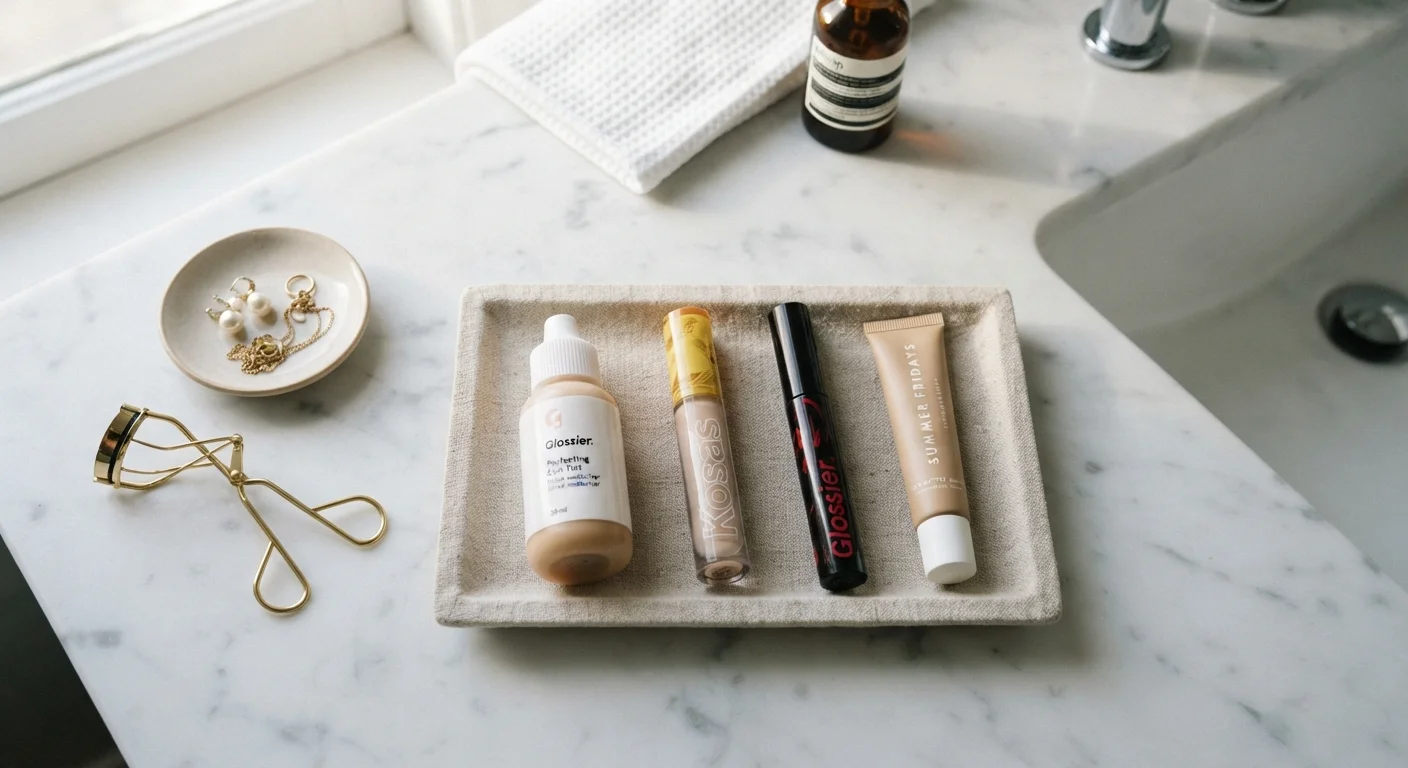
A streamlined routine paired with a five-minute morning makeup approach can meaningfully reduce both time and cost while keeping you looking and feeling put-together.
This article is for general informational purposes only and is not a substitute for professional skincare or medical advice. If you have specific skin concerns or conditions, consult a qualified dermatologist.