Why a Morning Routine Is Worth the Five Minutes
Skin isn't static overnight. While you sleep, it sheds dead cells, produces oil, and presses against pillowcases — so mornings are a natural reset opportunity. A short, intentional routine helps remove that buildup, reinforce your skin's protective barrier, and set up a clean canvas before you head into the day.
The bigger reason to care? Morning is when your skin faces its greatest environmental stressors: UV radiation, pollution, and dry air. A well-chosen routine addresses all of those threats proactively rather than reactively. For a deeper look at the biology behind each step, see what each skincare step actually does.
The encouraging news: you don't need an elaborate cabinet to see results. The most effective morning routines are short, consistent, and matched to your actual skin — not borrowed wholesale from someone else's shelf.
The Core Four: Your Non-Negotiable Steps
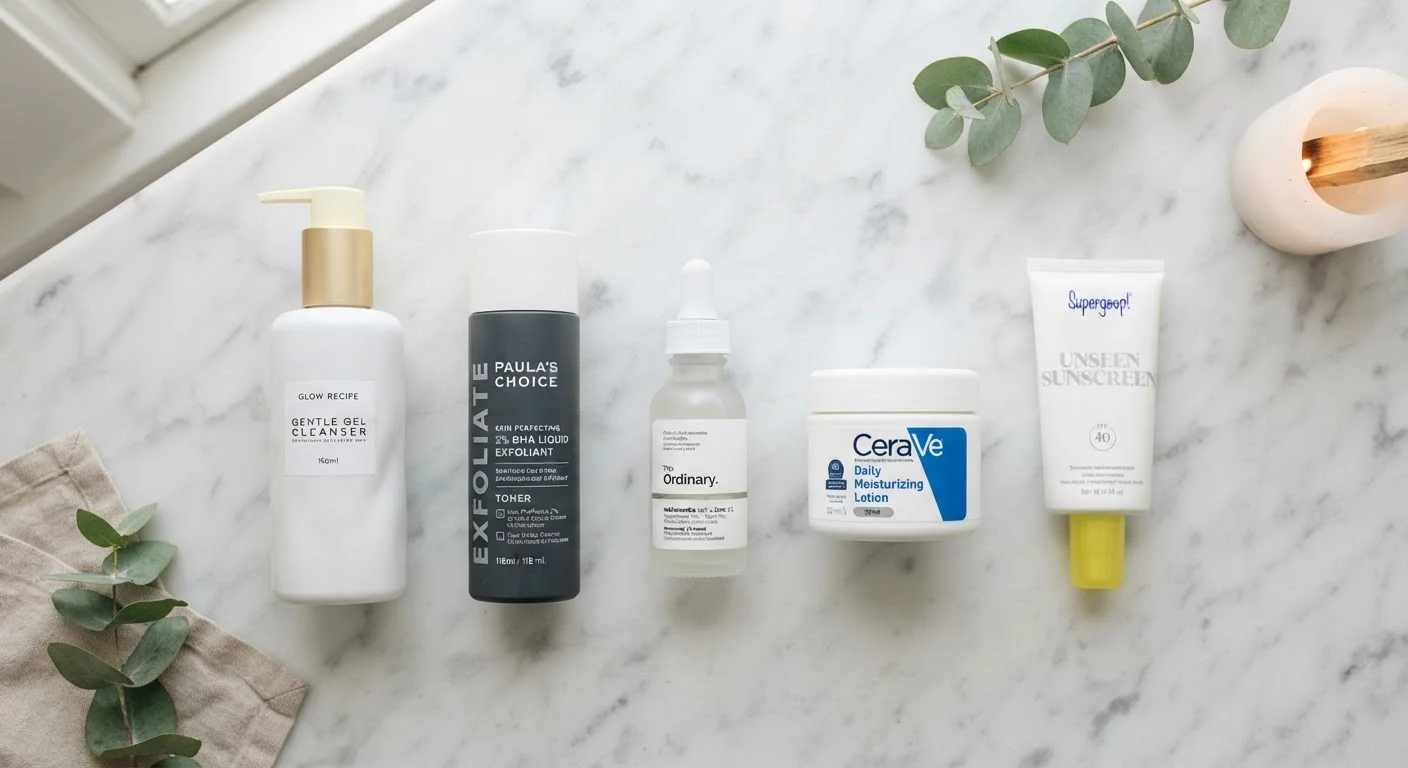
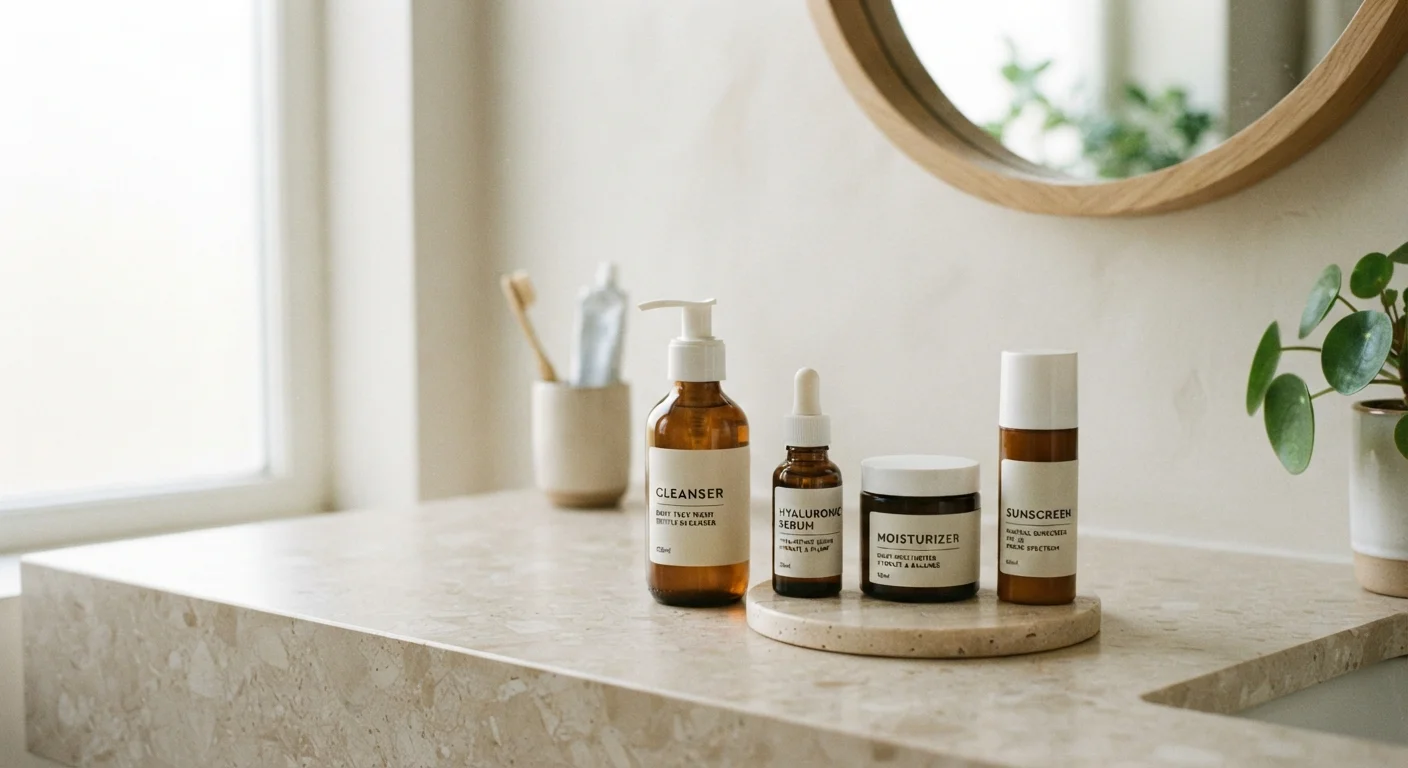
For beginners, four steps cover almost everything your skin needs in the morning:
- Cleanser — removes overnight oils and residue without stripping the skin barrier.
- Treatment serum (optional but useful) — delivers targeted ingredients like vitamin C or hyaluronic acid at a higher concentration than a moisturizer alone can provide.
- Moisturizer — seals in hydration and supports the skin's outer layer throughout the day.
- Sunscreen — the most research-supported step for preventing premature aging and protecting against UV damage.
Of these, sunscreen deserves special emphasis. Dermatologists consistently rank broad-spectrum SPF 30 or higher as the single most impactful daily skin health habit. Nothing else in your routine compensates for skipping it.
Start Smaller Than You Think You Need To
Resist the urge to buy a full routine at once. Start with just a cleanser and a sunscreen for the first week or two. Once those feel like second nature, layer in a moisturizer and eventually a serum. Gradual additions make it easier to spot what's working — and what isn't.
If budget is a concern, you can absolutely pare back to three steps — cleanser, moisturizer with SPF, or a standalone sunscreen — and still build a meaningful routine. Skincare on a tight budget covers where to simplify without losing results.
Matching Products to Your Skin Type
The same product that works beautifully for one person can be too heavy, too stripping, or too active for another. Getting a general sense of your skin type before buying anything saves you money and frustration.
Skin barrier
The outermost layer of skin that keeps moisture in and irritants out. A healthy barrier is the foundation of most skincare goals.
Broad-spectrum SPF
A sunscreen that protects against both UVA (aging) and UVB (burning) rays. The number indicates how much UVB protection is provided.
Non-comedogenic
A label indicating a product is formulated to avoid clogging pores, making it generally safer for acne-prone or oily skin types.
Ceramides
Lipid molecules naturally found in skin that help maintain the barrier and retain moisture. Often added to moisturizers for dry or compromised skin.
Serum
A lightweight, concentrated skincare product designed to deliver specific active ingredients — like vitamin C or hyaluronic acid — deeper into the skin.
Hyaluronic acid
A hydrating ingredient that draws water toward the skin. Despite the word 'acid,' it is not exfoliating and is generally well tolerated by most skin types.
- Oily skin — look for gel cleansers, lightweight oil-free moisturizers, and non-comedogenic (won't clog pores) sunscreens in lotion or fluid formulas.
- Dry skin — cream cleansers, richer moisturizers with ceramides or glycerin, and hydrating sunscreen formulas work well here.
- Combination skin — a gentle foaming cleanser and a medium-weight moisturizer often strike the right balance. You may need to adjust slightly for different zones of your face.
- Sensitive skin — fragrance-free, minimal-ingredient formulas reduce the risk of irritation. Introduce new products slowly and one at a time.
Keep in mind that skin type can shift with seasons, hormones, stress, and age. Our guide on adjusting your routine as the weather changes is a useful companion once you've got the basics down.
How to Layer Products in the Right Order
Skincare layering follows a simple rule: thinnest to thickest. Watery products penetrate first; heavier ones seal everything in.
- Cleanse and pat skin dry.
- Apply serum (if using) to damp or just-dry skin — a few drops are enough.
- Follow with moisturizer once the serum has had a moment to absorb.
- Finish with sunscreen as the final step, applying it generously to your face and neck.
One common mistake is applying sunscreen before moisturizer — this can dilute the SPF film and reduce its effectiveness. Sunscreen always goes on last in a morning routine, and before makeup if you wear any. If you want to go straight from skincare into a quick makeup look, five-minute makeup for weekday mornings picks up right where this routine leaves off.
Don't Mix Actives Without Research
Certain active ingredients — like vitamin C and niacinamide, or retinol and exfoliating acids — can interact in ways that reduce effectiveness or increase irritation when combined. As a beginner, choose products with straightforward ingredient lists and avoid layering multiple actives until you understand how each one behaves on your skin. When in doubt, consult a dermatologist.
Building the Habit: Keeping It Realistic
The best skincare routine is one you'll actually do. That sounds obvious, but it's worth saying plainly: a four-step routine done every morning beats a ten-step routine done twice a month.
A few practical ways to make it stick:
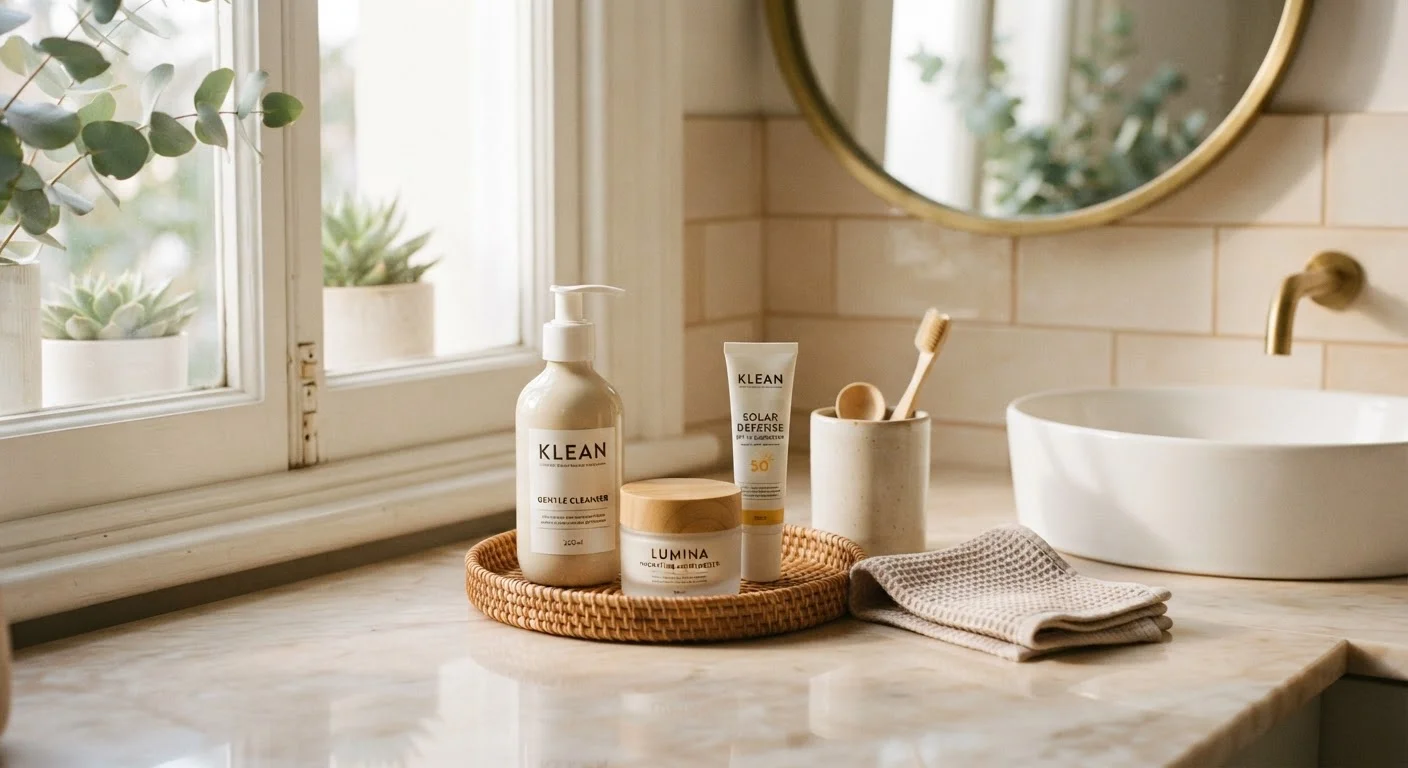
- Keep products visible. A small tray on the bathroom counter lowers the barrier between intent and action.
- Anchor it to something you already do. Applying skincare right after brushing your teeth pairs two habits together naturally.
- Track one thing, not everything. Sunscreen application is the single highest-value habit to lock in first. Build from there.
- Add products slowly. If you want to expand your routine later, introduce one new product at a time. Use the pre-use checklist before adding anything new.
Your morning routine and evening routine serve different purposes — morning is about protection, while evening is about repair and recovery. If you're curious how the two differ, nighttime skin repair breaks down exactly why your skin behaves differently while you sleep.
This article is for general informational purposes only and is not a substitute for professional dermatological advice. If you have a skin condition, persistent irritation, or specific skin health concerns, consult a licensed dermatologist or healthcare provider.