Why Seasons Affect Your Skin More Than You Might Expect
Your skin is in constant conversation with the environment around it. Humidity levels, UV index, wind, and indoor heating all influence how much moisture your skin retains, how fast its barrier breaks down, and how reactive it becomes. What works perfectly in August can leave skin tight and flaky by November — not because your skin changed fundamentally, but because the conditions it's working against shifted dramatically.
Understanding the difference between your underlying skin type and your current skin condition is one of the most useful frameworks here. Your skin type (oily, dry, combination) tends to stay relatively stable over time. But your skin condition — how it behaves right now — is highly responsive to seasonal factors. That distinction tells you whether to adjust products or just your application habits.
Seasonal Changes Affect More Than Just Dryness
Most people think of winter skincare solely in terms of moisture, but UV index, pollen levels, and even stress patterns shift seasonally too — and each can influence skin behavior. Spring, for instance, often brings increased sensitivity for those prone to reactive skin, due partly to environmental allergens. Keeping a simple log of how your skin behaves across months can help you spot patterns and plan ahead rather than reacting after the fact.
Best Practices for Seasonal Routine Adjustments
Rather than overhauling your routine from scratch every few months, think of seasonal skincare as a series of targeted swaps and additions. The following practices help you stay responsive without creating unnecessary complexity.
Switch your moisturizer weight as humidity levels drop.
Cold, dry air pulls moisture from the skin faster than humid air does. A lightweight gel moisturizer that felt perfect in summer can become insufficient once indoor heating kicks in and outdoor humidity falls. Heavier emollient formulas help compensate for the increased transepidermal water loss common in fall and winter.
Dial back active ingredients during seasonal transitions.
Exfoliating acids and retinoids are most effective on a stable skin barrier. During transition periods — particularly late fall when central heating first activates — skin is often temporarily more reactive and prone to sensitivity. Reducing frequency temporarily rather than eliminating these steps entirely prevents irritation while keeping progress intact.
Add a hydrating mist or essence layer in dry months.
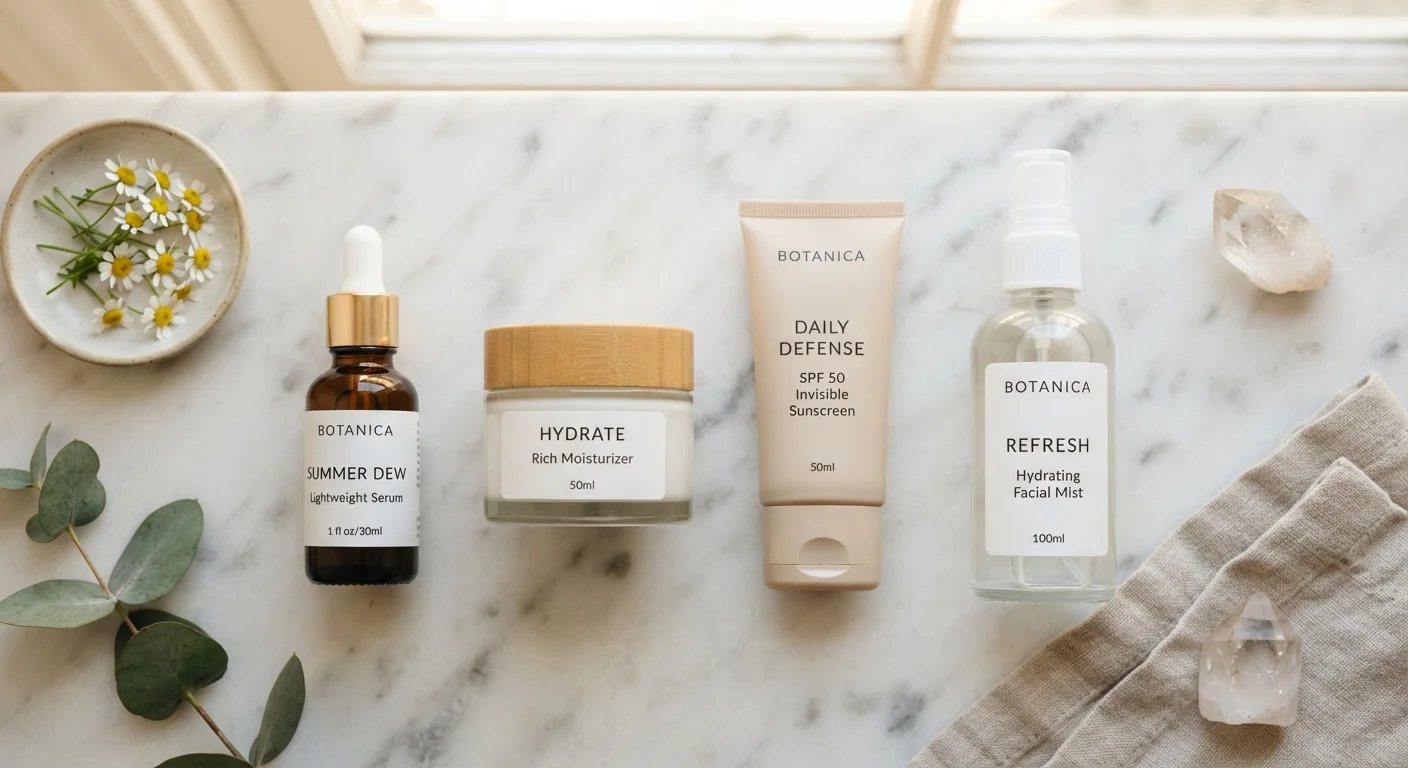
When the air can't supply ambient moisture, layering hydration directly onto skin before sealing it with a moisturizer makes a measurable difference. Humectant-rich mists or essences — those containing hyaluronic acid or glycerin — draw water to the surface and give barrier-support products something to work with.
Lighten up your cleansing routine in summer heat.
Higher humidity and increased sweating mean skin can feel oilier and more congested, which sometimes leads people to over-cleanse. Stripping the skin twice daily with strong cleansers disrupts the barrier and often triggers a compensatory oil increase. A gentle, low-pH cleanser keeps the surface clean without undermining skin health.
Reassess your SPF formula — not just your SPF number — each season.
The right sun protection formula for a sweaty, humid July day is rarely ideal for a cold, dry February. Heavy emollient sunscreens can feel uncomfortable in heat, while very lightweight ones may not provide enough barrier support in winter. Matching SPF texture to the season improves daily compliance — which matters more than the perfect formula used inconsistently.
Quick Wins You Can Apply Right Now
You don't have to wait until the season fully turns to start adapting. These immediate actions make a noticeable difference even if you only implement one or two.
If you're building from the ground up or refining the basics, the morning routine guide is a solid starting point for any season.
The One Constant: Sun Protection All Year
One of the most persistent myths in skincare is that sunscreen is a warm-weather accessory. In reality, UVA rays — the ones most associated with long-term skin changes — penetrate clouds and glass regardless of the temperature outside. What UV exposure does to skin over time is well-documented, and daily SPF use is one of the few skincare habits with broad scientific consensus behind it.
In summer, you may need water-resistant formulas and more frequent reapplication. In winter, a lighter SPF layered under a richer moisturizer tends to work better. The format changes; the habit doesn't. Your evening routine can then focus on repair and recovery after daily environmental exposure.
95%
UV radiation reaching Earth's surface that is UVA
According to the Skin Cancer Foundation, UVA rays make up approximately 95% of the UV radiation that reaches the Earth's surface and can penetrate clouds and glass year-round.
~30%
Drop in indoor humidity when heating activates
Indoor relative humidity can fall to 30% or lower when central heating runs in winter, according to environmental health researchers — a level that accelerates skin moisture loss.
This article is for general informational purposes only and is not a substitute for advice from a qualified dermatologist or skincare professional. Individual skin responses vary, and a licensed professional can provide guidance tailored to your specific needs.