What 'Fragrance' Actually Means on a Label
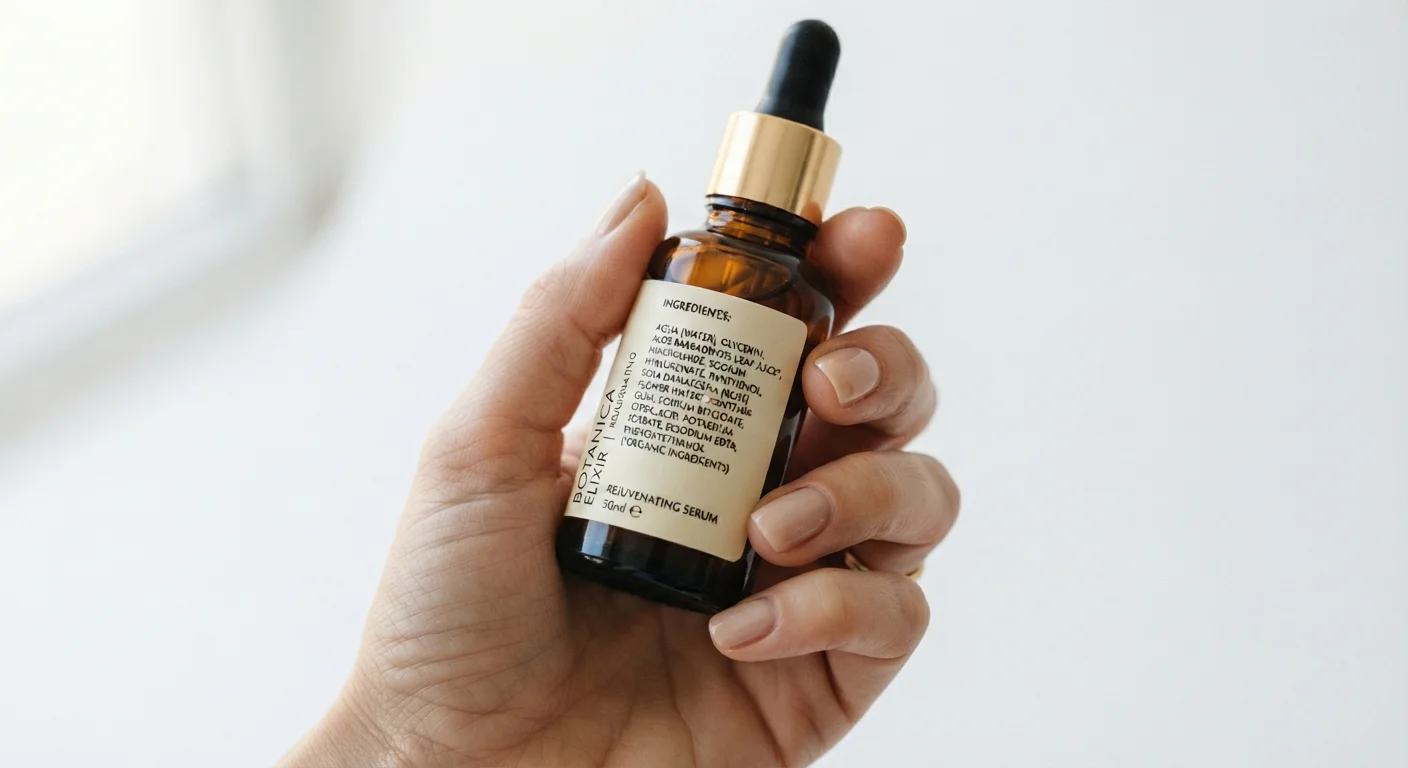
Pick up almost any skincare product and flip it over. Somewhere on that ingredient list, there's a good chance you'll spot the word fragrance — or its French equivalent, parfum. Both terms function as catch-all labels that can represent a single aromatic molecule or a proprietary blend of hundreds of different chemical compounds.
In the United States, the FDA permits manufacturers to list this entire blend simply as 'fragrance' without disclosing individual components, because fragrance formulas are considered trade secrets. This means a product's scent could come from synthetic chemicals, plant-derived extracts, or a combination of both — and the label won't spell that out.
Natural fragrance ingredients show up in other ways, too. Lavender oil, rose extract, linalool, limonene, and geraniol are all examples of botanically-sourced fragrance compounds that appear by their specific names. As you build confidence reading a skincare ingredient label, recognizing these names becomes easier.
The Trade Secret Loophole
Because fragrance formulas are protected as trade secrets under U.S. law, brands are not required to list every component. This means consumers cannot always determine from a label alone which specific fragrance chemicals a product contains. The European Union applies stricter rules, requiring individual disclosure of certain known allergens above specified concentrations.
Why Fragrance Gets Added to Products
Fragrance has no functional role in treating skin concerns. It doesn't hydrate, protect, or resurface. So why is it so common? The answer is largely sensory and commercial. A pleasant scent makes a product feel more luxurious, signals cleanliness, and can mask the earthy or medicinal smell of active ingredients like peptides or niacinamide.
Scent also plays a powerful psychological role. Research in consumer behavior consistently shows that how a product smells influences how people perceive its effectiveness — even when the formulation is identical. Understanding what each step in a skincare routine actually does helps put this into context: if an ingredient isn't contributing to skin function, it's contributing to experience.
~26
Fragrance allergens regulated in the EU
The European Union requires individual disclosure of 26 identified fragrance allergens on cosmetic labels when present above threshold concentrations, compared to the U.S. single 'fragrance' catch-all term.
1 in 10
People with fragrance allergy
Estimates from dermatology literature suggest roughly 1 in 10 people has some degree of fragrance sensitivity, making it one of the most prevalent contact allergens studied.
Top 5
Causes of contact dermatitis
Fragrance is consistently cited among the top causes of allergic contact dermatitis in dermatology patch-test studies conducted across North America and Europe.
Why Some People Actively Avoid It
Fragrance — whether synthetic or natural — is one of the most frequently identified causes of allergic contact dermatitis, a skin reaction triggered by immune response to a substance. Reactions can range from mild redness and itching to persistent inflammation and barrier damage.
People with sensitive skin, rosacea, eczema, or a compromised skin barrier are generally considered more vulnerable. However, sensitization can develop over time — meaning someone who used a fragranced product for years without issue may eventually develop a reaction. This is particularly relevant for leave-on products like moisturizers and serums, which have prolonged skin contact.
It's worth noting that 'natural' fragrance is not a guarantee of gentleness. Essential oils such as citrus, peppermint, and lavender contain potent aromatic compounds that are among the most common allergens in dermatology. The myth that natural always means safer is particularly worth re-examining here.
Test Before You Commit
If you're introducing a new product and you're unsure about fragrance sensitivity, try applying a small amount to the inside of your forearm for several days before using it on your face. This won't replace a professional patch test, but it can help you catch obvious reactions early. A dermatologist can perform formal patch testing if you suspect a fragrance allergy.
Navigating Fragrance-Free Shopping Without the Confusion
If you decide to reduce or eliminate fragrance from your routine, label reading becomes your best tool. The key distinction to remember: fragrance-free means no fragrance ingredients were used. Unscented typically means masking agents were added to neutralize a product's natural odor — those agents may themselves be fragrance compounds.
Beyond that single label, watch for essential oil names, 'natural fragrance,' and allergen disclosure terms like linalool, limonene, citronellol, or eugenol — all of which appear in ingredient lists when brands choose to break out individual components.
And if you're trying to figure out which products in your existing routine might be contributing to sensitivity, a good starting point is reviewing how you're layering products. Some irritation that seems fragrance-related is actually a compatibility issue between ingredients rather than fragrance alone.
This article is for general informational purposes only and does not constitute medical or dermatological advice. If you experience persistent skin reactions, consult a qualified dermatologist or healthcare professional.