It's Not About the Clothes—It's About the Mindset
Most style advice focuses on what to wear: which silhouettes flatter which shapes, which colors work for which seasons. But a fundamental piece gets overlooked—why some people feel naturally at ease in their clothing while others constantly second-guess themselves, regardless of what's in their closet.
Style confidence isn't a personality trait you're born with. It's a skill shaped by a web of non-appearance factors: your inner narrative, your decision-making habits, the messages you received growing up, and the environments you move through daily. Understanding these forces is the first step to dressing with genuine assurance.
As explored in what personal style actually means, developing a consistent look starts from the inside out—not from trend reports.
96%
of people link clothing choices to self-confidence
A survey by the American Psychological Association found that the vast majority of respondents said what they wear affects how confident they feel on a given day.
35+
decisions made about clothing per day on average
Research on daily decision-making estimates that adults make dozens of micro-decisions around appearance, contributing significantly to overall decision fatigue.
The Psychology Behind Getting Dressed
Psychologists have long studied the relationship between clothing and self-perception. The concept of enclothed cognition—explored in academic research—suggests that what we wear influences how we think and feel about ourselves. But the reverse is also true: how we feel about ourselves shapes what we reach for each morning.
Several psychological forces are at play:
- Self-efficacy beliefs: If you believe you're capable of making good style choices, you'll take more confident risks. If you don't, you'll default to safe, forgettable options.
- Identity congruence: Clothes that feel aligned with who you believe you are—or who you're becoming—feel comfortable. Clothes that feel like a costume create dissonance.
- Decision fatigue: Having too many choices doesn't necessarily expand freedom—it can paralyze it. People who've narrowed their preferences often dress more confidently because they know what works for them.
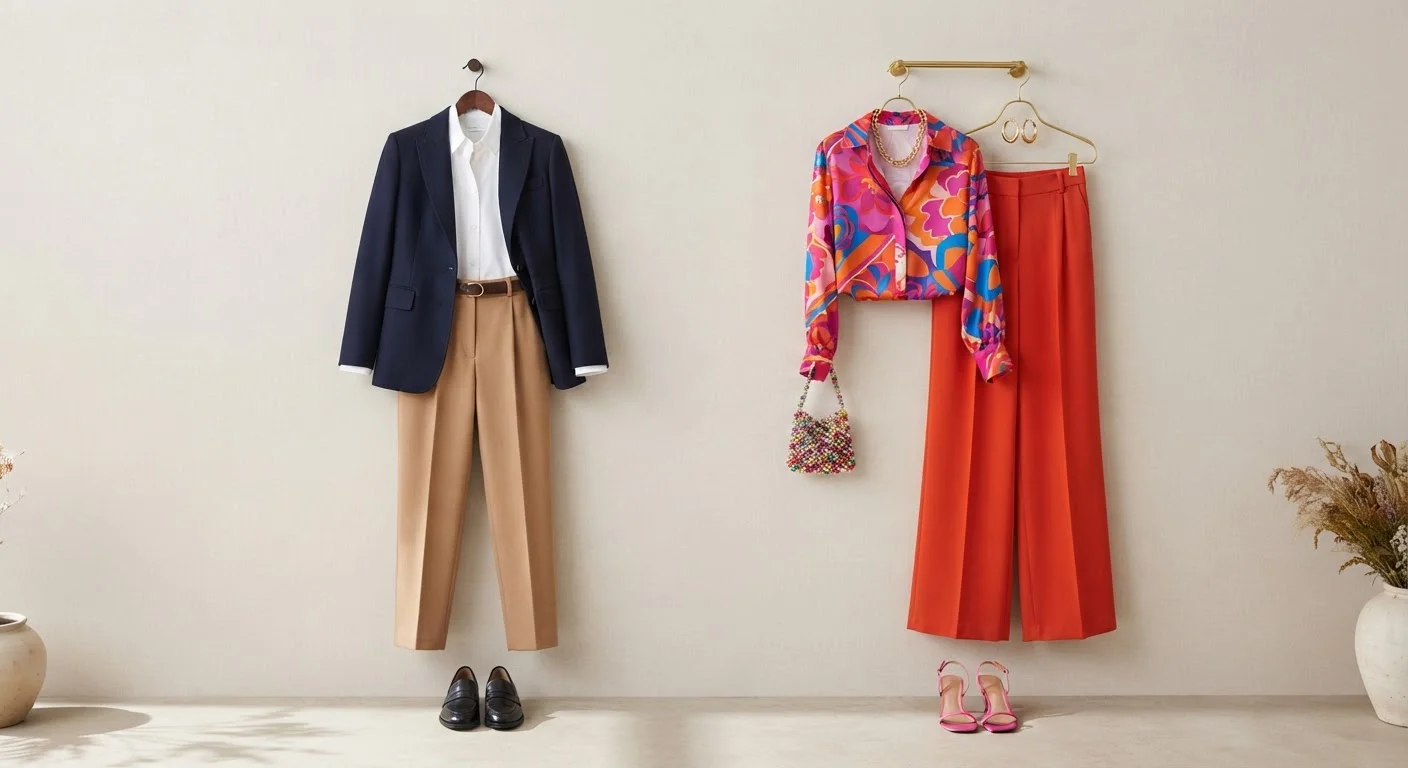
This is why dressing for your personality often leads to more consistent satisfaction than rule-based approaches alone.
“Clothing is a form of self-expression—there are hints about who you are in what you wear. Confidence comes from wearing something that reflects who you genuinely are, rather than who you think you should be.”
— Jennifer Baumgartner, Clinical psychologist and author of 'You Are What You Wear'
How Environment and Social Context Shape Your Style Voice
No one develops their aesthetic in a vacuum. Where you grew up, what was praised or criticized in your household, and the communities you belong to all leave fingerprints on how freely you express yourself through dress.
Research in sociology points to the concept of social identity—we use clothing partly to signal belonging to groups we value and to distinguish ourselves from those we don't. When your personal taste aligns with your social environment, confidence flows easily. When it doesn't, you may feel pressure to suppress or edit your style.
Workplace dress codes are one of the clearest examples of this tension. Navigating expectations while staying true to your aesthetic is a real skill—one covered in depth in when dress codes collide with personal style.
The key insight: external constraints don't have to shrink your style confidence. They can actually sharpen your self-knowledge by forcing you to identify what matters most to you within a given set of limits.
Building Lasting Style Confidence Through Habit
Confidence in any domain is built through repetition, reflection, and small wins—and style is no different. The people who dress most assuredly aren't necessarily those with the most fashion knowledge. They're the ones who've developed consistent habits around getting dressed.
Practically speaking, this looks like:
- Dressing intentionally each day rather than grabbing whatever is easiest
- Paying attention to how different outfits make you feel—not just how they look
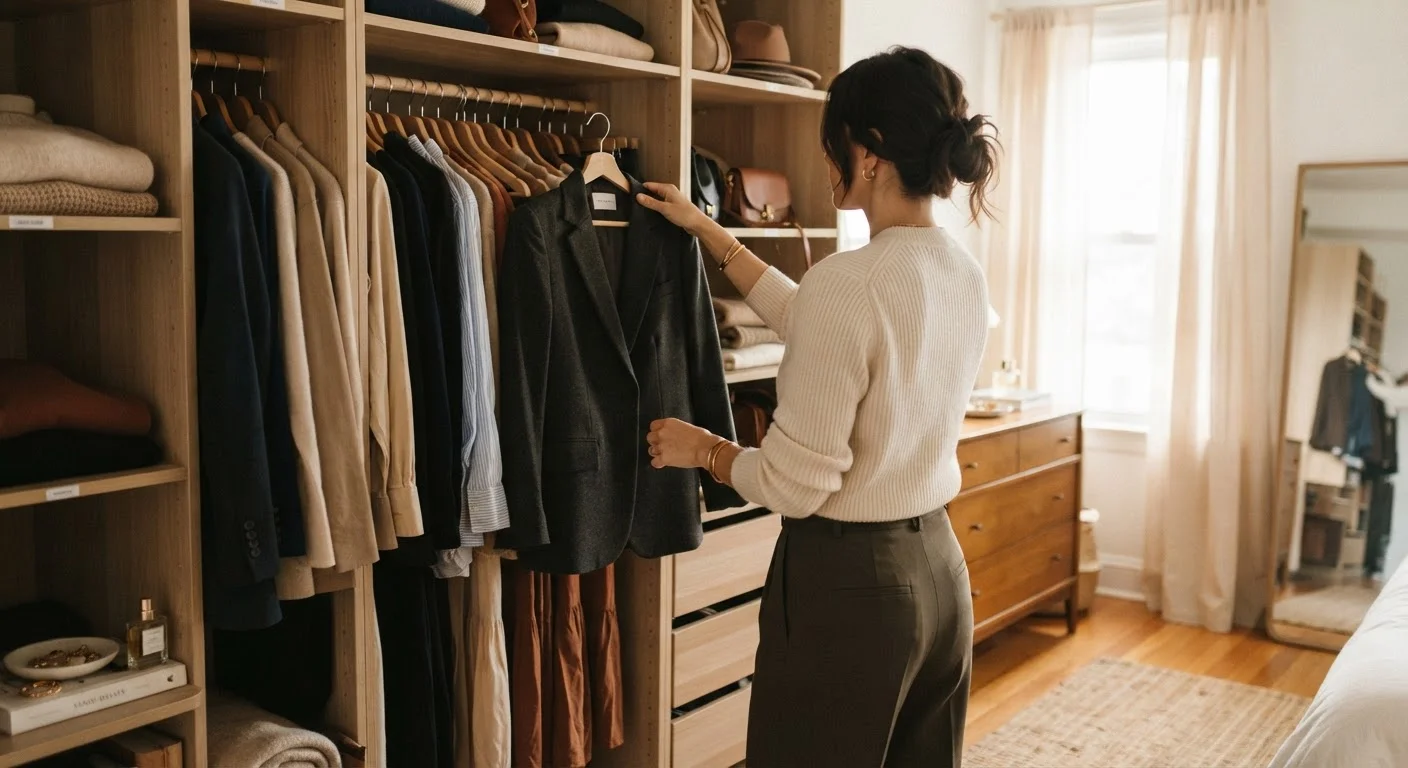
- Editing your wardrobe regularly to remove pieces that create doubt or discomfort
- Giving yourself permission to experiment in low-stakes situations
Try the 'How Does This Make Me Feel?' Test
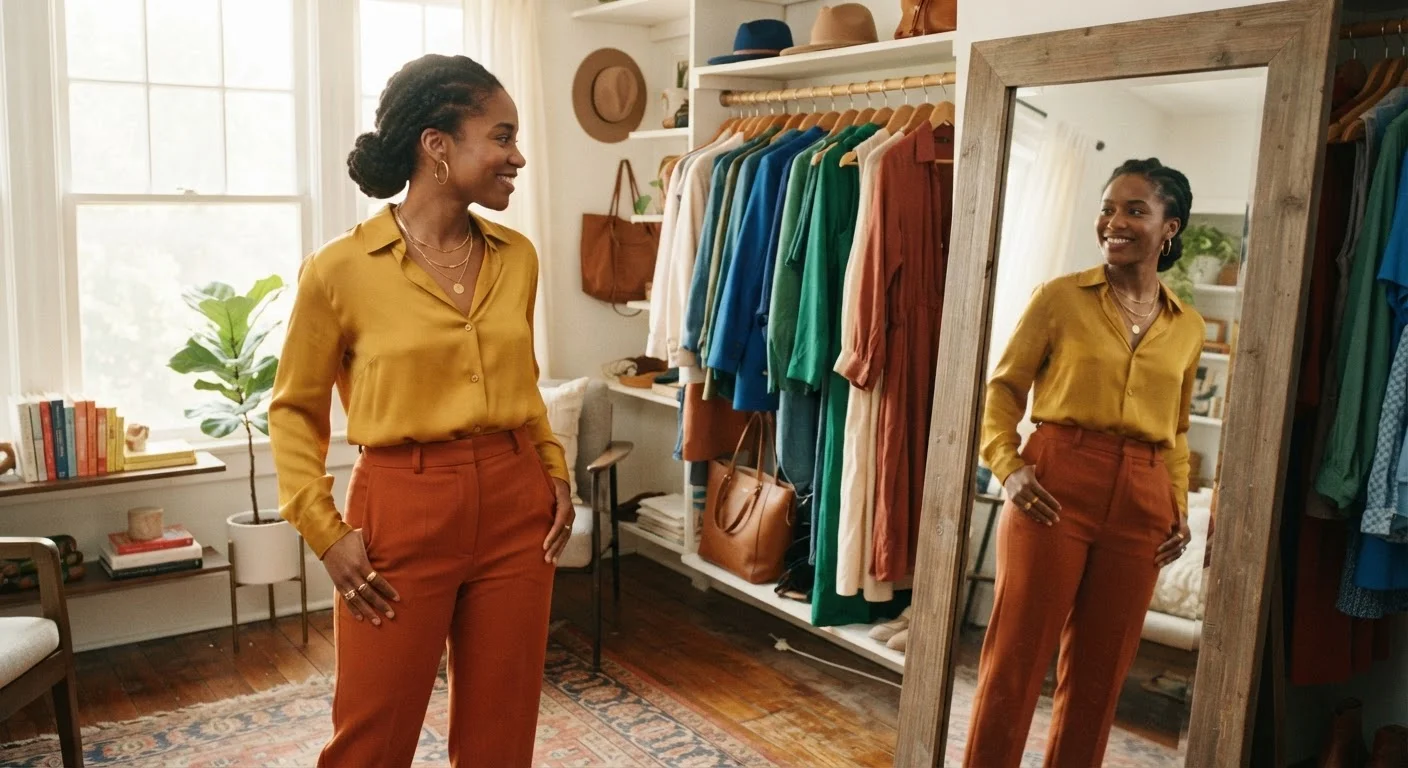
Before automatically re-hanging something you never reach for, put it on and pay attention to how it makes you feel—not how it looks. If it creates doubt, discomfort, or a sense of 'this isn't me,' that's useful data. Gradually editing for feel rather than appearance alone is one of the most effective ways to build a wardrobe that supports confidence.
Style confidence also deepens as your self-understanding evolves. Your aesthetic at 25 probably won't—and shouldn't—look the same at 45. How personal aesthetics shift across decades is worth exploring if you're in a period of style transition. And if you're building from the ground up, the fashion basics hub is a practical place to start.