
Why This Tension Exists — and Why It's Worth Solving
Dress codes exist for real reasons: to signal respect for an occasion, maintain professional cohesion, or honor cultural traditions. But they can feel like a direct confrontation with the identity you've carefully built through your wardrobe. The good news? That friction is almost always smaller than it appears.
Most dress codes define a minimum standard, not a uniform. A black-tie event requires formal attire — it doesn't specify which silhouette, fabric, or accessories you wear. A corporate office may require business professional — but that still leaves meaningful choices on the table. Learning to read dress codes as parameters rather than prescriptions is the first mental shift that changes everything.
If you haven't yet solidified what your personal style actually is, it's worth exploring that foundation first. Our guide on style archetypes can help you build that vocabulary — because knowing your aesthetic makes it far easier to adapt it for any setting.
Constraints Can Spark Creativity
Some of the most memorable personal style moments come from working within limits. Designers routinely cite creative constraints as catalysts for innovation — the same applies to your wardrobe. When total freedom is off the table, you're pushed to find the one detail that does the most work. That focus often produces outfits more considered and effective than anything you'd put together with an open closet.
How to Navigate Any Dress Code Without Losing Yourself
The steps below work across contexts — office dress codes, wedding guest attire, cultural ceremonies, and beyond. The same framework applies whether you're a maximalist working in a conservative industry or a minimalist attending a vibrant cultural celebration.
Decode what the dress code is actually asking for
Before you plan an outfit, understand the code's intent. "Black tie" signals formality and elegance. "Smart casual" signals polished but relaxed. "Traditional attire" at a cultural event may have specific garment or modesty requirements. Look up the event type, ask the host if needed, and identify the non-negotiable elements versus the flexible ones.
Identify your personal style signature
Your style signature is the repeating element that makes your outfits feel unmistakably yours — a love of bold color, an affinity for structured tailoring, a preference for layering, or a commitment to vintage pieces. Pin it down before you start dressing around a constraint. This is what you'll protect in the next steps. Our broader resource on building a personal style identity walks through this discovery process in depth.
Map your signature onto the dress code's flex points
Every dress code has fixed elements and flexible ones. A formal event fixes the formality level but rarely dictates fabric, cut, or color beyond "appropriate." A corporate dress code fixes professionalism but often leaves accessories, color palette, and silhouette open. List the fixed elements, then identify where you have room to move — that's where your signature lives.
Use accessories and details as your primary expression tools
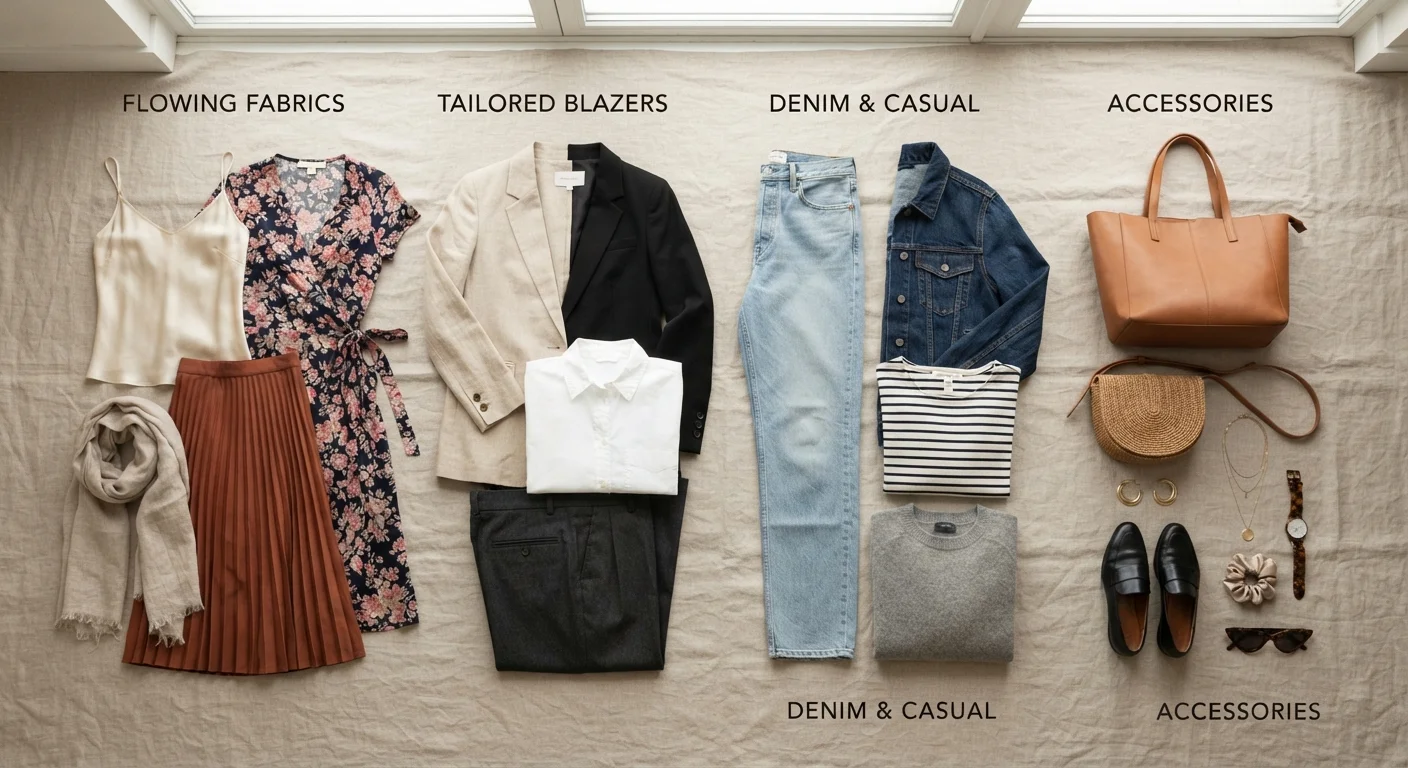
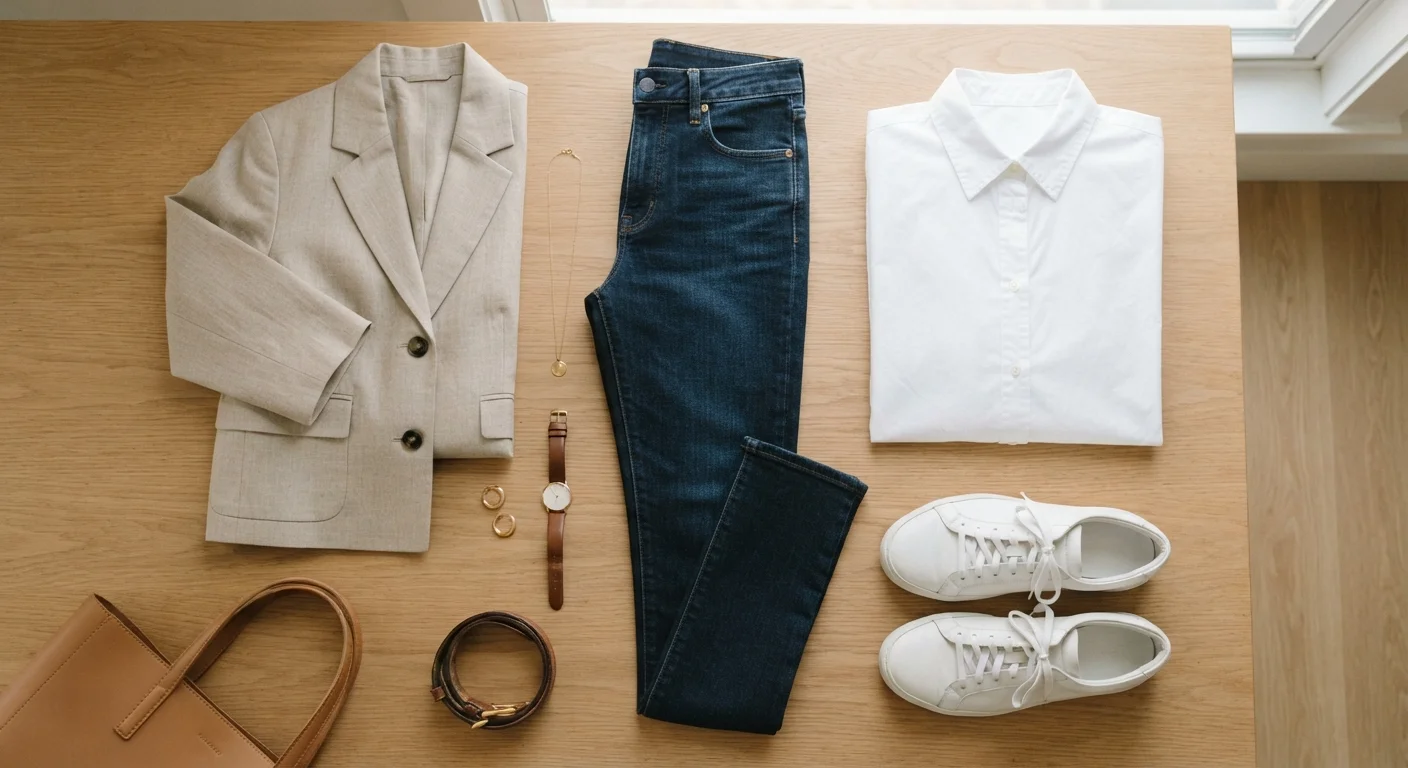
When the clothing itself must conform, accessories are your highest-leverage tool. A sculptural earring, a distinctive watch, an unexpected belt, a patterned pocket square, or a statement shoe can all signal personality within a constrained outfit. Texture and fabric choice within the approved silhouette are equally powerful — a velvet blazer reads formal but feels distinctive; a silk blouse in a bold print meets professional standards while carrying personality.
Do a reality check before you leave
Before finalizing the outfit, ask yourself two questions: Does this meet the dress code's actual requirements? And does it still feel like me? If the answer to both is yes, you've done it. If you've met the code but feel invisible in the outfit, go back to step 4. If you've preserved your style but stepped outside the code, revisit step 3. The goal is a genuine yes to both.
Once you've worked through this process a few times, it becomes instinctive. You stop seeing dress codes as walls and start seeing them as creative constraints — the kind that often produce more thoughtful outfits than total freedom does. For reliable outfit formulas that translate across occasions, outfit formulas that work across any occasion is a practical companion resource.
Don't Sacrifice the Occasion for the Outfit
Personal style matters — but so does reading the room correctly. An outfit that pulls focus at a somber occasion, or that disregards clear cultural expectations, can undermine the very confidence you were trying to project. Meeting the moment with respect doesn't mean erasing your identity; it means prioritizing appropriately, then finding your expression within that.
The Hardest Cases: Workplaces and Cultural Occasions
Two settings tend to create the sharpest tension between dress codes and personal style: the workplace and cultural or religious ceremonies.
At Work
Workplace dress codes vary enormously by industry. What passes as business casual in a creative agency would feel underdressed at a law firm. What business casual actually means in 2024 breaks down those industry-specific nuances. The key at work is to identify which elements of your style are low-stakes to preserve (a bold earring, a patterned tie, an unexpected shoe color) versus which are genuinely in conflict with the code.
At Cultural and Religious Events
These occasions call for a slightly different lens. Here, the dress code often carries deep meaning for the hosts and community — modesty requirements, color symbolism, or traditional garment expectations aren't arbitrary. Approach these as an opportunity to honor the context while still dressing with care and intentionality. Research the specific expectations ahead of time, and when in doubt, ask someone connected to the event.
For readers who want to go deeper on the personality-versus-rules question, dressing for your personality vs. following rules explores that balance thoughtfully.