Why Outfit Formulas Actually Work
Most mornings, the problem isn't a shortage of clothes — it's a shortage of clarity. Outfit formulas solve that by giving you a repeatable structure: a reliable combination of garment types that look intentional together. Think of them as templates, not uniforms. You swap out colors, textures, or specific pieces, but the underlying logic stays the same.
The bonus? Formulas work across body types, budgets, and personal aesthetics. They're not about following trends — they're about understanding what silhouettes and pairings are visually balanced. Once you internalize a handful of these, getting dressed stops being a daily negotiation with your closet.
For a deeper look at how to build the foundation these formulas rely on, check out our complete wardrobe guide. Below are the formulas worth committing to memory.
Dark Jeans + Tucked-In Top + Blazer
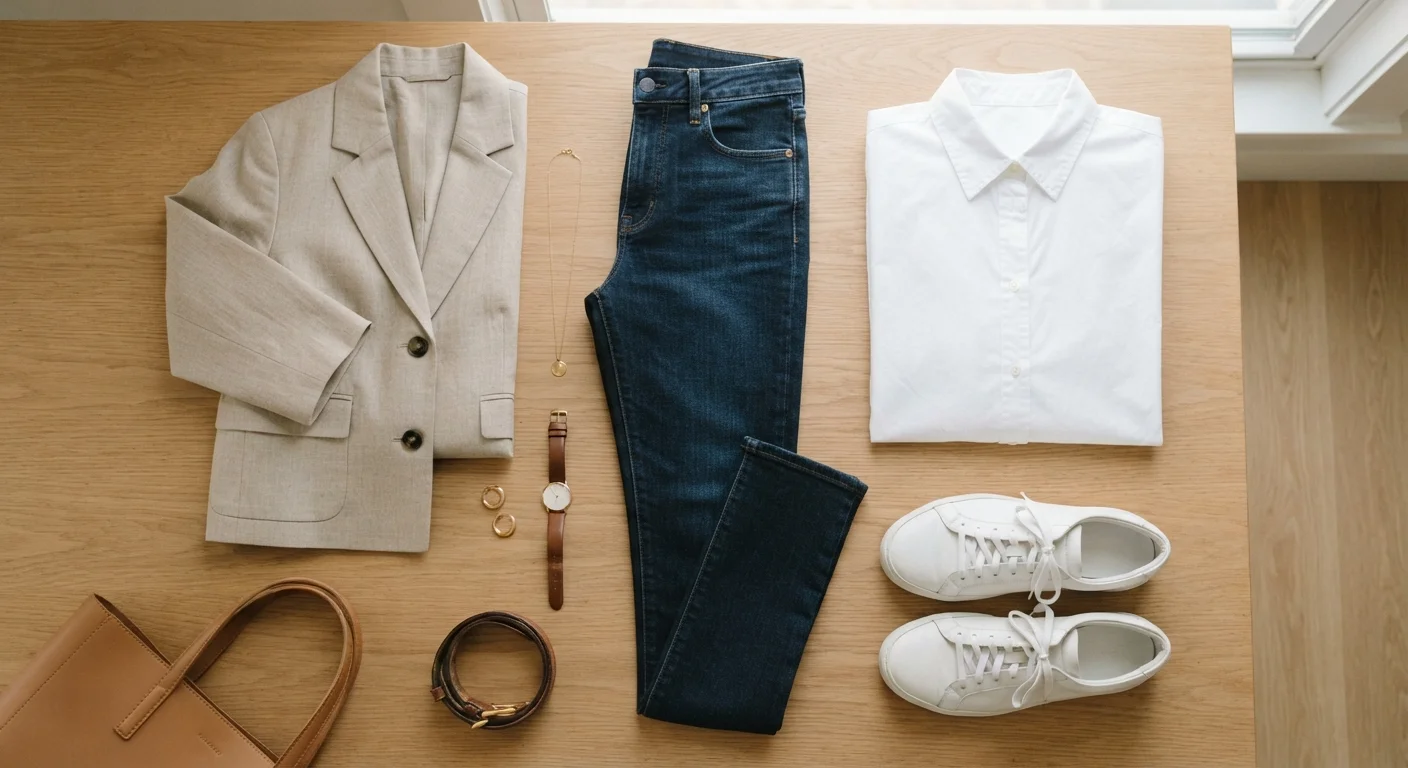
This trio is the workhorse of versatile dressing. Dark-wash jeans read as more polished than their lighter counterparts, so they bridge casual and semi-formal contexts with ease. A tucked-in blouse or button-down creates a defined waistline and looks intentional rather than thrown together. Add a blazer — structured or relaxed — and you've got something that works at a client lunch, a date night, or a casual Friday at the office.
The swap game here is simple: change the footwear. Ankle boots push it toward evening; clean white sneakers keep it relaxed; block-heel loafers hit the professional sweet spot in between.
Dark jeans plus a tucked top and blazer is one of the most reliably polished combinations you can own.
Monochromatic Layers in a Neutral Tone
Wearing one color family head-to-toe — particularly in camel, cream, grey, or navy — creates an elongated, effortlessly put-together look that requires almost no styling instinct. The key is varying texture to keep it from appearing flat: a chunky knit over slim trousers, or a linen shirt under a tailored coat in the same family of tan.
This formula is also highly season-adaptable. Lighter neutral layers work through spring and summer; richer tones in the same framework carry into fall and winter. For guidance on moving pieces across seasons without a full wardrobe refresh, see seasonal wardrobe transitions without buying everything new.
A single-tone outfit in varied textures removes the guesswork and still looks considered and complete.
Fitted Base Layer + Wide-Leg or Relaxed Trouser
Volume contrast is a principle that consistently delivers a balanced silhouette. When one piece is fitted — a ribbed tank, a slim turtleneck, a fitted tee — the eye reads a relaxed trouser as intentional rather than oversized. This pairing works in linen, denim, or tailored wool, and it transitions from weekend to workday depending on the fabric and footwear.
A tucked-in fitted tee with wide-leg jeans and mules is a weekend go-to. Swap in a slim knit top, tailored wide-leg trousers in a solid hue, and pointed-toe flats, and the same structural formula works in a professional setting.
Pairing a fitted top with a relaxed bottom creates proportion that flatters a wide range of body types.
The Shirt-Dress (or Long Cardigan) as a One-Piece Solution
Some formulas center on a single versatile piece rather than a combination. A shirt-dress — especially in a solid or small print — is an outfit on its own that reads as considered without needing much added. Belt it at the waist to shape, leave it open over slim pants for a layered look, or add tights and ankle boots for colder weather.
A long open cardigan works similarly as a layering anchor. Over a simple outfit of jeans and a fitted tee, a longline cardigan adds visual structure and a finished quality that makes the whole look feel more deliberate.
A shirt-dress worn three different ways proves that one thoughtful piece can do the work of an entire outfit formula.
Tailored Trousers + Simple Knit + Loafers
This is quiet, confident dressing at its most accessible. Tailored trousers in black, charcoal, or caramel, paired with a fine-knit crew-neck or V-neck sweater in a complementary tone, and finished with loafers, delivers a polished look without any stiffness. It works for the office, dinner with friends, or an art gallery visit — basically any occasion that calls for effort without formality.
The knit keeps it approachable, the trouser provides structure, and the loafer bridges comfort and polish. Swap in a silk blouse instead of a knit if the occasion requires a slightly more elevated touch.
Tailored trousers with a simple knit and loafers cover a surprisingly wide range of occasions with ease.
White Tee + Statement Bottom + Minimal Accessories
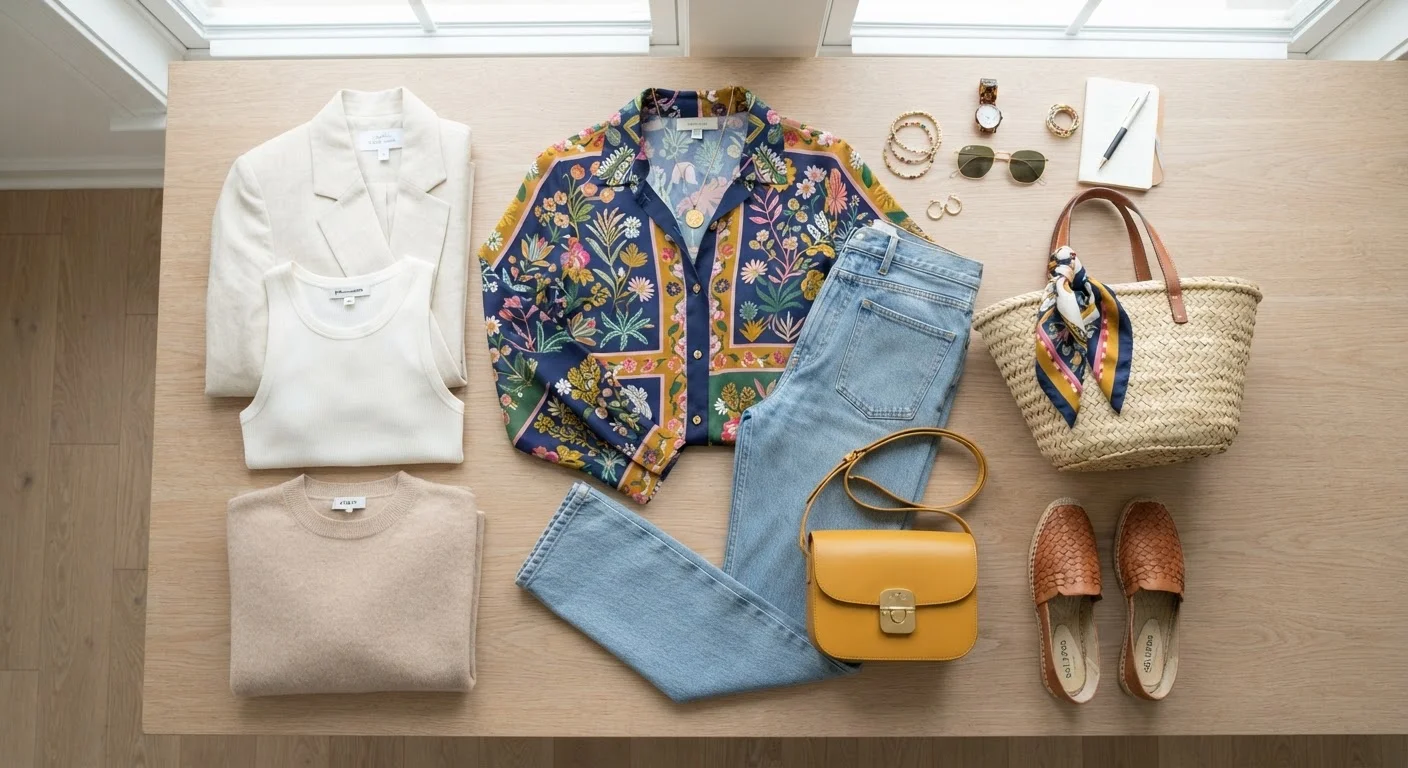
A plain white or off-white tee is arguably the best supporting piece in any formula because it puts all the visual emphasis on whatever you pair it with. A printed midi skirt, a bold-colored trouser, or a textured wide-leg pant all get a chance to speak without competition. This is where you can have fun with pattern and color — a space that feels low-risk because the top is so settled.
Keep accessories minimal: a single simple necklace or clean earrings, so the bottom half remains the point of interest. For more guidance on pairing prints and colors confidently, our piece on making neutrals, patterns, and color work together covers the essentials.
A white tee lets a bold or patterned bottom take center stage without the outfit feeling overwhelming.
Making the Most of Your Formulas
The real power of these combinations comes from small, deliberate adjustments. Shoes are one of the fastest levers — a loafer versus a sneaker can push the same outfit toward a lunch meeting or a Saturday errand run. Layering works the same way: a blazer over an otherwise casual look signals polish without requiring a full outfit change.
Streamline Your Morning Routine
If you pair outfit formulas with a streamlined beauty routine, you can cut your total get-ready time significantly. A polished look on both fronts doesn't require more effort — just more intention. See five-minute makeup for weekday mornings for a practical approach that complements a formula-based wardrobe.
When you're unsure whether a formula fits a specific event, consider the dress code context. Our guide on navigating dress codes with personal style can help you stay true to yourself while reading the room. And if you want to push your formulas further with color and print, mixing neutrals, patterns, and color is the next logical step.
Start with one or two formulas that match your lifestyle most closely and practice them consistently. Confidence in dressing is largely a muscle — the more you trust your combinations, the less mental energy each morning costs you.