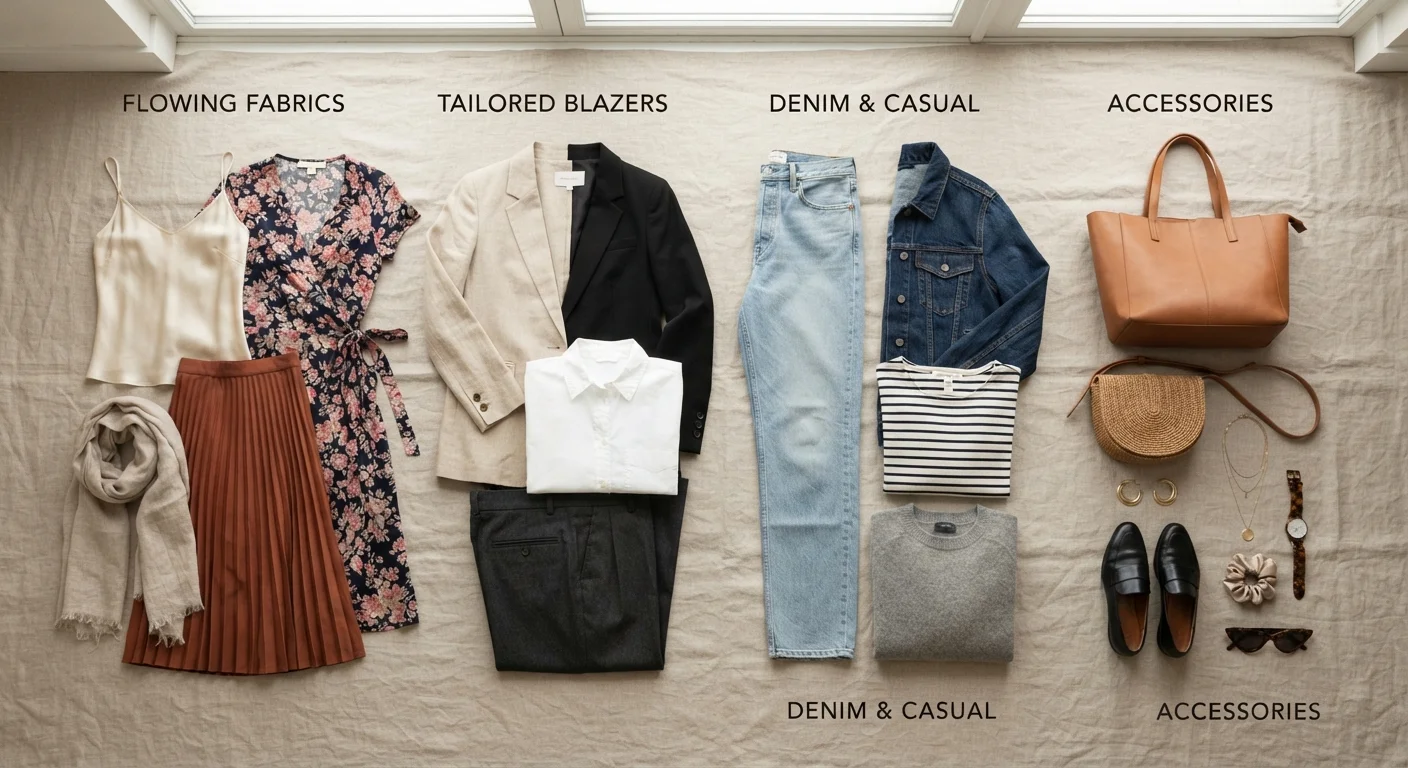

Why Business Casual Is So Hard to Pin Down
If you've Googled "business casual" before a first day of work and ended up more confused than when you started, you're in very good company. The term has been in use since the 1990s, originally tied to "Casual Fridays" policies that let corporate employees ease off the suit one day a week. Over the following decades, the concept crept into everyday workplace culture — and became increasingly vague in the process.
Today, business casual means genuinely different things depending on whether you work at a law firm, a marketing agency, a hospital, or a tech startup. That ambiguity isn't a flaw in the dress code — it reflects how differently American workplaces now define "professional." Understanding that context is the first step to dressing for it confidently.
Remote Work Changed the Equation
The widespread shift to remote and hybrid work after 2020 has blurred dress code norms even further. Many companies that previously had clear business casual expectations now apply them only on in-office or client-facing days. If your workplace is hybrid, it's worth clarifying whether the dress code applies to video calls, in-person days, or both — the answer varies significantly by company.
What Business Casual Looks Like Across Industries
Industry context is the biggest variable. Here's a practical breakdown:
- Finance, law, and real estate: Business casual here skews closest to traditional formal. Think tailored trousers or a pencil skirt, a pressed button-down or blouse, leather shoes or low block heels. A blazer is often expected. Denim is rarely appropriate.
- Healthcare and education: These fields often have specific uniform or scrub requirements, but administrative and leadership roles tend to follow a clean, modest business casual — neat trousers, cardigans, flats, nothing flashy or distracting.
- Tech and startups: This is where business casual is most elastic. Dark jeans, clean sneakers, a fitted crewneck or casual button-down — all fair game. The focus is less on formality and more on looking intentional and put-together.
- Creative industries: Advertising, design, and media companies often have the loosest interpretations, with room for more expressive personal style. That said, client-facing days typically call for a step up.
If you're exploring how your personal aesthetic fits within these expectations, our guide to navigating dress codes and personal style digs into exactly that tension.
~50%
US workers in casual or business casual environments
A Gallup workplace survey found roughly half of American workers operated in some form of casual dress environment even before the remote work expansion of the early 2020s.
1990s
When business casual entered mainstream workplaces
"Casual Fridays" policies popularized in the 1990s are widely credited with introducing the business casual concept to American corporate culture.
The Core Principles That Never Change
Despite all the industry variation, a few principles consistently define business casual across contexts:
- Fit matters more than formality. A well-fitted pair of chinos reads more professional than an ill-fitting suit. Clothing that fits your body well communicates effort and intention, which is ultimately what the dress code is asking for.
- Condition counts. Wrinkled, faded, pilling, or visibly worn items undercut even the right garment choice. Keeping your workwear in good condition is as important as what you buy.
- Avoid extremes. Business casual sits intentionally in the middle. Steer clear of anything that reads as either "dressed for a gala" or "dressed for the gym."
When building out a business casual wardrobe on a realistic budget, it's also worth thinking about the longevity of what you buy. Our breakdown of fast vs. slow fashion tradeoffs can help you weigh cost against quality before you shop.
The 'One Notch Up' Rule
When you're genuinely uncertain about a new workplace's standards, arrive slightly more dressed up than you think is needed for the first week. It's far easier to relax your wardrobe once you've read the room than to recover from showing up too casually on day one. A blazer you can remove is always a safe hedge.
Expressing Your Style Within the Dress Code
Business casual doesn't have to mean boring. Within the parameters of the dress code, there's genuine room for personality — a printed blouse in a muted palette, a well-chosen accessory, an interesting texture, or a color that goes beyond corporate grey.
If you're still developing your sense of personal style and want a vocabulary for it, our guide to style archetypes is a useful starting point. Understanding your aesthetic instincts makes it easier to make choices that feel true to you — even inside a dress code.
And if you want to experiment with texture or pattern in your work looks without veering into chaos, mixing patterns and textures intentionally gives you the visual logic to do it well.