Why Eclectic Dressing Has Rules (Even When It Looks Like It Doesn't)
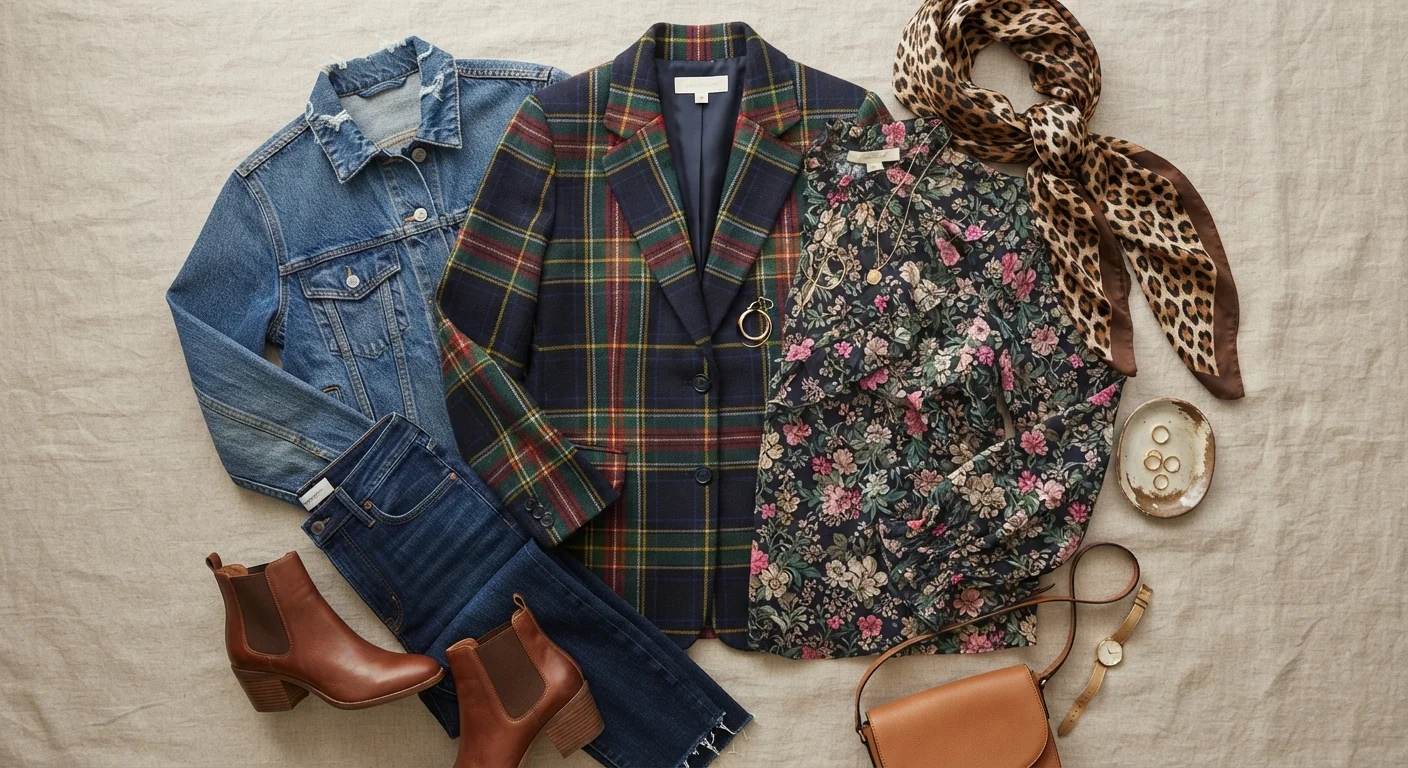
The most visually dynamic outfits — a vintage blazer over a modern slip dress, a bold plaid layered with a delicate floral — don't happen by accident. They're guided by a quiet visual logic that's easy to learn once you know what to look for. Understanding that logic is the foundation of developing a signature look that feels authentically yours.
The key insight: contrast creates interest, but cohesion creates intention. Without at least one unifying thread — a repeated color, a consistent mood, a shared silhouette weight — outfits read as disorganized rather than bold. The good news is that the unifying thread can be almost anything, as long as it exists.
“Fashion is the armor to survive the reality of everyday life. What you wear is how you present yourself to the world, especially today, when human contacts are so quick.”
— Miuccia Prada, Fashion designer and co-CEO of Prada Group
The Core Practices for Mixing Without Chaos
These principles work whether you're blending prints across a single outfit or weaving pieces from different decades into one cohesive wardrobe. Apply even two or three consistently and the results tend to feel intentional rather than thrown together. For more on how color fits into the equation, see our guide on mixing neutrals, patterns, and color.
Vary pattern scale so prints don't fight each other.
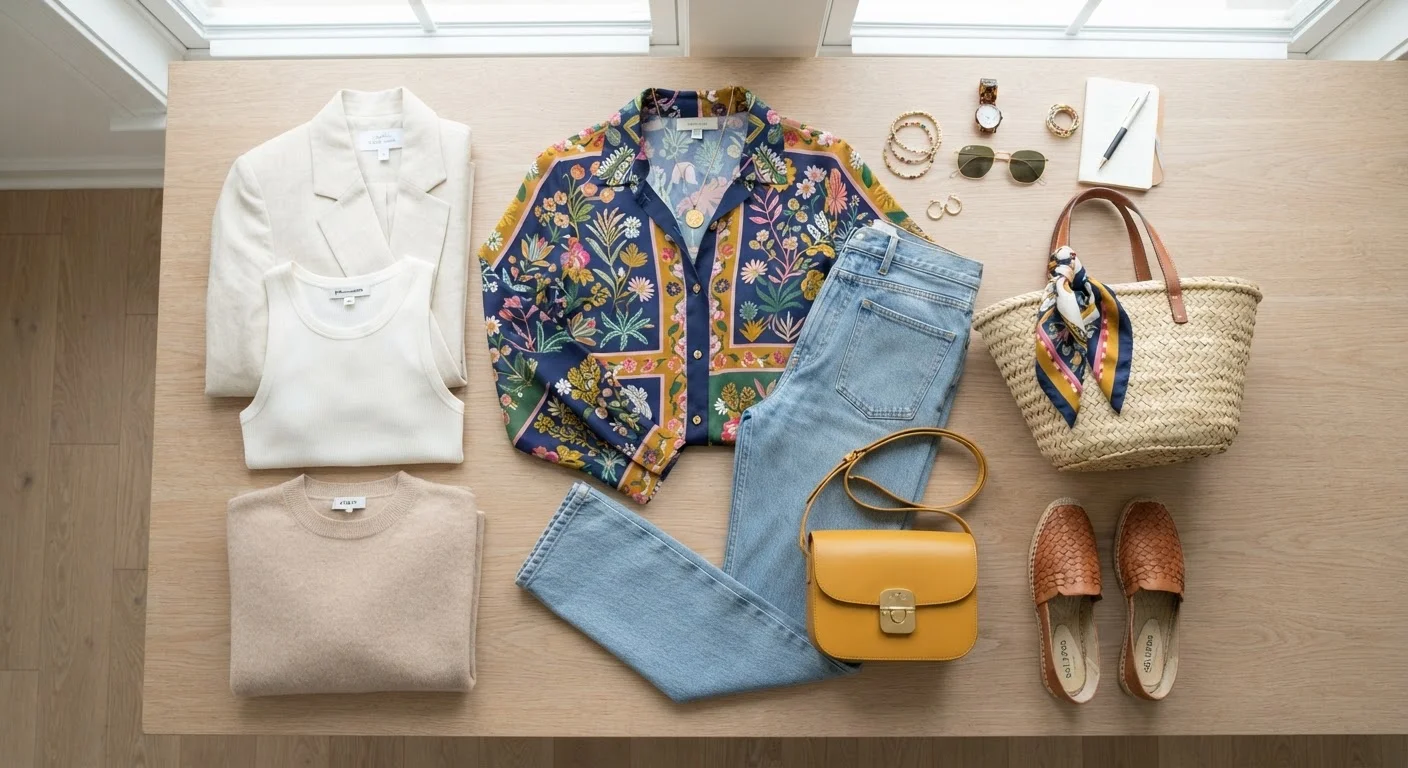
When two patterns of identical scale appear together — say, a medium stripe next to a medium check — the eye doesn't know where to settle. Contrasting sizes create a visual hierarchy that feels purposeful. A dominant large-scale print gets paired with a subordinate small-scale one, and each gets its own territory.
Anchor mixed outfits with a shared color pulled across at least two pieces.
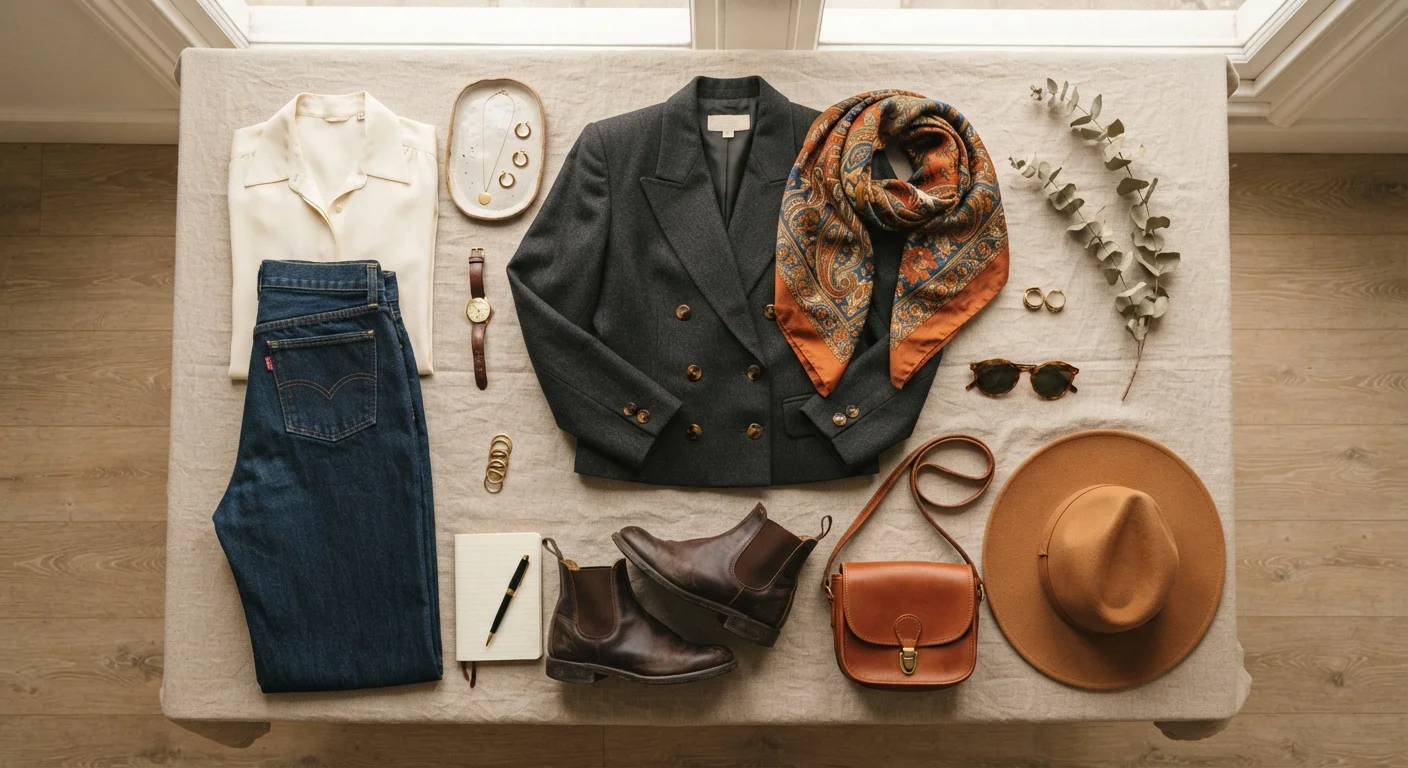
Color is the easiest unifying thread because the eye registers it instantly. When even one hue repeats in two different patterns or textures, the brain interprets the outfit as a system rather than a collection of separate items. It doesn't have to be an exact match — family shades (warm tones, dusty hues) work too.
Use texture contrast as intentional layering, not afterthought.
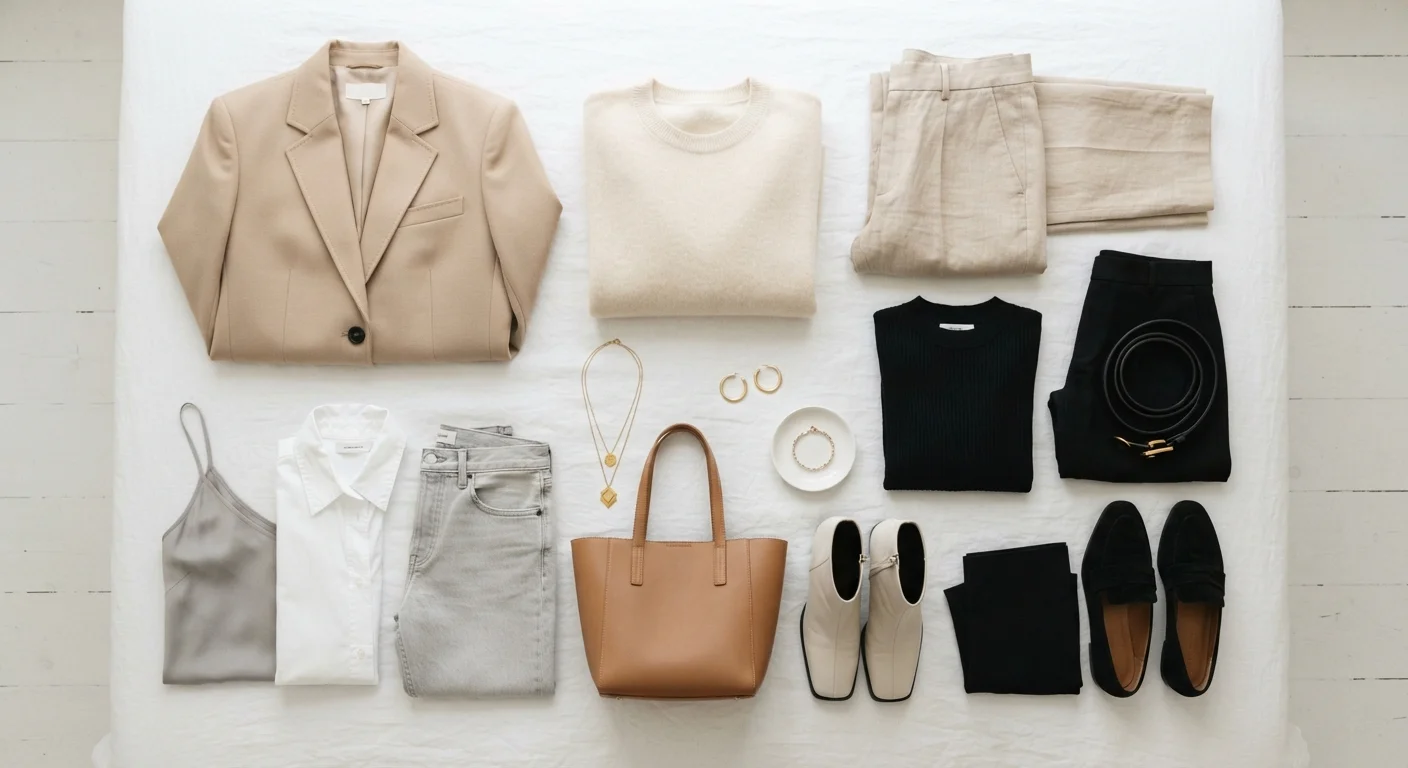
Texture is a pattern in its own right. Pairing a nubby tweed with a sleek silk, or a matte linen with a glossy leather belt, adds visual complexity without adding more print. Because texture operates differently than color or pattern, it almost never clashes — making it a safe way to layer depth into an already bold outfit.
When mixing eras, balance silhouette weight so proportions feel grounded.
Decade-mixing tends to fall apart at the proportion level rather than the print level. A voluminous 1970s blouse combined with a full 1950s skirt produces too much volume throughout. Pairing era-specific pieces with contrasting proportions — volume on top, lean on the bottom, or vice versa — creates the kind of studied balance that makes vintage-modern combinations look deliberate.
Limit yourself to one clear "statement" element per outfit.
Eclectic dressing fails most often not because of too many interesting pieces, but because of too many competing claims for attention. Designating a single statement element — the boldest print, the most unexpected texture, the oldest vintage piece — lets everything else serve as supporting cast. The result reads as curated rather than chaotic.
Quick Ways to Start Experimenting Today
If mixed-pattern dressing feels intimidating, start small. Introduce one layered print or one vintage-modern pairing into an otherwise simple outfit. Confidence in eclectic dressing builds through low-stakes experimentation — and it's worth noting that your style will naturally evolve the more you try. Use these quick wins to get moving without overhauling everything at once.
Mixing freely within contexts that have their own expectations — workplaces, formal events — requires a bit more strategy. Our piece on navigating dress codes while keeping your personal style covers exactly that terrain.
Start With Your Wardrobe, Not Inspiration Images
Scrolling through fashion imagery can make eclectic dressing feel out of reach. Instead, start by laying out what you already own and identifying the pieces that have the most personal energy. Mix-and-match experiments with familiar clothes are lower stakes and reveal your instincts faster than trying to replicate someone else's aesthetic. You might be surprised how much range you already have.
Reading the Visual Logic After You've Dressed
One of the most useful habits in eclectic dressing is the "squint test": step back from the mirror and squint slightly. When the look blurs together, does it feel balanced or busy? If one area reads as a chaotic cluster of competing shapes and colors, that's the zone to simplify. This is essentially the fashion equivalent of what interior designers call flow — the eye should be able to travel the outfit without jarring stops.
It also helps to identify what your outfit's anchor is — the element everything else responds to. Usually it's the loudest piece. Once you've named it, you can assess whether the supporting pieces are harmonizing or competing. For a broader vocabulary around how different style elements interact, style archetypes can give you useful language to think with.
72%
Shoppers who say personal style matters more than trends
According to a 2023 consumer survey by McKinsey & Company's State of Fashion report, the majority of fashion consumers prioritize individual expression over trend-following.
3×
Perceived outfit complexity from texture contrast alone
Fashion psychology researchers have noted that varying surface texture within an outfit significantly increases perceived style effort, even without adding additional colors or prints.
There's No Single "Right" Formula
The practices here are principles, not rules. Plenty of striking outfits break one or more of them — intentionally. The goal is to understand the logic well enough that when you break a guideline, you're doing it on purpose rather than by accident. Personal style is most expressive when you understand the framework you're working within or departing from.