Why Cats Groom Themselves: The Core Functions
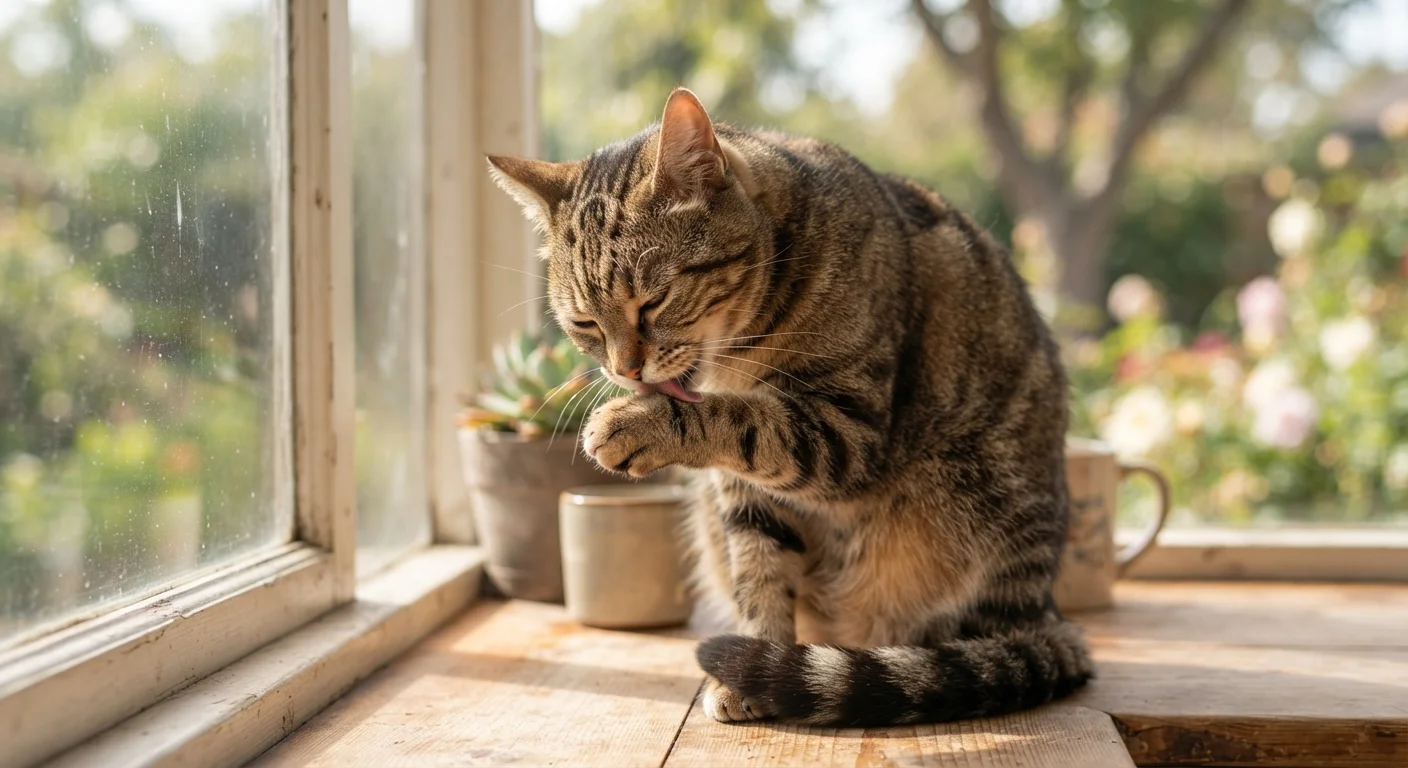
Grooming is not vanity — it is biology. When a cat methodically licks its coat, it is doing several things at once, all of them purposeful.
Hygiene and parasite control. The tongue's papillae act like a fine-toothed comb, removing dirt, loose fur, and debris while spreading natural oils evenly through the coat. This mechanical action also dislodges fleas and other surface parasites.
Temperature regulation. Cats cannot sweat efficiently. Spreading saliva across the coat through licking provides a modest cooling effect through evaporation — particularly useful during warmer months.
Wound care. Cats instinctively lick wounds. Cat saliva contains compounds with mild antimicrobial properties, though excessive wound-licking can also delay healing, so veterinary guidance is important when a cat focuses on an injury.
Stress relief and self-soothing. Grooming releases endorphins and serves as a displacement behavior — a way for cats to calm themselves when mildly anxious or overstimulated. This is why a cat may pause during play and groom briefly before resuming.
Social bonding (allogrooming). Cats in multi-cat households often groom one another — a behavior called allogrooming — which reinforces social bonds and reaches areas a cat cannot easily access alone.
30–50%
Of waking hours cats spend grooming
Veterinary behaviorists widely cite this range as typical for healthy adult domestic cats.
~1 in 10
Cats affected by over-grooming at some point
Estimates from veterinary dermatology literature suggest compulsive licking is among the more common feline behavioral complaints seen in practice.
~800
Papillae on a cat's tongue
Research published in PNAS (2018) used micro-CT imaging to characterize the scoop-shaped papillae that make feline grooming so mechanically effective.
What Normal Grooming Looks Like
A healthy adult cat typically grooms in predictable patterns: after meals, after waking, after social interaction, and at intervals throughout the day. The coat should appear smooth, clean, and free of mats. Skin underneath should look intact, without redness, scaling, or visible irritation.
Kittens learn grooming from their mothers during the first weeks of life. Senior cats may groom slightly less due to reduced flexibility, but a dramatic decline is worth monitoring. Short-haired cats generally manage coat maintenance independently; long-haired breeds often benefit from supplemental brushing to prevent matting. For practical guidance on helping your cat at home, see home grooming sessions that actually go smoothly for techniques that make the process easier for both of you.
Check the Coat Weekly With Your Hands
Run your hands along your cat's entire body — including the belly, armpits, and base of the tail — at least once a week. You will detect early matting, bald patches, skin changes, or flea dirt long before they become visible at a glance. This takes under two minutes and pays off in early problem detection.
When Grooming Becomes a Problem: Over-Grooming
Over-grooming — sometimes called psychogenic alopecia when driven by psychological factors — occurs when a cat licks, chews, or pulls at its coat beyond what normal maintenance requires. The result is often symmetrical hair thinning or bald patches, most commonly on the belly, inner thighs, and along the flanks.
Medical causes should always be ruled out first. Allergies (food, environmental, or contact), flea allergy dermatitis, skin infections, and pain in a specific area can all prompt focused, repetitive licking. A cat with a sore hip may obsessively lick that joint. For a broader look at how cats signal that something hurts, see signs your pet is in pain and may need a vet.
Behavioral and stress-related causes include environmental changes (a move, a new pet, schedule shifts), indoor confinement without adequate enrichment, and inter-cat conflict. These triggers make grooming a compulsive coping mechanism rather than a maintenance behavior.
Over-Grooming Is Rarely 'Just Behavioral'
Even when stress appears to be the obvious trigger, cats that over-groom commonly have an underlying itch or discomfort that makes grooming feel rewarding. A veterinarian will typically assess for allergies, parasites, and skin infections before attributing hair loss to anxiety alone. Treating only the behavioral component while missing a medical one can lead to prolonged discomfort for the cat.
Without veterinary evaluation it can be impossible to distinguish a medical from a behavioral cause — and many cases involve both. A thorough exam, including skin assessment and possibly allergy testing, is the appropriate starting point.
When Grooming Decreases: Under-Grooming
A cat that stops grooming itself is sending a clear signal. Under-grooming produces a dull, matted, or greasy coat — often accompanied by a general look of dishevelment. Common causes include:
- Arthritis or musculoskeletal pain — reaching the lower back, tail base, or rear legs becomes too uncomfortable.
- Obesity — physical bulk limits a cat's ability to reach much of its own body.
- Dental pain — an inflamed mouth makes licking painful.
- Systemic illness — conditions affecting energy levels or organ function (kidney disease, hyperthyroidism, infections) often reduce grooming as an early sign.
- Depression or chronic stress — cats experiencing prolonged anxiety or grief can lose motivation for self-care.
Sudden changes in grooming habits — in either direction — belong on your list of symptoms to discuss with a veterinarian. Well-meaning habits around feeding, exercise, and environment can sometimes contribute to these patterns; everyday habits that quietly undermine your pet's health explores how routine choices affect overall feline wellbeing.
What to Do If You Notice a Change
Start by documenting what you observe: which body areas are affected, how frequently the grooming (or lack of it) occurs, and any recent changes in your household. Photos of bald patches or matted fur give your veterinarian useful baseline information.
Avoid waiting to see if it resolves on its own when hair loss, skin damage, or a significant coat change is involved. Early veterinary evaluation narrows down the cause and prevents secondary problems like skin infections from compounding the original issue.
Keeping a consistent monthly eye on your cat's coat condition is easy to fold into a broader care routine. The monthly pet care checklist for dogs and cats provides a straightforward framework for tracking grooming and other health indicators over time.
This article is for general informational purposes only and is not a substitute for professional veterinary advice. Always consult a licensed veterinarian regarding your cat's specific health needs.