The Lifespan Gap Is Real — and Significant
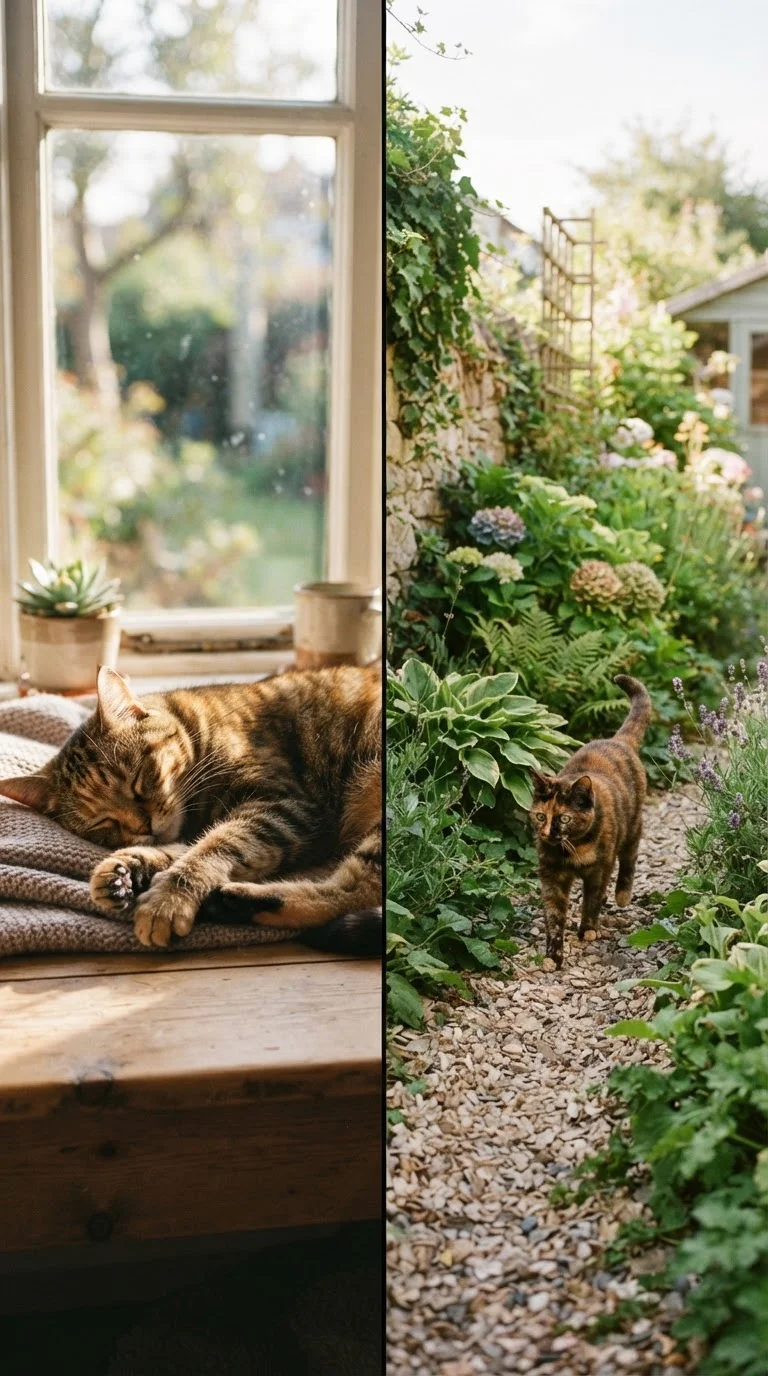
Veterinary consensus consistently places the average lifespan of an indoor-only cat between 12 and 18 years. Outdoor cats, by contrast, average closer to 2 to 5 years, according to estimates from organizations such as the American Veterinary Medical Association. Even cats that split time between indoors and outdoors typically fall somewhere in between.
The gap isn't arbitrary. Outdoor cats are exposed to a dense cluster of risks — moving vehicles, territorial fights with other cats, predators, and weather extremes — that compound over time. Indoor living removes most of these hazards in a single stroke. For owners whose primary concern is how long their cat lives, this data point is hard to argue with.
For a deeper look at how environment shapes feline health outcomes beyond just lifespan, see how lifestyle shapes long-term health.
Significantly longer average lifespan
Indoor cats typically live 12–18 years compared to roughly 2–5 years for outdoor cats, based on widely cited veterinary estimates. Removing traffic, predation, and disease exposure accounts for most of this difference.
Dramatically lower infectious disease exposure
FIV, FeLV, and respiratory infections spread through contact with other cats — contact that indoor-only cats rarely have. This reduces both treatment costs and suffering over the cat's lifetime.
Protection from environmental toxins
Pesticides, herbicides, antifreeze, and toxic plants are commonplace hazards outdoors. Keeping cats inside eliminates most accidental ingestion risks.
Lower parasite burden without outdoor exposure
Indoor cats have far fewer encounters with fleas, ticks, and intestinal parasites, which simplifies preventive care and reduces the risk of parasite-borne illness.
The Real Risks of Outdoor Life
Outdoor cats face threats that are difficult to mitigate without physically limiting their roaming. Infectious diseases — including feline leukemia virus (FeLV), feline immunodeficiency virus (FIV), and upper respiratory infections — spread readily through contact with other cats. Parasites like fleas, ticks, and intestinal worms are also far more common in cats with outdoor access.
Ingestion of lawn chemicals, rodent bait, and toxic plants represents another significant hazard. The ASPCA Animal Poison Control Center lists dozens of common garden plants toxic to cats. And despite preventive medications, heartworm transmission via mosquitoes remains a real concern in many regions.
Outdoor cats also pose an ecological concern: studies by the Smithsonian Conservation Biology Institute estimate that free-ranging cats kill billions of birds and small mammals annually in the United States, making this a welfare issue that extends beyond the individual pet.
Higher risk of obesity and inactivity
Without space to roam and hunt, indoor cats often move less and eat more. Obesity in cats is associated with type 2 diabetes, joint disease, and reduced quality of life.
Behavioral problems from under-stimulation
Boredom manifests as destructive scratching, aggression, excessive vocalization, or over-grooming in cats that lack adequate mental and physical outlets. These behaviors are often misread as personality flaws rather than environmental signals.
Stress from limited territory and sensory input
Cats are naturally territorial animals with complex sensory needs. A small, unchanging indoor environment can cause chronic low-grade stress, especially in cats that were previously accustomed to outdoor access.
Requires deliberate, ongoing enrichment investment
Safe indoor living is not passive — it requires owners to actively provide climbing opportunities, interactive play, and sensory variety. This demands consistent time and resources.
Indoor Life: Benefits and Hidden Risks
The safety benefits of indoor living are well-established, but an unstimulating indoor environment can create its own problems. Cats confined without adequate enrichment frequently develop stress-related behaviors: over-grooming, inappropriate elimination, aggression, and repetitive movement patterns. Boredom and inactivity also contribute directly to weight gain — a meaningful health concern given that obesity in cats is linked to diabetes, arthritis, and urinary disease.
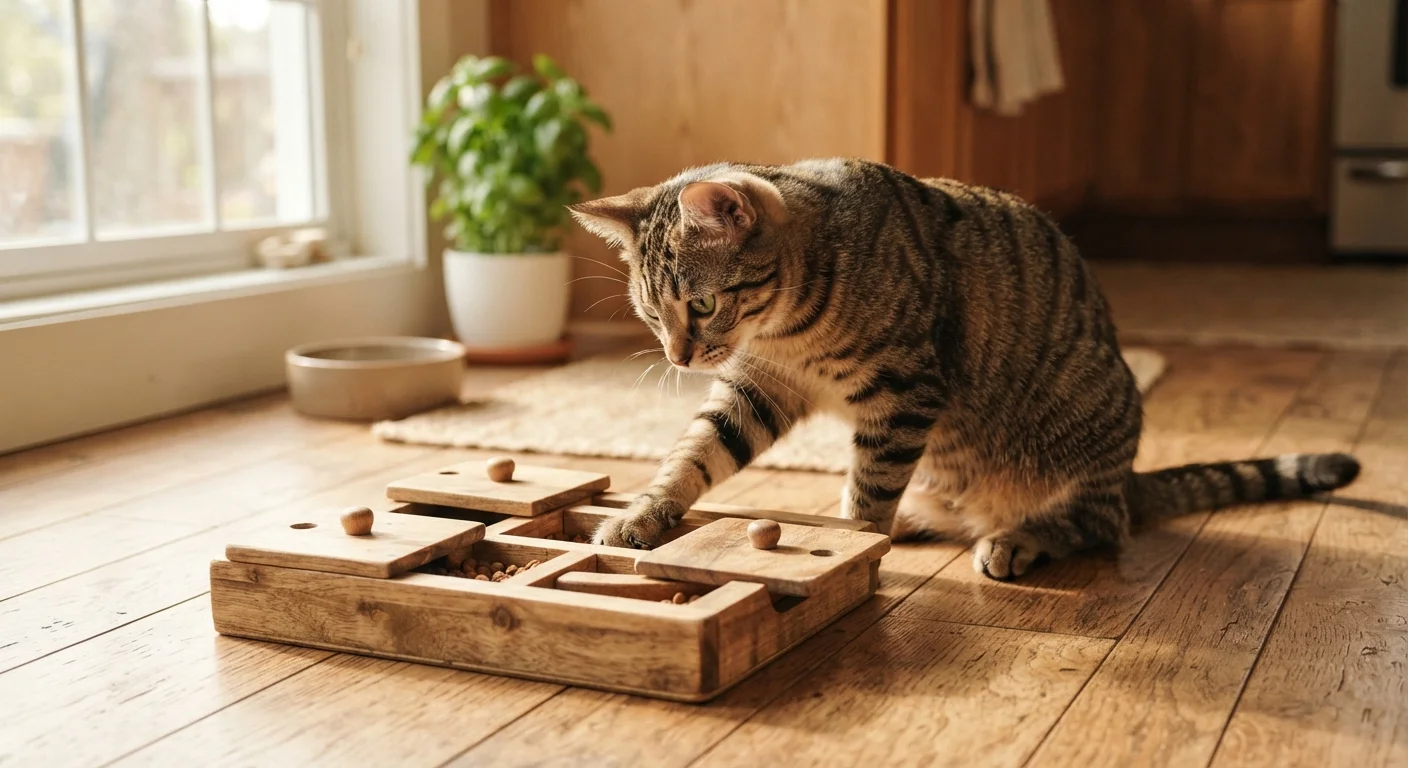
Enrichment activities that genuinely engage indoor pets — such as puzzle feeders, climbing structures, window perches, and interactive play — aren't optional extras for an indoor cat. They're a core part of responsible care. For weight management guidance relevant to indoor cats, why the scale matters for cats and dogs offers practical context.
Enrichment Is Not Optional for Indoor Cats
Veterinary behaviorists increasingly recognize environmental enrichment as a clinical need, not a luxury, for indoor cats. A cat that lacks opportunities to express natural behaviors — hunting, climbing, exploring, hiding — is at elevated risk for both physical and psychological health problems. Simple changes like rotating toys, providing vertical space, and scheduling daily interactive play sessions can meaningfully improve welfare. If behavioral concerns arise, a veterinarian or certified animal behaviorist can help identify the root cause.
A Middle Path: Controlled Outdoor Access
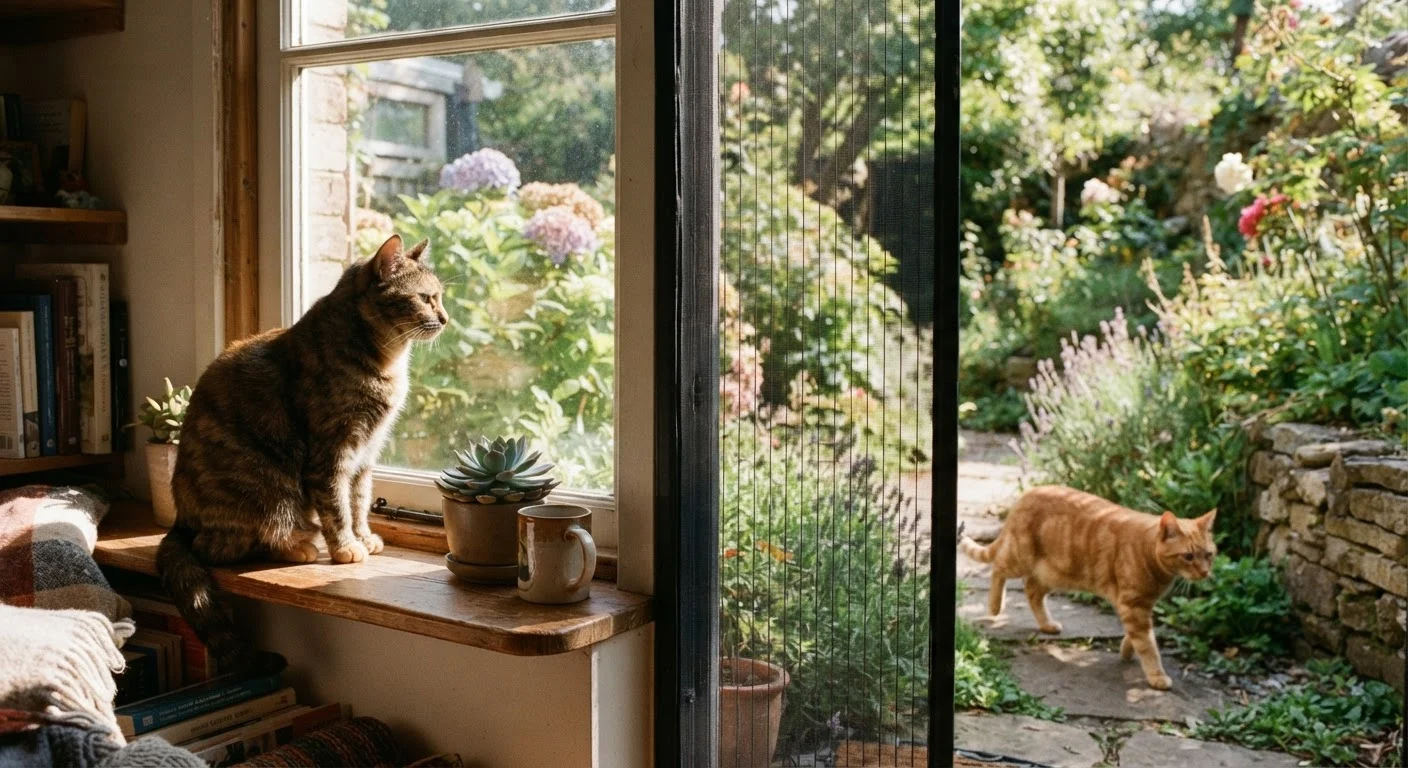
For owners whose cats were previously outdoor cats — or who have high-energy, curious animals that seem genuinely distressed indoors — a structured compromise is worth considering. Catios (enclosed outdoor enclosures), leash and harness walks, and supervised backyard time allow cats to experience natural stimuli without the hazards of unrestricted roaming.
Transitioning an outdoor cat to indoor living is possible but requires patience. Veterinarians generally recommend doing it gradually, enriching the indoor environment before limiting access, and monitoring for signs of frustration or anxiety. Consulting your veterinarian before making changes is always a sound first step — particularly for older cats accustomed to outdoor routines.
For a comprehensive review of what peer-reviewed research actually concludes about environment and feline health, what the research says about cat health and lifespan is a useful companion read.
12–18 yrs
Average indoor cat lifespan
Widely cited by veterinary organizations including the American Veterinary Medical Association as the typical range for indoor-only domestic cats.
2–5 yrs
Average outdoor cat lifespan
Estimated average for free-roaming cats, reflecting cumulative risks from vehicles, predators, disease, and environmental hazards.
Billions
Birds and mammals killed by free-roaming cats annually
Smithsonian Conservation Biology Institute research estimates free-ranging cats are among the largest human-linked sources of bird and small mammal mortality in the U.S.