Why Separation Anxiety Gets Misread
Come home to a chewed couch cushion or a puddle on the floor, and the instinct is to assume your dog acted out on purpose. But intentional "revenge" behavior is not how dogs operate — a conclusion supported by decades of animal behavior research. What looks like defiance is often fear.
Separation anxiety is one of the most commonly misattributed conditions in domestic dogs. Owners mistake it for boredom, poor training, or stubbornness. That misreading matters, because the responses those assumptions generate — scolding, stricter confinement, reduced attention — can make a genuine anxiety disorder significantly worse. Understanding what's actually happening is the first step toward helping your dog.
It's also worth noting that not every anxious behavior signals clinical separation anxiety. Common pet behavior myths — including the idea that dogs «know» they did something wrong — can cloud how owners interpret what they see. Accurate observation is essential.
The Core Signs to Watch For
Separation anxiety tends to produce a recognizable cluster of behaviors. The key distinguishing feature is timing: symptoms emerge specifically around your departure and, critically, they stop when you return.
~17%
Dogs estimated to have separation anxiety
Research published in veterinary behavior journals suggests roughly 14–20% of dogs seen in clinical settings show signs consistent with separation anxiety.
30 min
Typical onset window after owner leaves
Veterinary behaviorists note that most separation anxiety behaviors begin within the first 30 minutes of an owner's departure, often within minutes.
#1
Reason dogs are surrendered to shelters
Behavioral problems, including anxiety-driven destruction and vocalization, are consistently cited among the top reasons owners relinquish pets, according to shelter intake data.
- Destructive chewing or scratching: Concentrated near exit points — doors, windows, and door frames — rather than scattered randomly around the home.
- Excessive vocalization: Barking, howling, or whining that begins shortly after you leave and continues at length. Neighbors are sometimes the first to notice.
- House soiling: Accidents from a dog that is otherwise reliably house-trained, occurring only during alone time.
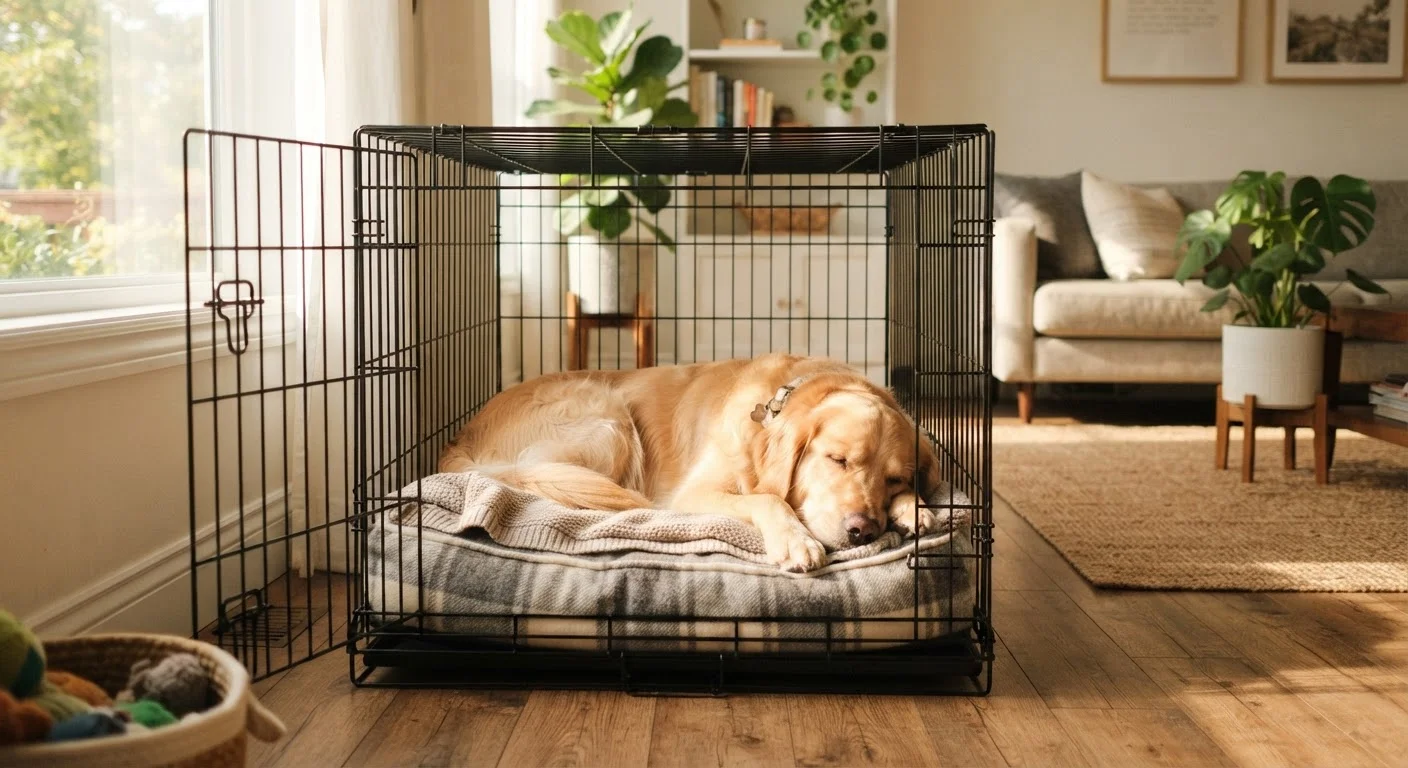
- Escape attempts: Broken nails, worn paw pads, or damage to crates and barriers suggest the dog is actively trying to get out.
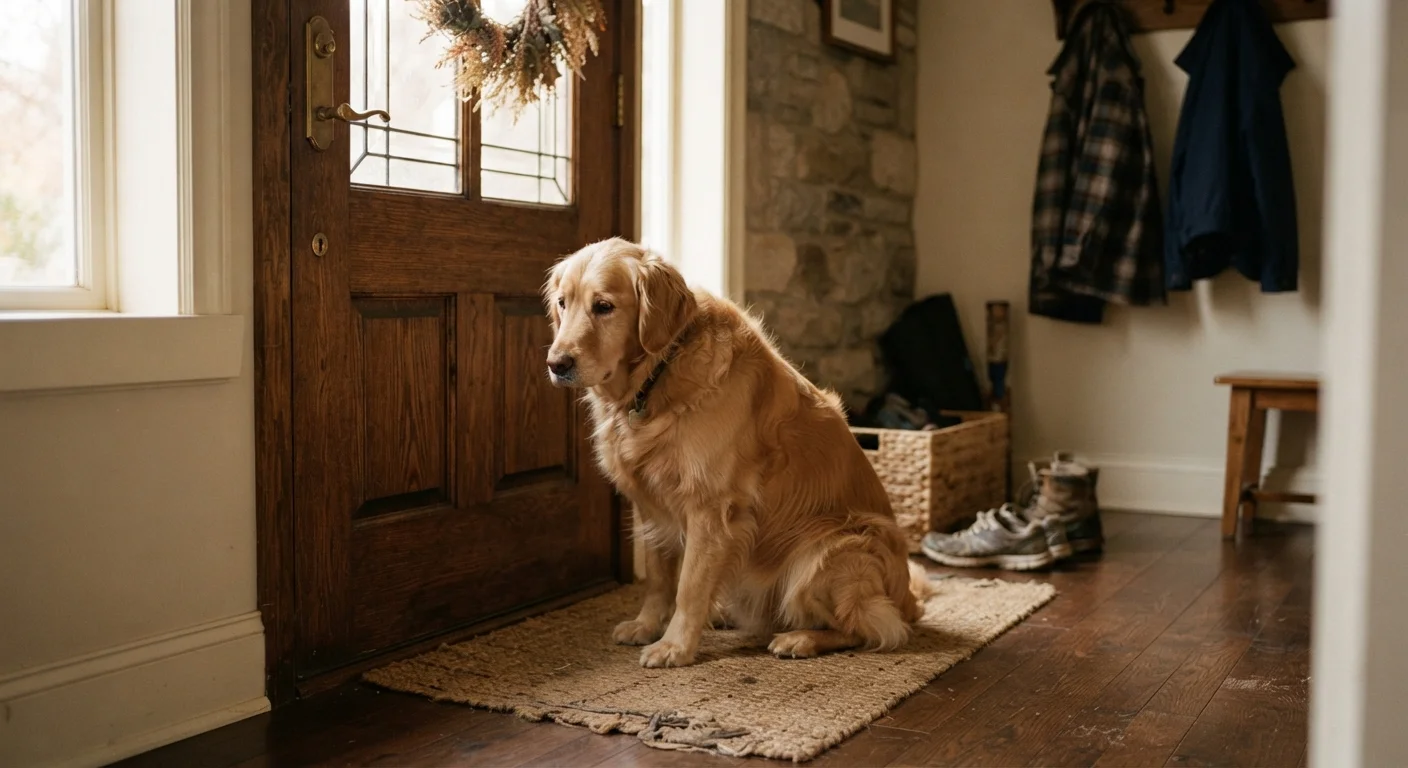
- Pre-departure anxiety: Pacing, panting, drooling, or shadowing you as you prepare to leave — before you've even walked out the door.
- Refusal to eat: Food or treats left behind go untouched during the absence, even in dogs that are otherwise food-motivated.
If your dog exhibits several of these behaviors consistently, and only in your absence, separation anxiety is a strong possibility. A video recording taken while you're away can confirm what's happening and is a valuable tool to share with your veterinarian.
What Triggers It — and Who's at Risk
Separation anxiety can develop in any dog, but certain circumstances make it more likely. Abrupt changes in schedule — a return to the office after extended time at home, a move, or the loss of a household member — are common triggers. Dogs adopted from shelters may carry previous experiences of abandonment that make separation especially threatening.
Strong attachment to one specific person is another contributing factor. This is why a dog may remain distressed even when other people or pets are present. The anxiety is not about being alone in the abstract — it's about the absence of that particular individual.
Practice Short Departures First
Desensitization works by teaching your dog that you always come back. Start by leaving for just 30 seconds, return calmly, and gradually extend the time over days and weeks. Keep your departures and arrivals low-key — dramatic goodbyes and enthusiastic greetings can amplify the emotional spike around your comings and goings.
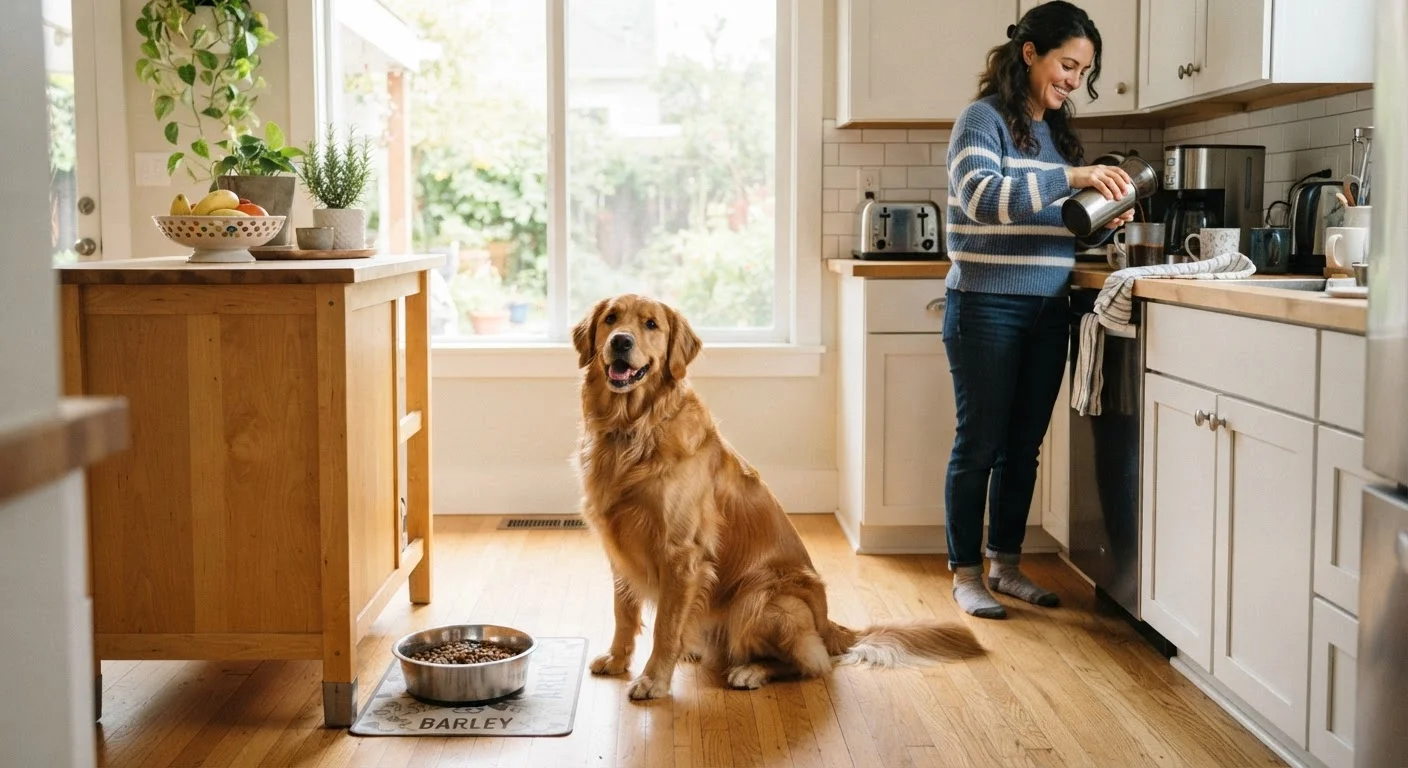
Building a predictable daily routine is among the most well-supported strategies for reducing baseline anxiety in dogs. Consistency in feeding times, walks, and rest periods gives a dog reliable information about what comes next — which reduces the sense of unpredictability that feeds anxious behavior.
When to Involve a Professional
Mild separation-related distress often responds to gradual desensitization — systematically teaching a dog that short absences are safe, then extending that duration over time. But moderate to severe separation anxiety is genuinely difficult to address without professional guidance.
Start with your veterinarian. Anxiety-related behaviors can sometimes have a medical component, and conditions that cause pain or discomfort can heighten overall stress — making it worth reviewing signs your pet may be in pain alongside behavioral symptoms. Your vet can also refer you to a certified applied animal behaviorist or veterinary behaviorist if the case warrants specialist input.
Avoid the temptation to self-troubleshoot through punishment or extended isolation. Well-meaning approaches that feel logical to humans — like ignoring a dog's greeting to discourage attention-seeking — are not appropriate substitutes for a structured behavioral plan. Some everyday habits that seem harmless can inadvertently reinforce anxiety cycles.
This article provides general educational information about canine behavior and is not a substitute for professional veterinary or behavioral advice. If you are concerned about your dog's wellbeing, consult a licensed veterinarian or certified animal behaviorist.