Why Inspiration Boards Rarely Become Real Outfits
Saving a beautiful outfit image feels satisfying — productive, even. But most people find that the gap between their Pinterest board and their actual morning routine remains stubbornly wide. The problem isn't lack of taste or the wrong clothes; it's that inspiration lives in a different context from everyday life. Images are curated, lit, and styled by professionals. Your wardrobe has to function in real weather, at real occasions, on a real schedule.
The fix isn't to collect better inspiration. It's to develop a translation process — a way of pulling out what you genuinely respond to in those images and finding where it already lives (or could live) in your actual closet. This guide walks you through exactly that process, starting with what you've already saved. For a broader foundation, this comprehensive personal style resource covers the full journey from self-discovery to a wardrobe that truly works.
Your Lifestyle Is Part of the Look
Inspiration images are often styled for shoots, not real schedules. Before locking in a style direction, map out how you actually spend your week — work, errands, social events. A look you love needs to make sense for Monday morning, not just a curated flat lay. Weighing your closet approach can also help you decide how much range you really need.
The Step-by-Step Translation Process
Follow these steps in order. The process is designed to move you from abstract aesthetic interest to concrete, wearable outfits — without requiring you to buy much, if anything, new.
What you will need
Mood board (digital or physical)
Collects your style inspirations in one place so you can identify patterns and recurring themes.
Full-length mirror
Lets you evaluate fit, proportion, and overall look when building outfits from your existing wardrobe.
Notebook or notes app
Useful for jotting down outfit ideas, wardrobe gaps, and styling observations as you go.
Fabric tape or clothing clips
Helps temporarily adjust fit while experimenting with layering or tucking techniques.
Audit your inspiration for patterns
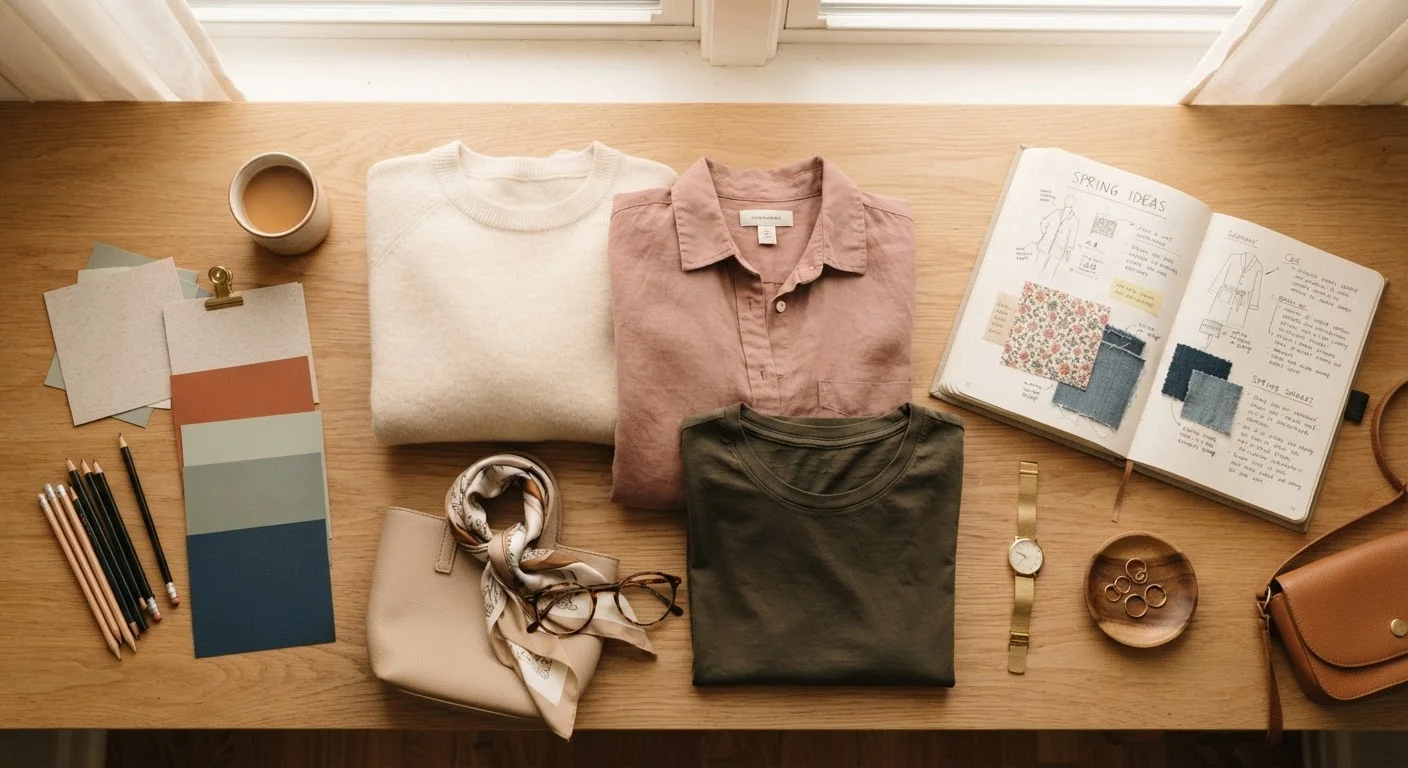
Scroll through your saved images and look for what keeps showing up — not just specific pieces, but silhouettes, color palettes, textures, and the overall mood of each look. Are most images relaxed and earthy? Structured and monochromatic? Layered and eclectic? Spotting these patterns is the real work. If you haven't yet built a clear sense of your style vocabulary, this beginner-friendly style guide is a great place to start.
Translate themes into clothing descriptors
Take your top three recurring patterns and write them as practical descriptors. For example, if you keep saving oversized blazers with minimal accessories, your descriptor might be: structured-relaxed, neutral palette, clean lines. These descriptors become a filter — not for shopping, but for assessing what's already in your closet. This step bridges the abstract ("I love this aesthetic") and the actionable ("I can build this with what I own").
Pull your existing clothes against those descriptors
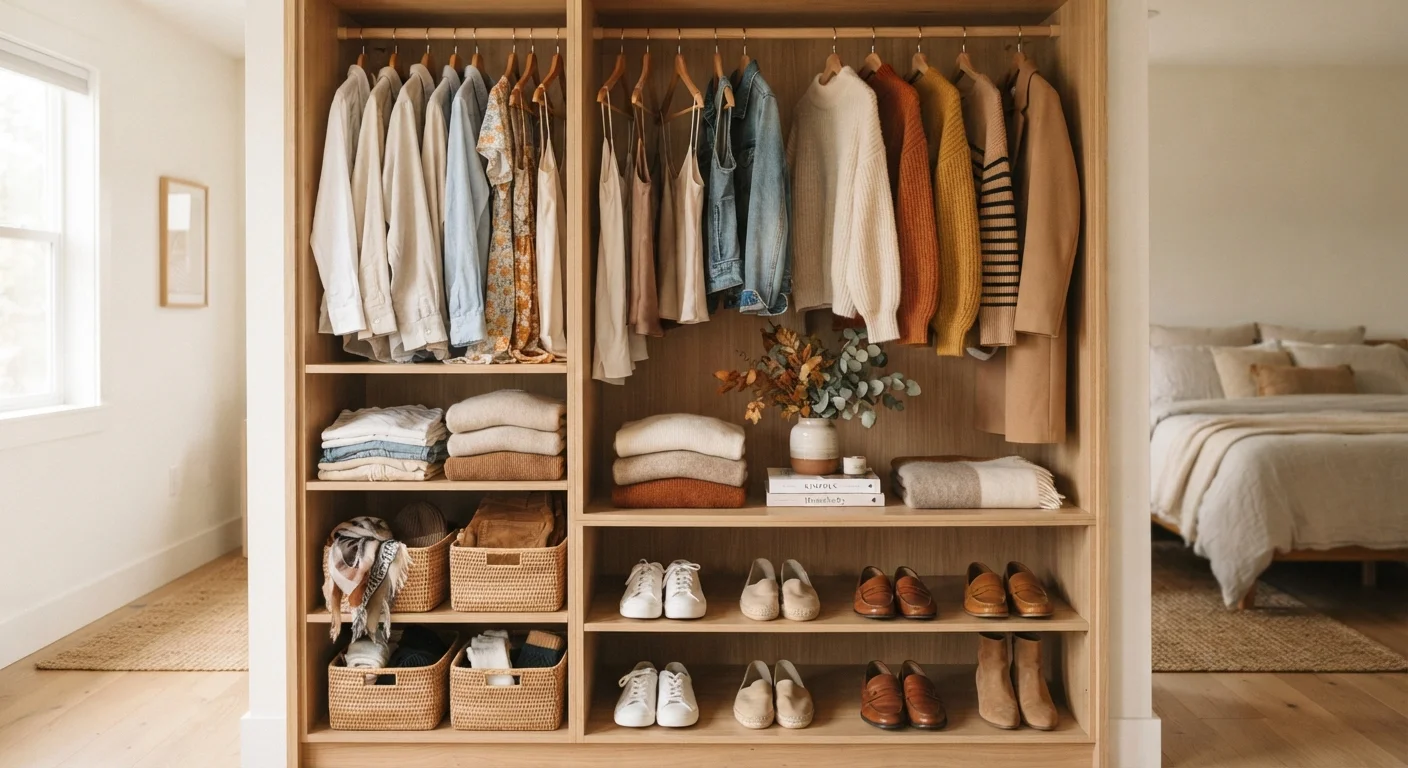
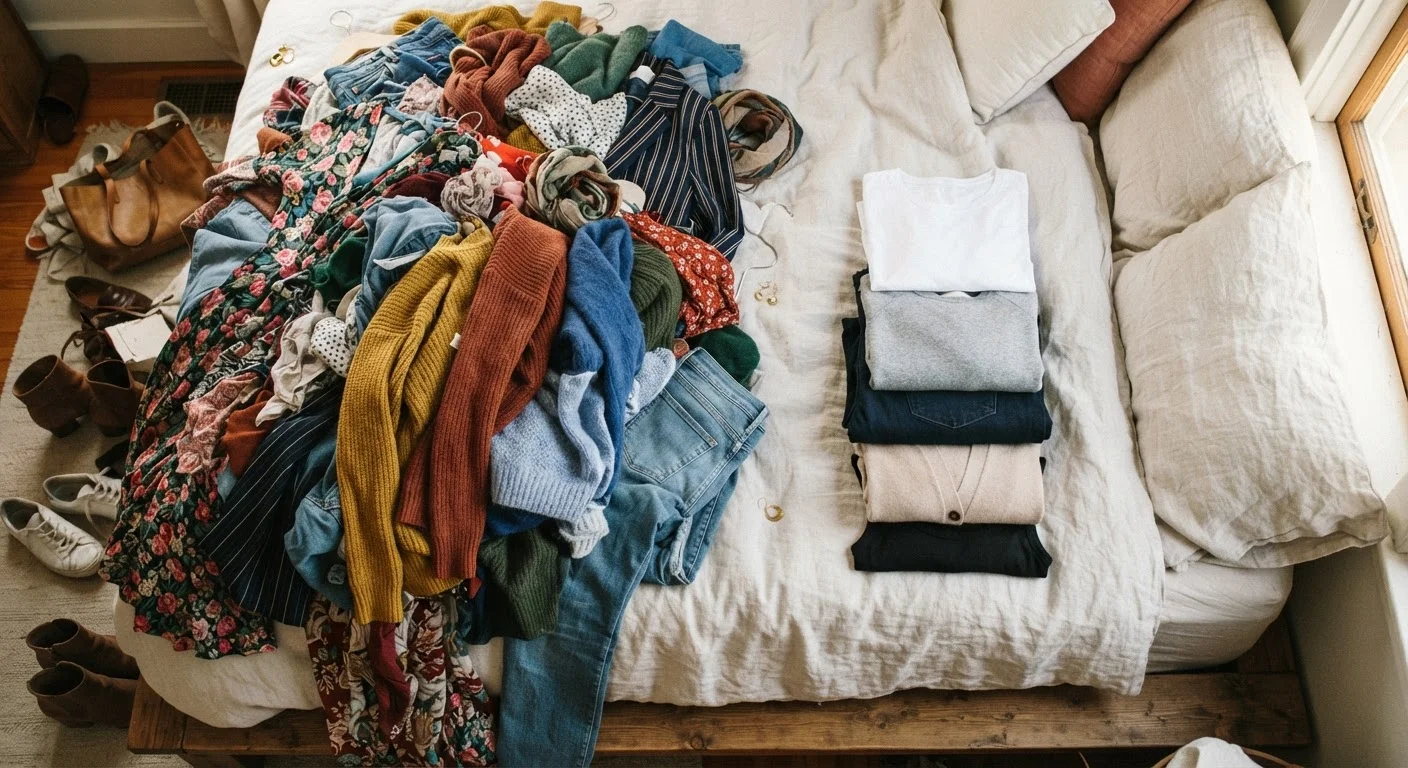
Go through your wardrobe and pull out every piece that fits at least one of your descriptors. Lay them on a bed or hang them together. You'll likely find more to work with than you expected — and a clearer picture of what's genuinely missing versus what just needs better styling. If this reveals significant gaps between seasons, this guide on seasonal wardrobe transitions can help you rework what you already own.
Build complete outfits from what you pulled
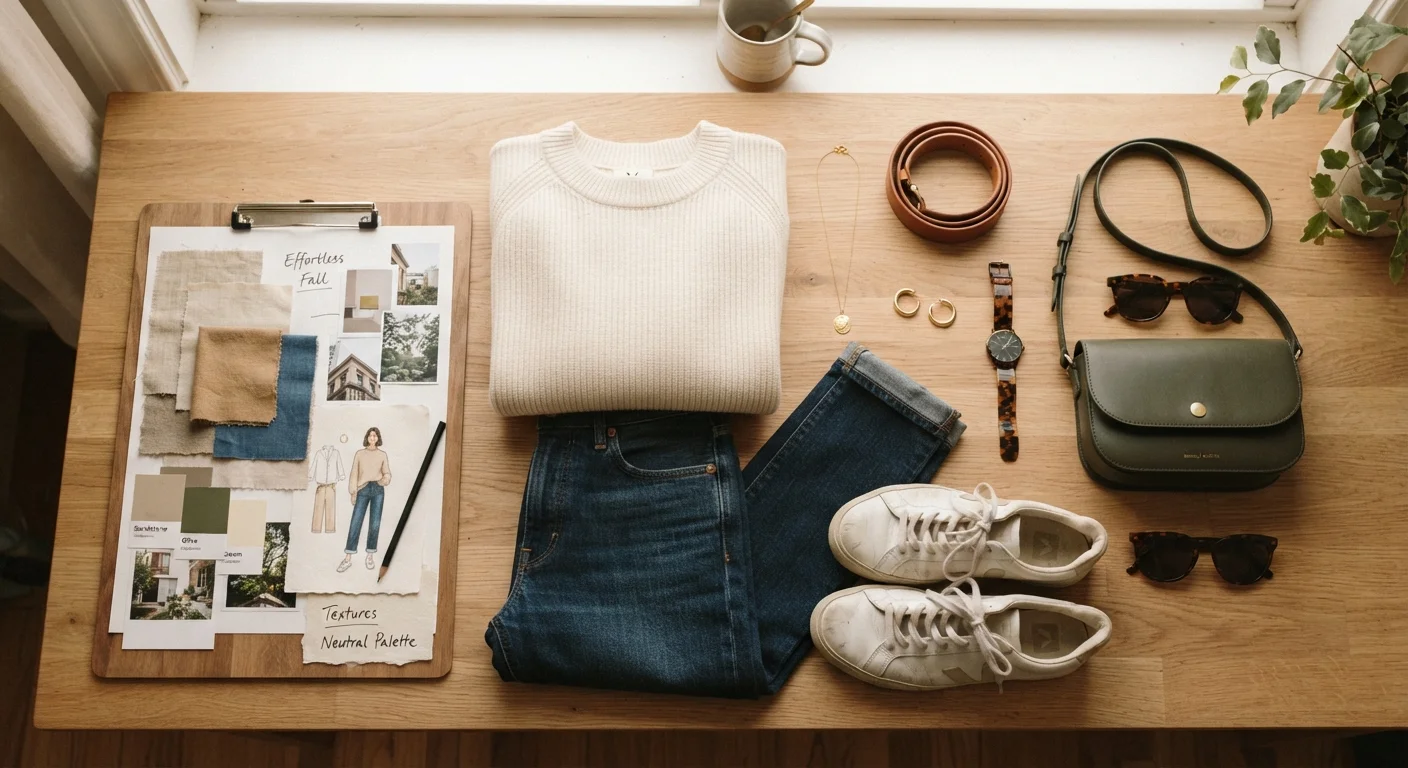
Using only the pieces in front of you, create three to five complete outfits — shoes, outerwear, and accessories included. Take photos with your phone so you can reference them later. The goal is to stress-test whether your inspiration themes are actually achievable with your current wardrobe. Most people discover that two or three new items would significantly expand their options rather than a full overhaul. For a broader look at the habits that keep wardrobes stuck, see common wardrobe pitfalls to avoid.
Note genuine gaps — and shop with intention
After building outfits, write down what was consistently missing. Be specific: not "more tops" but "a loose linen shirt in a neutral" or "ankle boots with a low heel." Shopping with descriptors instead of vague intentions helps you avoid impulse purchases that look great on a hanger but never get worn. For general guidance on building a functional closet framework, the Fashion Basics hub covers core principles worth knowing before you buy anything new.
Inspiration ≠ Instruction
Treating every saved image as a shopping directive is one of the fastest ways to build a closet full of items that don't work together. Use inspiration to understand your aesthetic instincts, not to replicate exact outfits piece by piece. Real style comes from consistent themes applied to your own life — not from identical reproduction.
Your Budget Is a Real Constraint
Identifying gaps in your wardrobe doesn't mean you need to fill them all immediately. Prioritizing thoughtfully and spending within your means is part of building a wardrobe that works long-term. For practical strategies on making purchasing decisions within a budget, the Budgeting Basics hub offers helpful context. Style and financial wellbeing aren't in opposition — they work better together.