Why These Two Numbers Matter More Than Most Drivers Realize
Tires are the only part of your vehicle that actually contacts the road. Every braking, cornering, and acceleration force passes through four contact patches — each roughly the size of a hand. When tire pressure is off or tread is worn down, those patches can't do their job, and stopping distances increase, wet-road grip deteriorates, and the risk of a blowout rises significantly.
The good news is that both factors are easy to monitor at home with inexpensive tools. The challenge is knowing which numbers actually matter — and what they mean in practice.
For a broader picture of how tire care fits into overall vehicle ownership, see our guide to long-term vehicle reliability.
Tire Pressure: The Right Numbers and How to Read Them
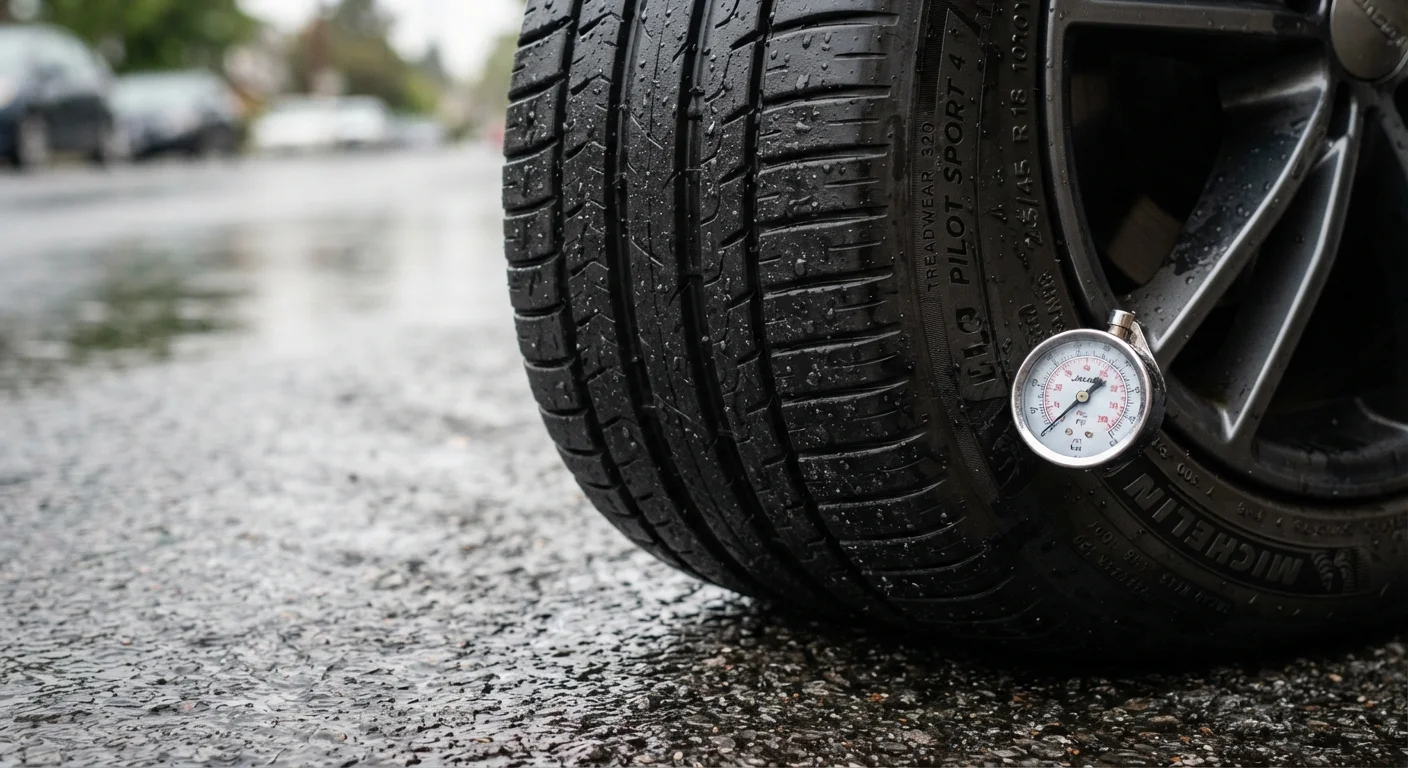
Tire pressure is measured in PSI (pounds per square inch). Most passenger cars call for somewhere between 30 and 36 PSI, though the correct figure for your specific vehicle is found on the driver's door jamb sticker or in the owner's manual — not on the tire sidewall itself. The number molded into the sidewall is the tire's maximum pressure, not the recommended operating pressure.
25%
Pressure drop that triggers TPMS alert
Per NHTSA regulations, TPMS systems are required to warn drivers only when pressure falls 25% below the vehicle manufacturer's recommended level.
4–6 PSI
Temporary pressure increase from driving heat
Tire air temperature rises during driving, inflating readings — which is why pressure should always be checked on cold tires for accuracy.
2/32"
Legal U.S. tread depth minimum
Federal standards require tire replacement at this depth; however, wet-braking performance degrades noticeably before this threshold is reached.
Pressure should be checked when tires are cold — meaning the car has been parked for at least three hours or driven fewer than a mile at low speed. Driving heats the air inside the tire and temporarily inflates readings by 4–6 PSI, which can make an underinflated tire appear acceptable.
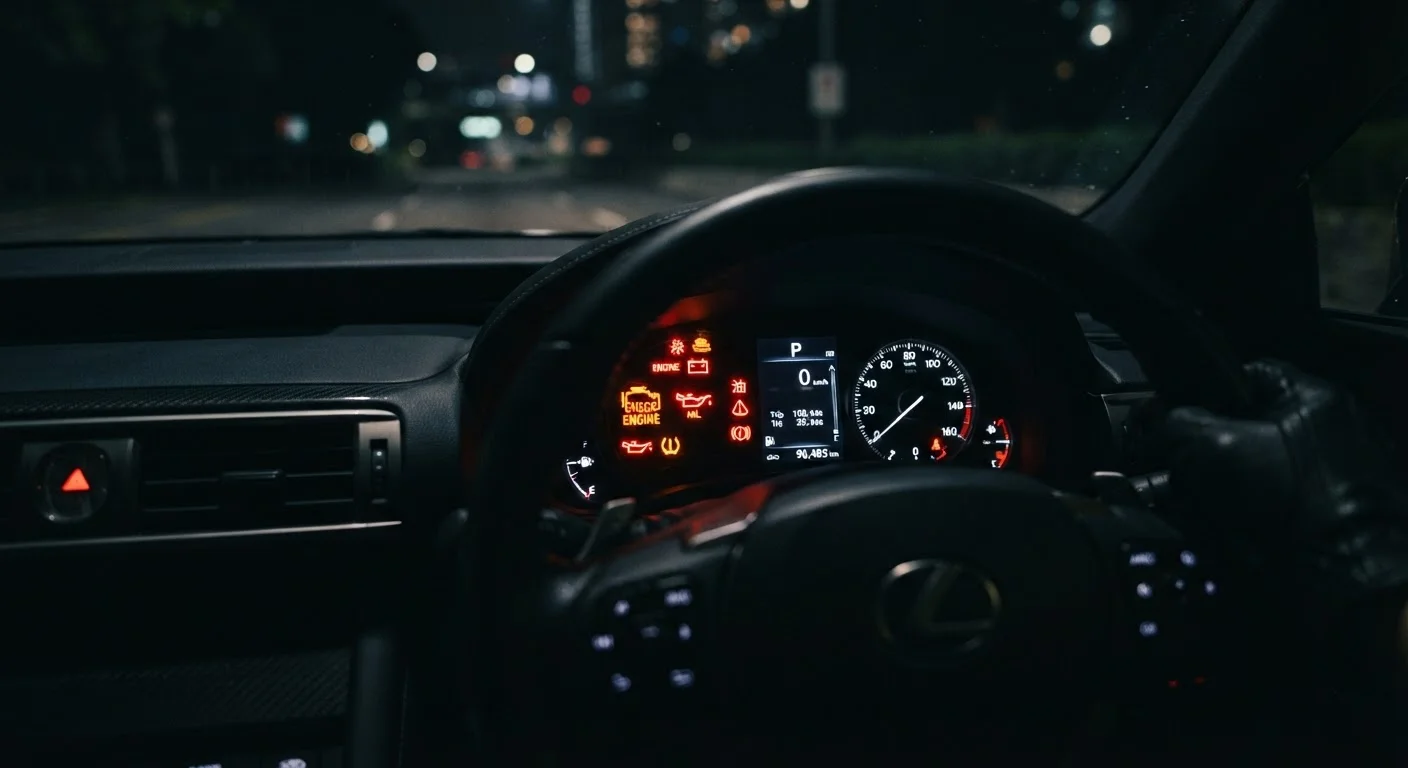
Check pressure at least once a month and before any long highway drive. Many modern vehicles are equipped with a Tire Pressure Monitoring System (TPMS), but that system typically alerts you only when pressure drops 25% below the recommended level — well past the point where handling is already compromised. Don't rely on the TPMS light as your primary check. If your dashboard TPMS icon does illuminate, our dashboard warning lights guide explains what to do next.
Tread Depth: Understanding the Legal Minimum vs. the Safe Minimum
Tread depth is measured in 32nds of an inch. New tires typically start at 10/32" to 11/32". U.S. law requires replacement once tread reaches 2/32" — indicated by raised wear bars molded into the grooves of most tires. However, safety experts and tire organizations widely recommend replacing tires at 4/32", particularly if wet-road driving is common. At 4/32", a tire's ability to channel water and maintain grip in rain begins to degrade meaningfully.
PSI (Pounds Per Square Inch)
The unit used to measure the air pressure inside a tire. Your vehicle's recommended PSI is set by the manufacturer and appears on the door jamb sticker or in the owner's manual.
Tread Depth
The measurement from the top of the tire's rubber tread to the bottom of its deepest grooves, expressed in 32nds of an inch. Adequate tread depth is critical for channeling water and maintaining grip.
TPMS (Tire Pressure Monitoring System)
An onboard electronic system that monitors tire pressure and alerts the driver via a dashboard warning light when pressure drops significantly below recommended levels. It does not replace manual checks.
Wear Bars
Raised rubber indicators molded into the grooves of a tire at the 2/32" depth mark. When tread surface is level with the wear bars, the tire has reached the U.S. legal replacement threshold.
Cold Tire Pressure
Tire pressure measured after a vehicle has been parked for at least three hours or driven less than a mile at low speed. Cold readings are the accurate baseline for comparing against manufacturer recommendations.
The classic penny test checks the 2/32" threshold: insert a penny into a tread groove with Lincoln's head pointing down. If you can see the top of Lincoln's head, the tire is at or below the legal limit. For the 4/32" check, use a quarter: if you can see the top of Washington's head, it's time to start planning for replacement.
Tread wear is also rarely uniform. Check depth at multiple points across the width of the tire and at several spots around the circumference. Uneven wear — such as wear on only the inner or outer edge — often signals alignment or inflation issues that should be addressed alongside any replacement. Tire care is also a core part of seasonal upkeep; see our seasonal maintenance schedule for timing guidance.
Practical Checks You Can Do at Home
Maintaining tire health doesn't require special equipment beyond a quality analog or digital tire pressure gauge (typically a few dollars at any auto parts retailer) and a coin for tread checks. A dedicated tread depth gauge offers more precise readings and costs very little.
Build a simple habit: once a month, check all four tires for pressure and visually inspect tread depth and sidewall condition. Look for cracking, bulging, or embedded objects. If a tire repeatedly loses pressure, that's a sign of a slow leak that warrants professional inspection — driving on an underinflated tire causes heat buildup that can lead to structural failure.
Tire costs are one of the more predictable ongoing vehicle expenses. Understanding them in advance can help with budgeting — something we cover in depth in our article on hidden vehicle ownership costs.