What Engine Oil Actually Does — and Why It Wears Out
Engine oil does far more than reduce friction. It carries heat away from moving parts, suspends contaminants so they can be captured by the filter, and protects metal surfaces from corrosion. As oil ages, it oxidizes, its viscosity changes, and additive packages designed to neutralize acids and prevent sludge gradually deplete. Once those properties are gone, no amount of topping off the level will restore them.
Manufacturers engineer oil-change intervals based on how long their oil formulation and filter can perform reliably under normal operating conditions. Push past that window and you're running an engine on a fluid that's no longer doing its job properly — which sets off a chain of consequences that builds quietly and expensively. As part of understanding the true cost of vehicle ownership, oil changes are one of the most cost-effective services you can keep current.
Common Mistakes Drivers Make With Oil Maintenance
Most engine damage from neglected oil isn't dramatic — it's cumulative. The mistakes below are the most common ways drivers unknowingly shorten the life of their engine.
Ignoring the oil-life monitor or sticking rigidly to an outdated mileage rule regardless of driving conditions.
Why it happens: Many drivers were taught a fixed interval — often 3,000 miles — that no longer applies to most modern vehicles and engine oils. Old habits are hard to update.
Topping off oil without checking its condition, masking the need for a full change.
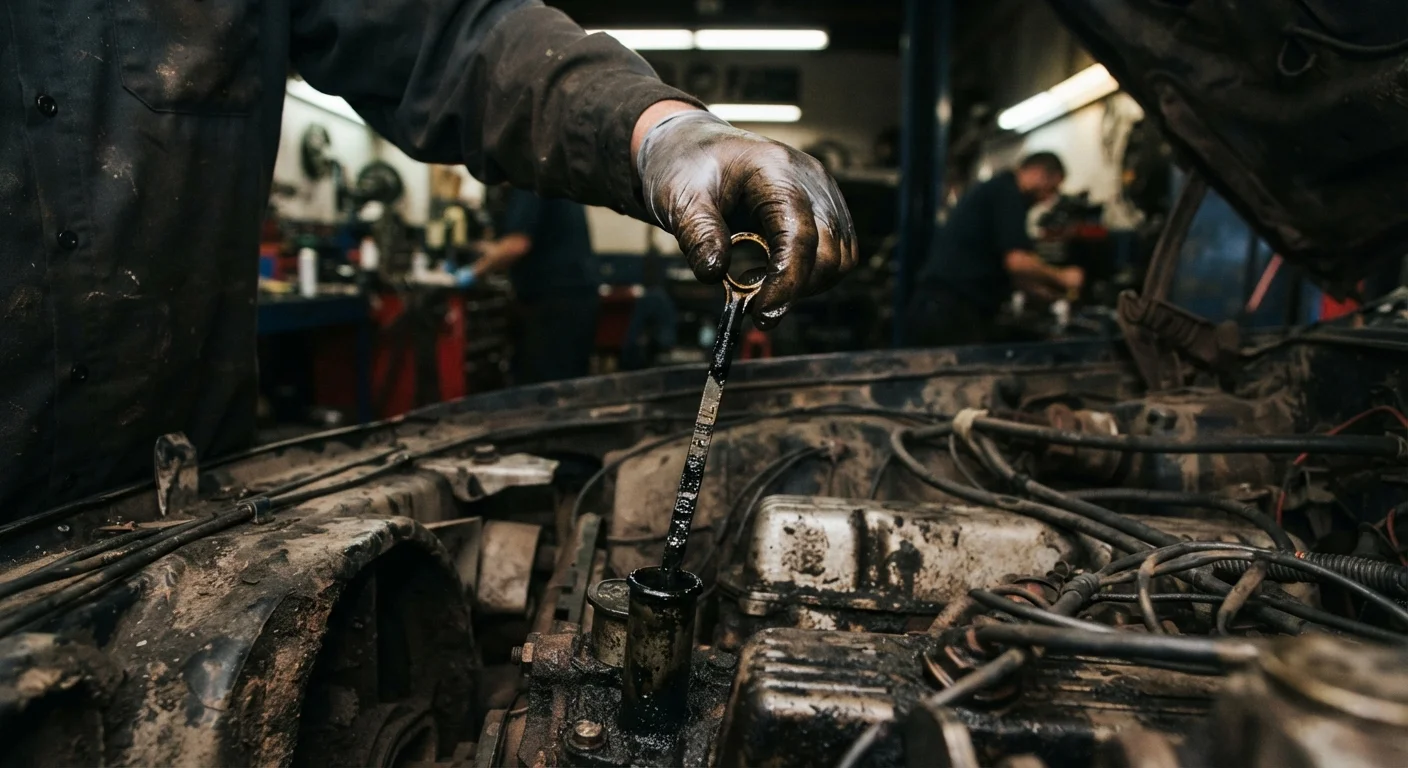
Why it happens: A dipstick reading at the correct level looks fine at a glance, so drivers assume everything is in order. They're monitoring quantity, not quality.
Delaying a change because the warning light hasn't appeared yet, even when the interval has clearly passed.
Why it happens: Drivers often treat warning indicators as the definitive signal rather than a safeguard. In reality, damage can accumulate before any dashboard light activates.
Using the wrong oil viscosity or specification for the engine.
Why it happens: At quick-service shops or during DIY changes, convenience sometimes leads to grabbing whatever oil is available rather than verifying the specification on the oil cap or in the owner's manual.
Neglecting to replace the oil filter along with the oil.
Why it happens: Some drivers or budget service providers skip filter replacement to save a small amount of money, not realizing the filter holds concentrated contaminants from the old oil.
Short Trips Are Harder on Oil Than You Think
Engines driven primarily on short trips — under five miles — never fully reach operating temperature. This allows moisture and combustion byproducts to accumulate in the oil rather than evaporating off, degrading the fluid faster than a highway driver's schedule would suggest. If short-trip driving describes most of your use, your oil may need changing more frequently than the standard interval.
The Real Financial Stakes of Skipping Service
$25–$75
Typical cost of a routine oil change
General industry pricing for conventional and synthetic oil changes at professional service centers, though costs vary by region and vehicle type.
$3,000–$10,000+
Potential engine repair or replacement cost
Engine damage caused by oil starvation or sludge buildup can require extensive repairs or full replacement, depending on severity and vehicle make.
A routine oil change is one of the least expensive professional services your car requires. Engine repairs are among the most expensive. Sludge buildup can require an engine flush or, in severe cases, internal cleaning that demands partial disassembly. Worn bearings, scored cylinder walls, and damaged camshafts can mean repair estimates that reach into the thousands — or a determination that the engine needs replacement entirely.
Beyond repair costs, neglected oil maintenance affects resale value. Buyers and dealers routinely check service records, and a vehicle with gaps in oil-change history signals higher risk. The depreciation hit from a poorly maintained vehicle can be significant. Consistent oil changes are also central to the habits covered in keeping your car running well for the long haul.
Neglect Can Void Your Powertrain Warranty
Many new-vehicle powertrain warranties require documented proof that oil changes were performed at manufacturer-specified intervals. Skipping or delaying service — and failing to keep records — can give an automaker grounds to deny a warranty claim on engine components. Keep every receipt or digital record of each oil change, including the mileage at service.
Staying on Schedule: Practical Guidance
Most modern vehicles use an oil-life monitoring system that calculates remaining oil life based on driving conditions, temperature cycles, and engine loads — not simply mileage. Trust this system and respond promptly when the indicator appears. For older vehicles without such a system, consult the owner's manual for manufacturer-recommended intervals under both normal and severe driving conditions (frequent short trips, towing, or extreme climates count as severe).
Building oil changes into a broader maintenance routine makes them easier to track. The seasonal maintenance framework is a useful structure for pairing oil checks with other time-sensitive services. Keeping receipts or digital records of every oil change also protects you if a warranty claim or resale negotiation ever requires proof of service history.
This article is for general informational purposes only. Always consult your vehicle's owner's manual and a qualified mechanic for maintenance decisions specific to your car.