How Often Should You Actually Bathe Your Dog?
There is no single universal answer to bath frequency, and that is by design — dogs vary enormously in coat texture, activity level, and skin health. Understanding those variables helps you build a schedule that genuinely fits your pet rather than defaulting to an arbitrary rule.
Short-coated, low-odor breeds (such as Beagles or Boxers) can typically go six to eight weeks between baths. Double-coated breeds like Huskies or Golden Retrievers trap dirt and dander more readily, making a four- to six-week cadence reasonable for most. Dogs with hair that continuously grows — Poodles and related mixes, for example — may need baths every three to four weeks alongside regular trims. Hairless breeds (Chinese Crested, Xoloitzcuintli) are the outlier: their exposed skin accumulates oils quickly, so a weekly or biweekly wash is often appropriate.
Activity level matters just as much as coat type. A dog who swims frequently or spends hours in muddy terrain will need baths more often than one who stays mostly indoors. Equally, a dog with a diagnosed skin condition — seborrhea, allergies, or a fungal issue — may require medicated baths on a schedule recommended by a veterinarian. Never increase or modify a medicated bathing routine without professional guidance.
Match Your Schedule to Your Dog, Not a Rule
Bathing too frequently strips the natural oils that protect the skin, while bathing too infrequently can allow yeast and bacteria to build up. Pay attention to your dog's coat condition and odor between baths — these are the most reliable indicators of when a wash is actually needed.
Bath frequency is just one component of a well-rounded grooming plan. For a broader picture of what routine pet maintenance looks like month to month, see the Monthly Pet Care Checklist for Dogs and Cats.
What You'll Need Before You Start
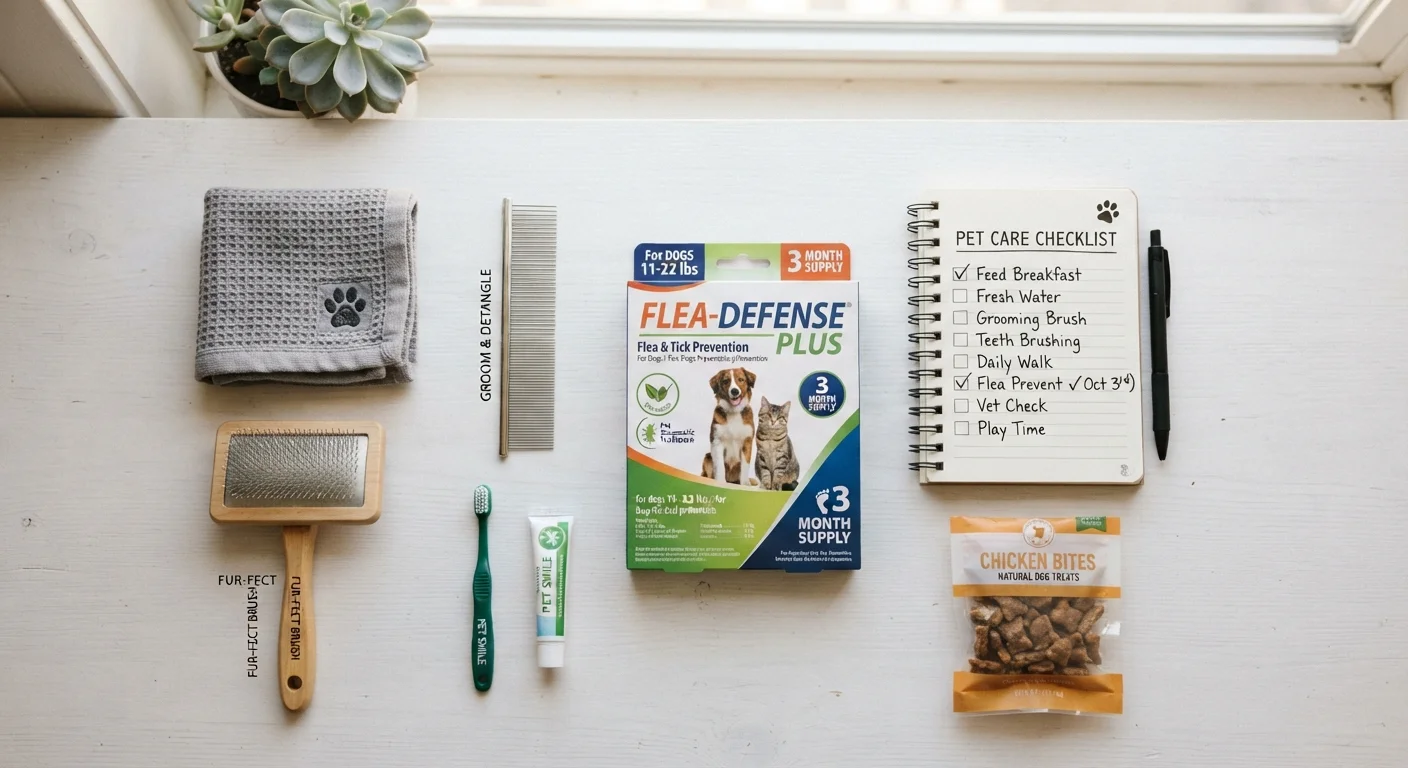
Gathering supplies before your dog enters the tub prevents the all-too-common mid-bath scramble — and keeps an anxious dog from bolting while you search for a towel.
Dog-formulated shampoo
Cleans the coat without disrupting the dog's natural skin pH; choose a formula appropriate for your dog's coat type or any skin conditions.
Non-slip bath mat
Provides traction in the tub or sink, reducing slipping and helping keep an anxious dog calmer during the bath.
Handheld sprayer or cup
Allows controlled water flow for wetting and rinsing, especially useful around the face and ears.
Coat-appropriate brush or comb
Used before the bath to remove tangles and debris so mats do not tighten when wet.
Absorbent towels
Removes surface water immediately after the bath; microfiber towels are particularly effective at absorbing moisture quickly.
Pet-safe blow dryer
Speeds drying time for dense or double-coated breeds and helps prevent moisture-related skin issues.
Dog conditioner
Helps detangle long or curly coats and restore softness after shampooing; most useful for coats prone to dryness or matting.
What you will need
If your dog is new to bathing or shows significant anxiety, consider pairing the experience with positive reinforcement from the start. The Home Grooming Sessions That Actually Go Smoothly guide covers how to build cooperative associations that make the process easier for both of you over time.
Step-by-Step Bathing Technique
Following a consistent sequence protects your dog's skin and coat, reduces stress, and ensures no area is missed. Work through the steps below each time you bathe your dog.
Brush thoroughly before the bath
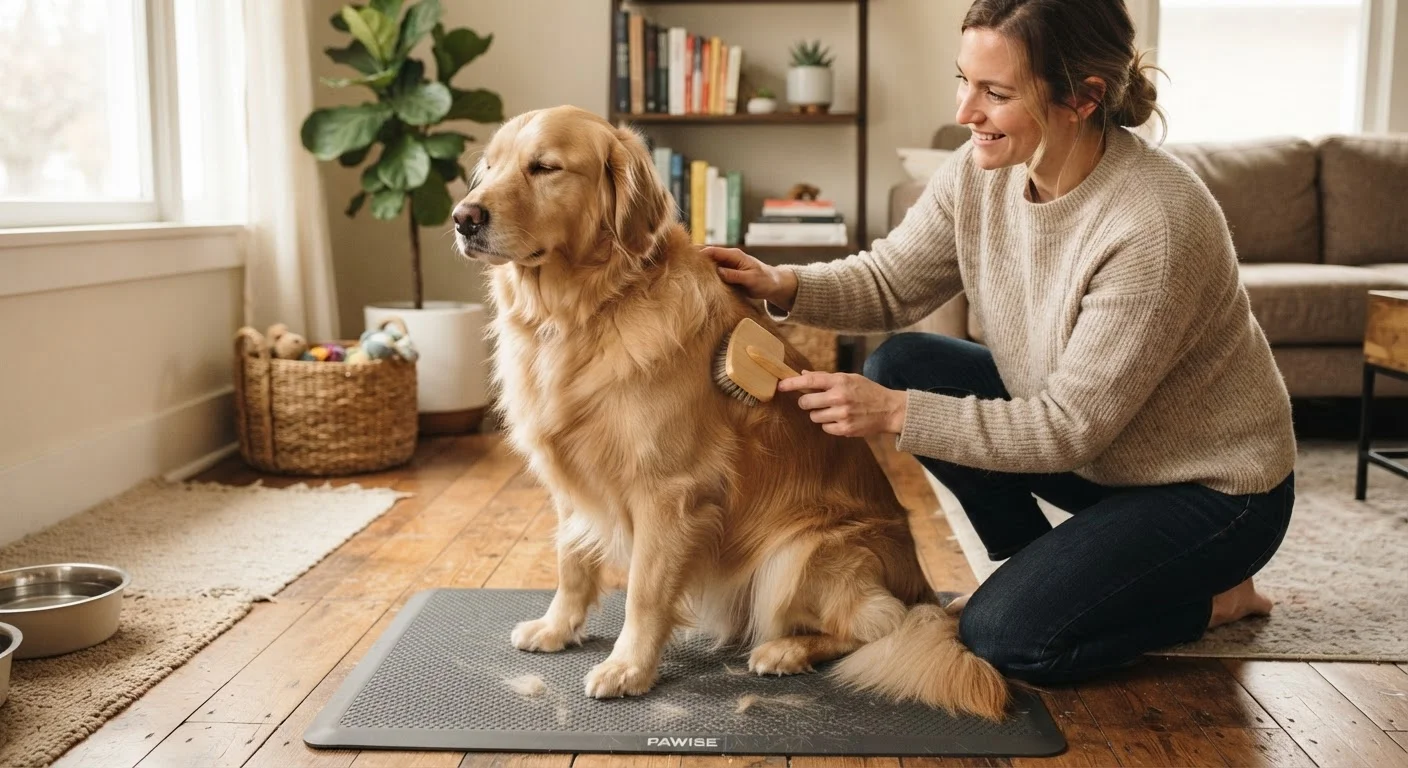
Remove loose fur, debris, and surface tangles with a brush appropriate for your dog's coat type. Mats that go into a bath will tighten as they absorb water, becoming significantly harder to remove afterward.
Set the water temperature to lukewarm
Run the water before placing your dog in the tub. Aim for a temperature that feels comfortably warm on the inside of your wrist — never hot. Dogs are sensitive to heat, and water that feels mild to you can still cause discomfort or stress.
Wet the coat completely down to the skin
Work from the neck down toward the tail, ensuring water penetrates through the entire coat — not just the surface. Double-coated dogs in particular require thorough saturation before shampoo will lather effectively.
Apply dog-formulated shampoo and lather
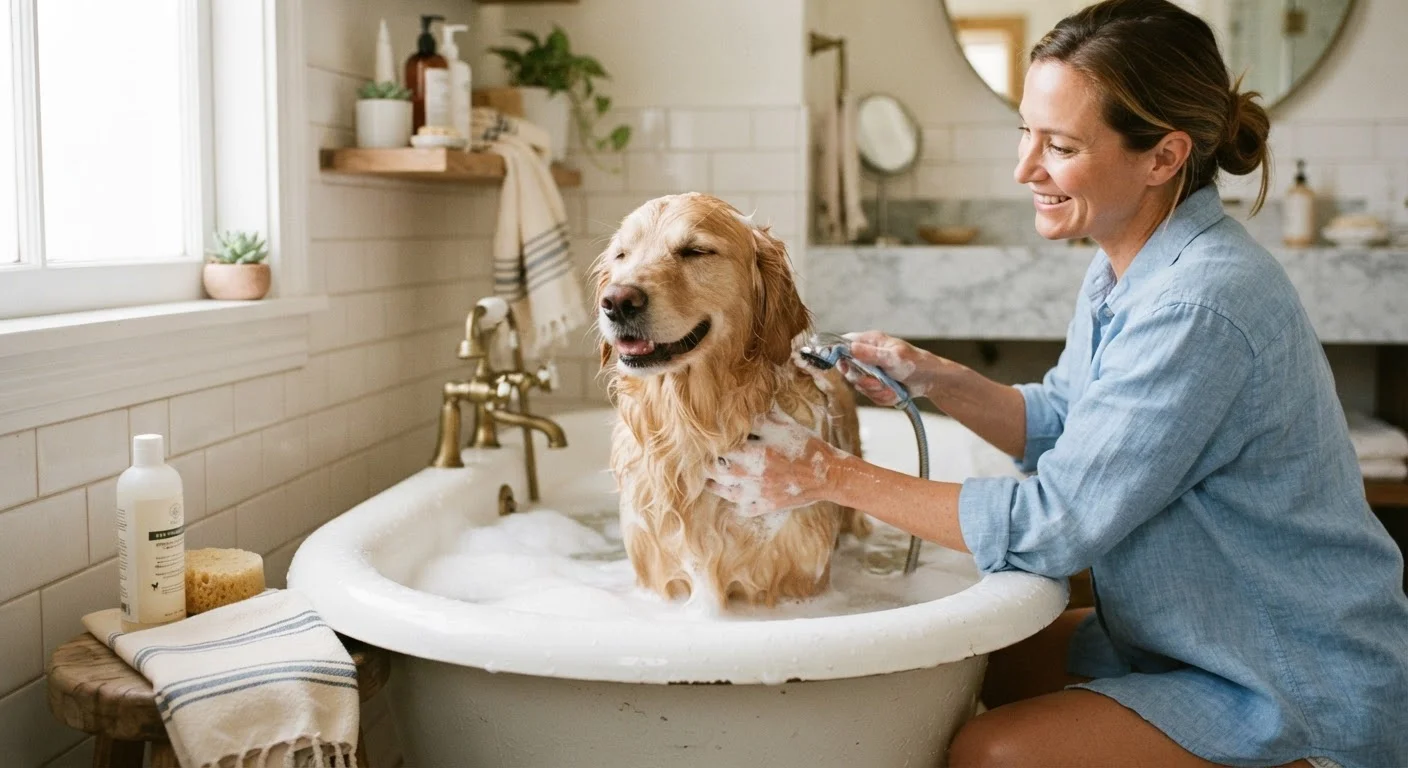
Use a shampoo specifically made for dogs. Human shampoos — even gentle ones — are formulated for a different skin pH and can disrupt your dog's natural skin barrier, leading to dryness or irritation over time. Work the shampoo in using your fingertips, massaging it through the coat from the neck toward the tail. Avoid the eyes and ear canals.
Rinse until the water runs completely clear
This step is more time-consuming than most owners expect. Rinse thoroughly from the neck toward the tail, lifting the coat and working water through to the skin. Squeeze through the legs and belly where shampoo pools. Continue rinsing until the water running off your dog shows no suds at all.
Dry carefully and completely
Wrap your dog in an absorbent towel and squeeze — don't vigorously rub — to remove surface water. For longer or denser coats, a pet-safe blow dryer on a low, cool, or warm (not hot) setting speeds drying and helps prevent the coat from drying in mats. Ensure skin folds, ear flaps, and the groin area are fully dry before considering the session complete.
Avoid Human Shampoo and Baby Products
Human skin operates at a different pH than dog skin, and even mild human shampoos can disrupt the protective acid mantle on a dog's skin over time. This can lead to dryness, irritation, and increased susceptibility to infection. Always choose a shampoo labeled specifically for dogs, and select medicated formulas only under veterinary direction.
Bath time can pair naturally with other parts of your dog's weekly routine. Incorporating grooming into a predictable daily and weekly structure can reduce anxiety significantly — see Building a Daily Routine Your Dog Can Rely On for guidance on scheduling grooming alongside feeding and exercise.
Coat-Specific Tips and Common Mistakes to Avoid
Even with good technique, a few missteps can undermine the results or create new problems.
- Double coats: Never shave a double-coated dog in summer — the undercoat actually insulates against heat. Bathe, blow-dry on a low setting, and brush thoroughly to prevent mats from tightening as the coat dries.
- Curly or continuously growing coats: Brush before bathing to remove tangles; water causes existing mats to tighten dramatically.
- Short coats: These dry quickly but benefit from a thorough post-bath wipe-down to collect loose hair, especially during shedding seasons.
- Skin folds (Bulldogs, Shar-Peis): Dry between folds completely after bathing — trapped moisture is a leading cause of fold dermatitis.
Common mistakes include using water that is too hot (dogs are sensitive to temperatures humans find merely warm), skipping the pre-bath brush, and rushing the rinse phase. Leftover shampoo is one of the most common causes of post-bath itching and flaking.
Bathing is also a good opportunity to check your dog's ears, nails, and teeth, turning one grooming session into a brief head-to-tail health check. For guidance on oral hygiene specifically, the Dental Care in Pets guide explains what to look for and when professional cleaning is warranted. For a lifecycle perspective on how grooming needs shift from puppyhood through senior years, see A Complete Overview of Routine Pet Care Across a Pet's Life Stages.
Persistent Itching After Bathing Warrants a Vet Visit
If your dog consistently scratches, rubs, or shows redness after baths despite thorough rinsing and dog-appropriate shampoo, this may indicate a contact allergy, an underlying skin condition, or an incompatible product. Do not attempt to self-diagnose or self-treat — contact your veterinarian for an evaluation before continuing the current routine.
This article is for general informational purposes only and is not a substitute for professional veterinary advice. If your dog has a skin condition, allergies, or unusual symptoms following bathing, consult a licensed veterinarian.